Best Portable Power Stations for CPAP Machines in 2026
8 min read
On this page
- The short version
- How much power does a CPAP actually use?
- How we picked (research-based)
- 1. Jackery Explorer 300 Plus — best for most CPAP users
- 2. Bluetti EB3A — best budget pick
- 3. EcoFlow River 3 Plus — quietest pick
- 4. EcoFlow Delta 2 — best for multi-night backup
- Comparison table
- The 12V DC trick: how to get 15% more runtime free
- CPAP backup checklist
- FAQ
- Verdict
A CPAP needs 20–60W all night — but the heated humidifier can triple that. These four LiFePO4 power stations run a CPAP through the night (and through outages), with the real runtime math, the 12V-DC trick that saves 15% of your…
The short version
A CPAP machine is one of the easiest loads a power station can handle — if you know your machine's real wattage. Most CPAPs draw 20–60W with the heated humidifier off, which means a small ~300Wh station like the Jackery Explorer 300 Plus or Bluetti EB3A covers a full night with room to spare, while the EcoFlow River 3 Plus adds whisper-quiet operation and expandability. If you run the heated humidifier and heated tube (which can push draw to 60–90W+), or you want multi-night backup, step up to the EcoFlow Delta 2. The single biggest runtime win isn't a bigger battery — it's a 12V DC converter cable for your machine, which skips inverter losses.
This is a research-based guide: every spec below comes from the manufacturers' official documentation, and runtime figures are calculated from published wattage data, not bench tests. We did not test these units with CPAP machines.
A note on medical equipment: a CPAP is prescribed medical equipment. A power station is a great backup, but if your sleep apnea is severe, talk to your doctor or equipment provider about your backup plan — don't rely on a single battery for life-critical therapy without professional guidance.

How much power does a CPAP actually use?
The math that decides everything: watts × hours = watt-hours.
- CPAP, humidifier off: 20–60W depending on pressure setting and machine. 8 hours at 30W = 240Wh.
- CPAP, heated humidifier on: add 30–60W. 8 hours at 70W = 560Wh — more than double.
- Heated tube: another 10–20W on top.
- Travel CPAPs (like the ResMed AirMini) sip power — roughly 13W with their DC converter — so even tiny stations last multiple nights.
Then add ~15% for inverter losses when you run on AC — or skip them entirely with a 12V DC converter (see below). Check your machine's power brick: the fine print lists its rated wattage, and your actual draw is usually 50–70% of that number.
How we picked (research-based)
- Pure sine wave output: all picks — CPAP motors and electronics need clean power.
- Quiet operation: this sits by your bed. Fan noise matters.
- 12V car port: for the DC-converter trick that stretches runtime.
- UPS/EPS switchover: so a midnight outage doesn't wake you when the machine stops.
- LiFePO4 chemistry: thousands of cycles, safe to keep at the bedside.
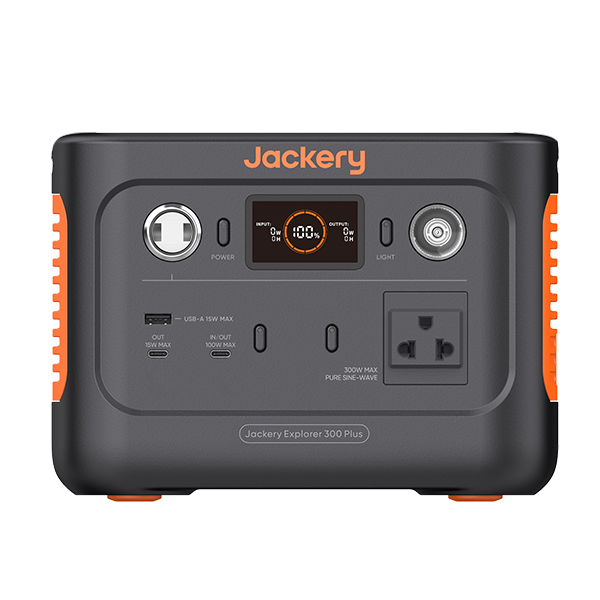
1. Jackery Explorer 300 Plus — best for most CPAP users
The 300 Plus hits the CPAP sweet spot: 288Wh of LiFePO4, a pure sine wave 300W inverter (plenty for any CPAP), and just 8.27 lbs. The math works out: at 30W (humidifier off), you get roughly 8 hours after inverter losses — a full night. At 60W (humidifier on), plan on ~4 hours, so turn the humidifier off for outage nights. The 12V car port is the real feature here: run your CPAP on a 12V DC converter cable and you skip the ~15% inverter tax, stretching that same night comfortably past 9 hours.
Jackery's 3000-cycle LiFePO4 rating and 5-year warranty (3+2 with registration) mean it survives nightly use for years, and it recharges in 2 hours from the wall — easy to top off each morning. It's also one of the quietest options here. Limitation: 288Wh is one night, not a weekend — pair it with a solar panel for multi-day outages.
Verified specs: 288Wh LiFePO4 | 300W pure sine (600W surge) | 8.27 lbs | 12V/10A car port | 100W USB-C in/out | 3000 cycles to 80% | 5-year warranty (3+2).
2. Bluetti EB3A — best budget pick
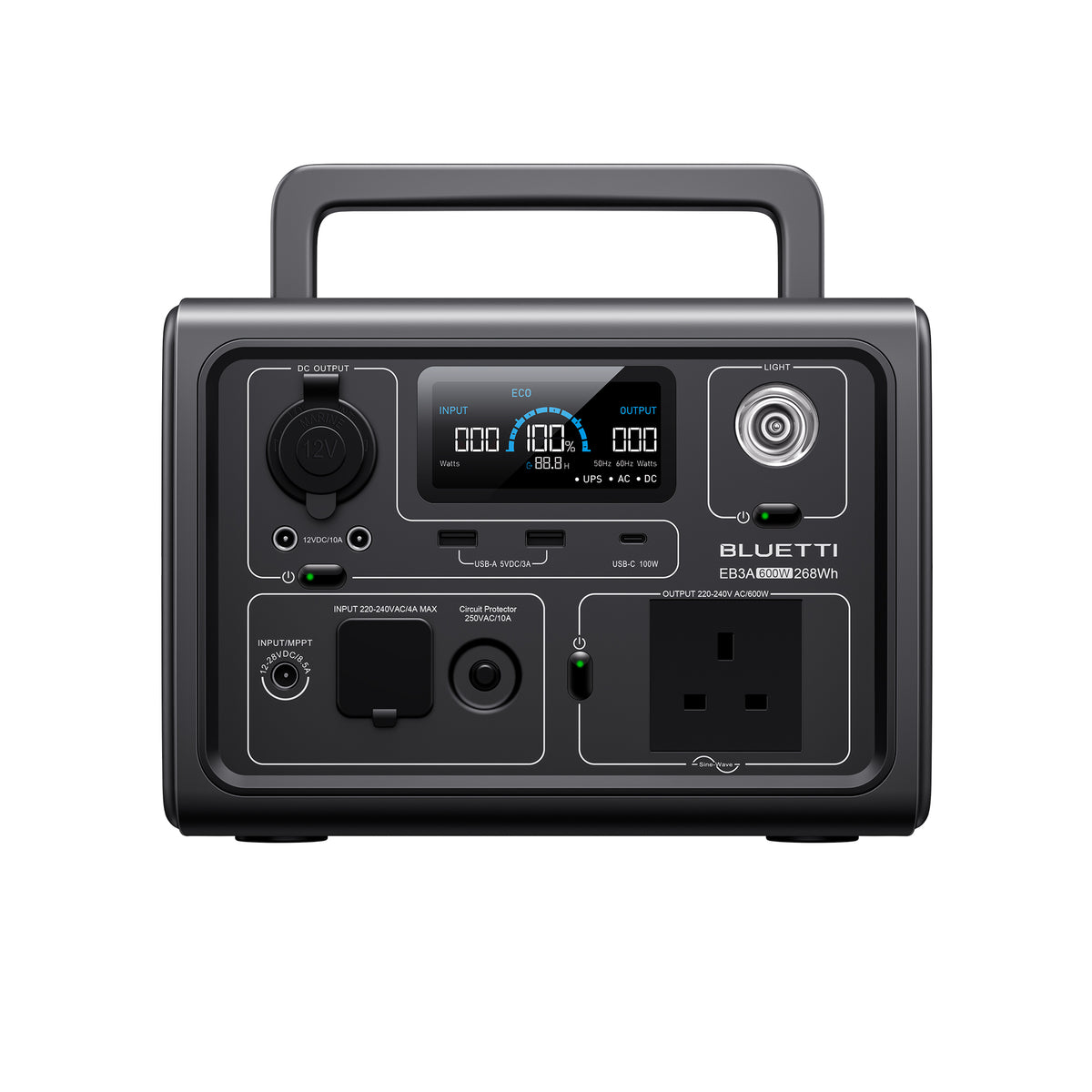
The EB3A is the value king of bedside backup: 268Wh of LiFePO4 with a 600W inverter — double the AC headroom of the Jackery — frequently selling around $180–$220 on sale (list ~$349). That 600W matters if your machine's heated humidifier pushes total draw toward 90W, or if you want to run the CPAP plus a phone charger and a lamp simultaneously. It also has a proper UPS mode with sub-20 ms switchover, so a grid blip at 3 AM never interrupts therapy.
Trade-offs: 2500+ cycle rating is shorter than the others' 3000 (still roughly 7–10 years of nightly use), and at 10.14 lbs it's slightly heavier than the Jackery. But for the price, nothing else gives you UPS-grade CPAP backup with 600W of output.
Verified specs: 268.8Wh LiFePO4 | 600W pure sine (1200W surge) | 10.14 lbs | UPS mode (<20 ms) | 100W USB-C | 15W wireless pad | 2500+ cycles.
3. EcoFlow River 3 Plus — quietest pick
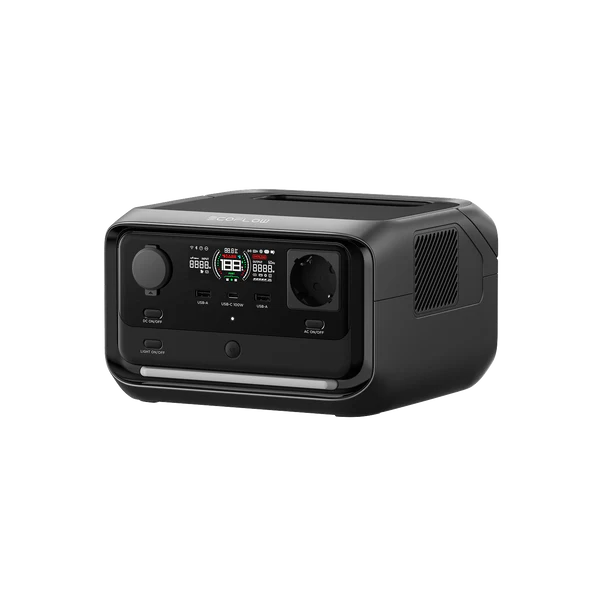
If fan noise is your concern, the River 3 Plus is rated under 30 dB — roughly a whisper — and EcoFlow's X-GaNPower design doubles runtime for loads under 100W, which is exactly where CPAPs live. The 286Wh base unit covers a humidifier-off night, and the EB600 extra battery stacks it to 858Wh for 2–3 nights without recharging. The <10 ms UPS is genuinely fast enough for sensitive electronics, and the whole thing weighs 10.4 lbs.
The catch: 600W of output and a 286Wh base capacity mean you should think of the base unit as a one-night solution. But as a bedside unit you recharge each morning (0–100% in ~1 hour), its silence and efficiency are unmatched.
Verified specs: 286Wh LiFePO4 (expandable to 858Wh) | 600W AC (1200W X-Boost) | 10.4 lbs | <30 dB | <10 ms UPS | 220W solar | 5-year service.
4. EcoFlow Delta 2 — best for multi-night backup
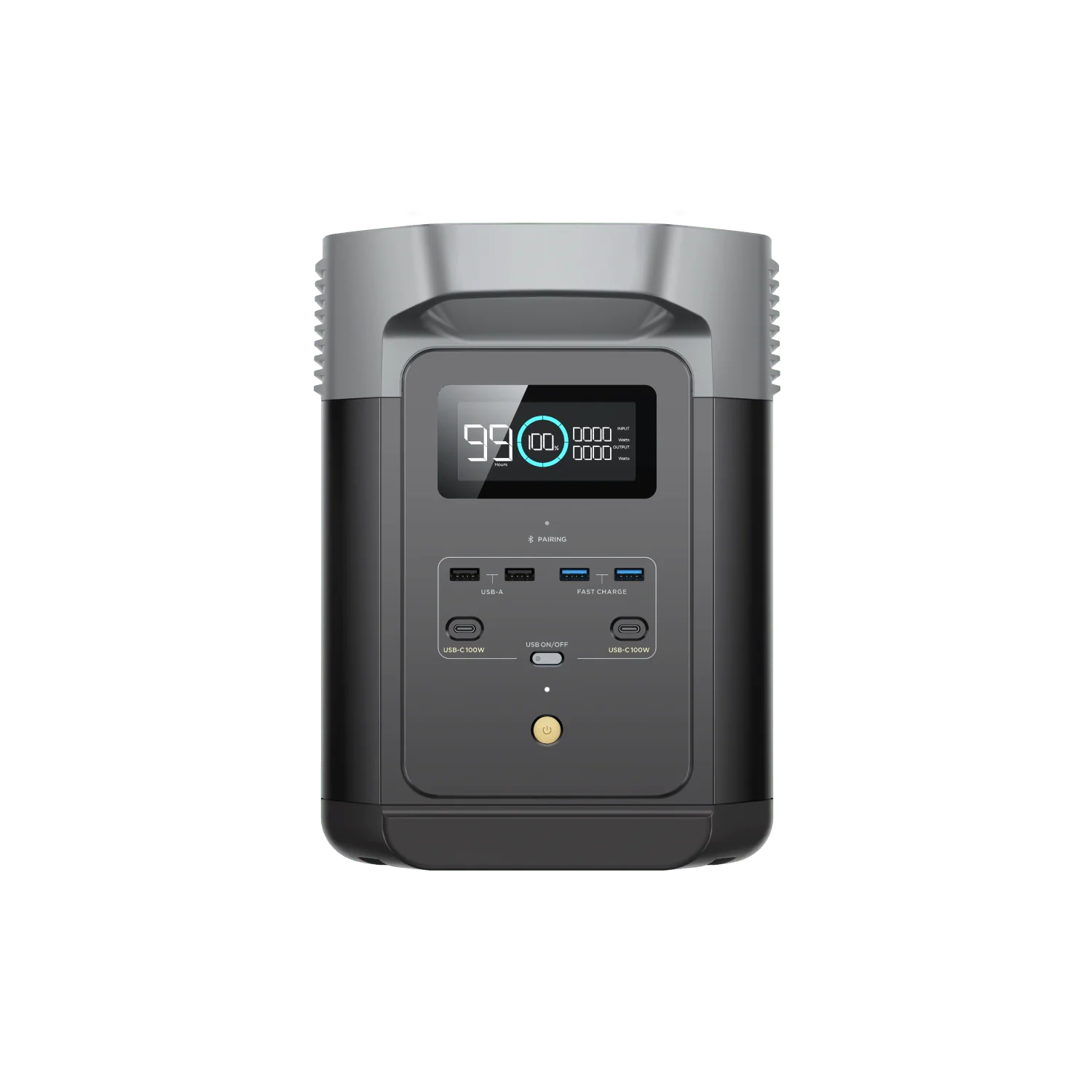
When one night isn't enough — multi-day outages, or humidifier-on comfort all week — the Delta 2's 1024Wh changes the equation. EcoFlow's own published figure: ~17 hours on a 40W CPAP. That's two full nights with the humidifier off, or a comfortable night-plus with it on. The EPS (emergency power supply) mode auto-switches through blackouts, and the 1200W X-Stream charging refills 0–80% in ~50 minutes from any outlet or generator.
It's heavier (27 lbs) and the fans are audible under heavy load — though a 30–60W CPAP barely wakes them. If your CPAP is part of a broader outage plan (fridge, phones, router), the Delta 2 covers the whole list in one box, and it accepts extra batteries up to 3040Wh.
Verified specs: 1024Wh LiFePO4 | 1800W AC | 27 lbs | EPS auto-switchover | 0–80% in ~50 min | 3000 cycles | 5-year warranty.
Comparison table
| Explorer 300 Plus | EB3A | River 3 Plus | Delta 2 | |
|---|---|---|---|---|
| Capacity | 288Wh | 268Wh | 286Wh → 858Wh | 1024Wh → 3040Wh |
| AC output | 300W | 600W | 600W | 1800W |
| Nights (30W, humidifier off) | ~1 | ~1 | ~1 (→3 w/ battery) | ~2+ |
| Noise | Very quiet | Quiet (fanless at low load) | <30 dB | Audible under load |
| UPS switchover | EPS supported | Yes (<20 ms) | Yes (<10 ms) | EPS mode |
| Weight | 8.27 lbs | 10.14 lbs | 10.4 lbs | 27 lbs |
| Warranty | 5 years (3+2) | —* | 5 years | 5 years |
*Bluetti's EB3A warranty terms vary by region and retailer; check the listing before buying.
The 12V DC trick: how to get 15% more runtime free
Every power station loses ~10–15% converting its DC battery to AC and back through your CPAP's power brick. Skip both conversions: most CPAP makers sell a 12V DC converter cable (ResMed, Philips, and others all offer them) that plugs straight into the station's 12V car port. On a 288Wh unit, that 15% is over an hour of extra sleep. It also runs cooler and quieter — no inverter fan at all. If you buy one accessory for CPAP backup, make it the DC cable for your specific machine.
CPAP backup checklist
- Know your wattage: read the power brick, estimate 50–70% of its rating as typical draw, and decide humidifier on/off.
- Size for 1.5 nights minimum: outages don't respect bedtime. A 288Wh unit at 30W gives ~8 hours — fine for one night, tight for two.
- Use UPS/EPS mode at home: keep the station plugged in between the wall and your CPAP; it switches over automatically in a blackout.
- Turn off the heated humidifier on battery: it's the difference between one night and two-plus on a small unit.
- Recharge daily during outages: a 2-hour wall charge (or a car/solar top-up) resets you every morning.
- Don't run the battery to zero: LiFePO4 is forgiving, but keeping 10–20% in reserve protects against a second outage the next night.
FAQ
How long will a 300Wh power station run my CPAP?
About 8 hours with the humidifier off (30W draw, accounting for inverter losses) — one full night. With the heated humidifier on (60–90W), expect 3–5 hours. Use a 12V DC cable to add ~15% runtime.
Can I use a power station with a heated humidifier?
Yes, but budget for it: the humidifier roughly doubles or triples power draw. Either size up to a 500Wh+ unit or turn the humidifier off on battery nights.
Is it safe to run a CPAP on a portable power station?
Yes, provided the station has pure sine wave output (all our picks do). For bedside use, choose LiFePO4 chemistry, keep the unit ventilated, and use the manufacturer's 12V DC cable for your machine when possible.
Will the power station switch over automatically in an outage?
If it has UPS or EPS mode and you keep it plugged in between the wall outlet and your CPAP — yes. The Bluetti EB3A (<20 ms), EcoFlow River 3 Plus (<10 ms), and Delta 2 (EPS) all switch fast enough that therapy continues uninterrupted. The Jackery Explorer 300 Plus supports EPS as well.
Can I take a CPAP power station on a plane?
Airline limits are strict: spare lithium batteries over 100Wh need airline approval, and anything over 160Wh is prohibited in carry-on. None of these full units can fly as spares — check with your airline, and consider a dedicated FAA-compliant CPAP battery for air travel.
Verdict
For most CPAP users, the Jackery Explorer 300 Plus is the right box: light, quiet, LiFePO4, and exactly enough capacity for a full night with the humidifier off. Budget shoppers should grab the Bluetti EB3A — more output and a real UPS for less money. Noise-sensitive sleepers get the EcoFlow River 3 Plus, and anyone planning for multi-day outages should step up to the EcoFlow Delta 2. Whatever you choose, pair it with a 12V DC cable for your machine — it's the cheapest runtime upgrade in CPAP backup.
About our reviews
Specs come from published manufacturer data sheets, cross-checked against owner feedback. Figures go stale. Check the current data sheet before you buy. This is not electrical or purchasing advice.
Related guides
 Buying guidesEcoFlow vs Jackery vs Bluetti: Which Brand to Buy in 2026?EcoFlow, Jackery, and Bluetti sell roughly 70% of all portable power stations — but they are not interchangeable. This…
 Buying guidesBest Portable Power Stations for Camping in 2026The best camping power stations of 2026, ranked by research: Jackery Explorer 2000 v2, Anker Solix C1000, Bluetti Elite 200 V2,…
 Buying guidesBest Portable Power Stations for Home Backup (2026)We compared the top portable power stations for home backup on verified specs — capacity, output, charging speed, solar input,…