Best Portable Power Stations for Home Backup (2026)
7 min read
On this page
- Home backup, without the gas generator
- How we picked
- Our top picks at a glance
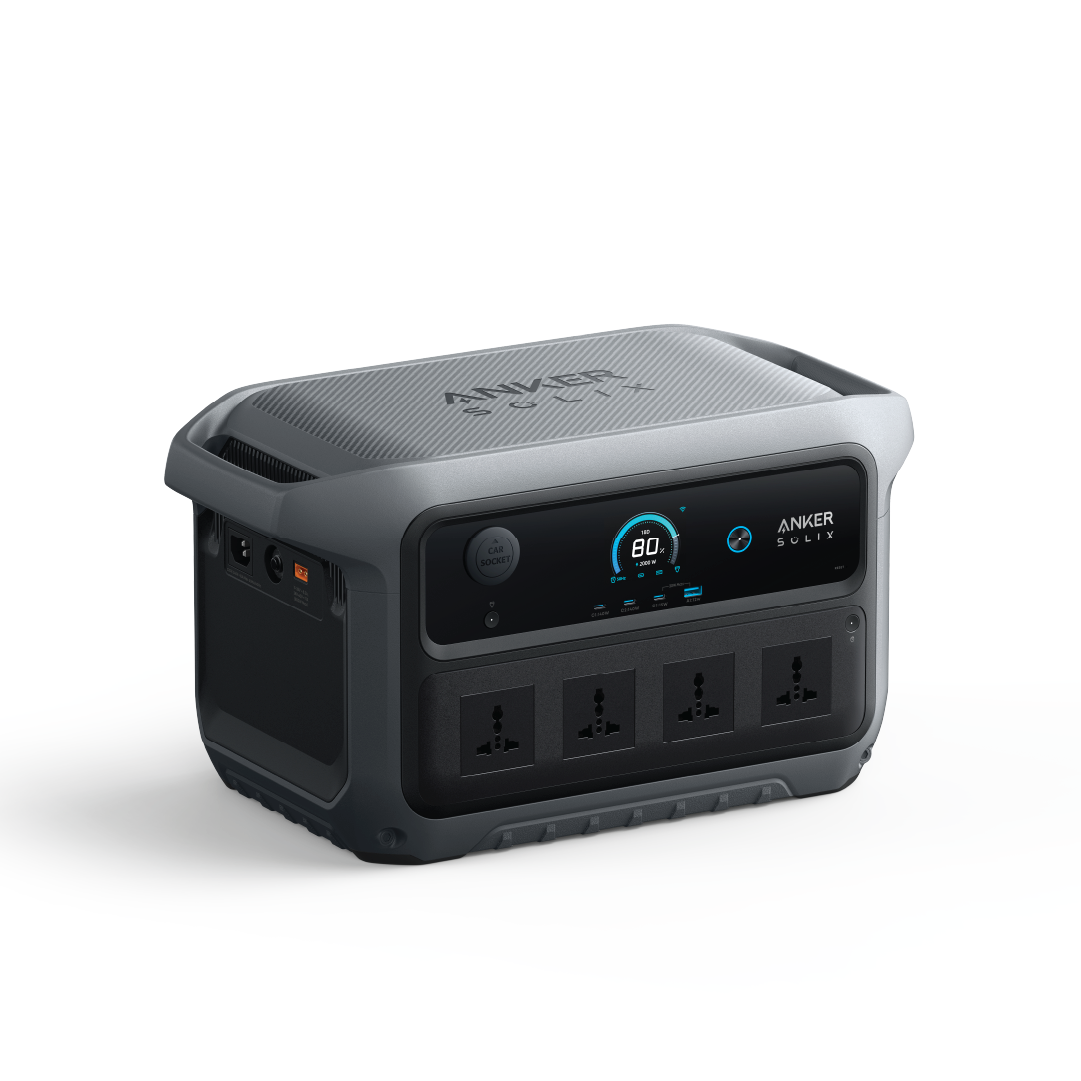
- 1. Anker Solix C2000 Gen 2 — Best overall
- 2. Bluetti AC200L — Best for RV, off-grid & expansion
- 3. Jackery Explorer 2000 v2 — Lightest 2kWh
- 4. EcoFlow Delta 3 Max — Fastest wall charging, premium pick
- 5. EcoFlow Delta 2 — Best 1kWh budget pick
- Buying advice: how to size a home-backup station
- FAQ
- The bottom line
We compared the top portable power stations for home backup on verified specs — capacity, output, charging speed, solar input, UPS, and price. Our top pick for 2026: the Anker Solix C2000 Gen 2 at ~$899. Here are the 5 best, who each is…
Home backup, without the gas generator
When the grid goes down, a portable power station keeps your fridge cold, your phones charged, your Wi-Fi up, and your CPAP running — silently, with no fumes, safe indoors. But the market is crowded, and marketing specs don't always survive contact with a real outage. This guide ranks the best portable power stations for home backup in 2026 based on verified manufacturer specs (capacity, output, charging speed, solar input, UPS switchover, warranty) cross-checked against published expert reviews and owner feedback. We didn't bench-test these units — every claim below traces to an official spec sheet or a documented reviewer/owner pattern.
Research-based guide: specs come from the manufacturers' official documentation (Anker, BLUETTI, Jackery, EcoFlow). Prices are "as of Oct 2026" and move with sales — check current pricing before buying.
How we picked
- LiFePO4 chemistry only. Every pick uses lithium iron phosphate cells (3000–4000 cycle ratings) — the chemistry that lasts a decade instead of a few years. No older NMC units made the cut.
- Real output for real appliances. Minimum 1800W continuous, so a fridge, microwave, or power tools actually run.
- Fast recharge matters in emergencies. We weighted wall-charge speed heavily — a station you can refill in an hour beats one that takes all day.
- UPS capability. Every pick switches to battery in 20ms or less, so routers, PCs, and medical devices ride through blackouts.
- Value at real prices. Ranked on October 2026 street pricing, not list prices nobody pays.
Our top picks at a glance
| Pick | Capacity | Output | Wall recharge (0–80%) | Solar max | Weight | Price (Oct 2026) |
|---|---|---|---|---|---|---|
| Anker Solix C2000 Gen 2 — Best overall | 2048Wh | 2400W | ~58 min full (AC+solar); <3h wall-only | 800W | 41.7 lbs | ~$899 |
| Bluetti AC200L — Best for RV/off-grid & expansion | 2048Wh | 2400W | ~45 min | 1200W | 61.6 lbs | ~$1,199 |
| Jackery Explorer 2000 v2 — Lightest 2kWh | 2042Wh | 2200W | ~52 min (emergency mode) | 400W | 39.5 lbs | ~$899 |
| EcoFlow Delta 3 Max — Fastest wall charging | 2048Wh | 2400W | ~68 min | 500W | 44.8 lbs | ~$1,399 |
| EcoFlow Delta 2 — Best 1kWh budget pick | 1024Wh | 1800W | ~50 min | 500W | 27 lbs | ~$350–$600 on sale |
1. Anker Solix C2000 Gen 2 — Best overall

2048Wh | 2400W | ~$899 as of Oct 2026
The C2000 Gen 2 is the value disruptor that reset pricing for the whole 2kWh class. You get 2048Wh of 4000-cycle LiFePO4, 2400W continuous output (4000W peak), dual 140W USB-C ports, a TT-30 RV outlet, 800W of solar input, and expansion to 4kWh with the BP2000 battery — for roughly $500 less than the EcoFlow Delta 3 Max. Its 9W idle draw is the lowest in the class, making it the best always-plugged-in UPS backup. The 58-minute full recharge needs combined AC + solar input (wall-only takes under 3 hours), and the 5-year warranty matches the big brands. For most homeowners buying one 2kWh station in 2026, this is where the smart money goes.
Best for: value-first buyers, always-on UPS duty, solar owners, RVers. Skip if: wall-charge speed is your top priority.
2. Bluetti AC200L — Best for RV, off-grid & expansion
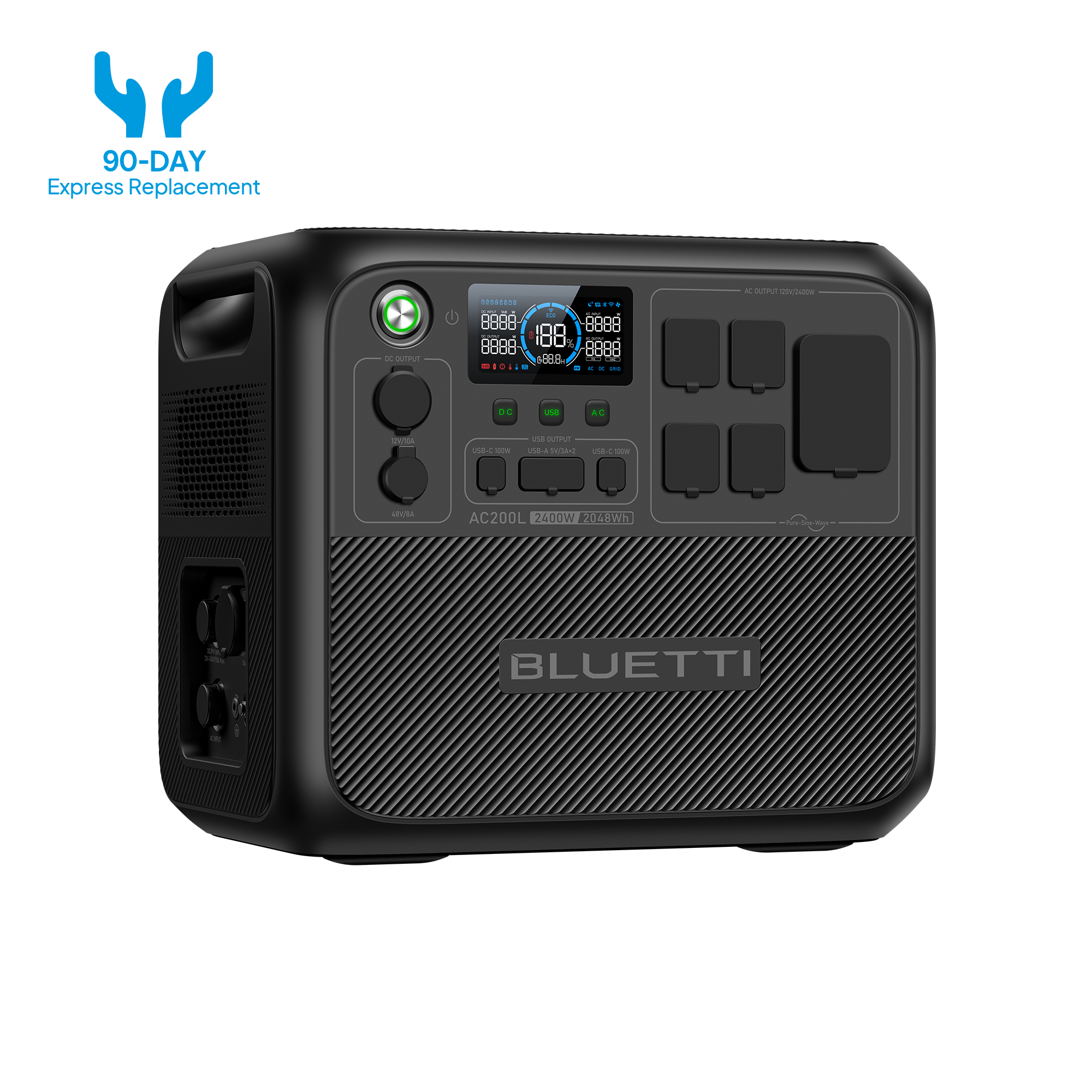
2048Wh | 2400W | ~$1,199 as of Oct 2026
The AC200L is the capability pick: the fastest wall recharge in the class (0–80% in 45 minutes), a massive 1200W of solar input, and expansion all the way to 8192Wh with extra batteries. The TT-30 RV outlet and 48V DC port make it the only 2kWh station purpose-built for travel trailers. The cost is weight — 61.6 lbs makes it a place-it-and-leave-it unit — and availability on BLUETTI's US store has been spotty. If your backup might grow into a home system, or you live the RV/off-grid life, nothing else scales like this.
Best for: RVers, off-grid cabins, anyone planning to expand past 2kWh. Skip if: you carry your station regularly.
3. Jackery Explorer 2000 v2 — Lightest 2kWh
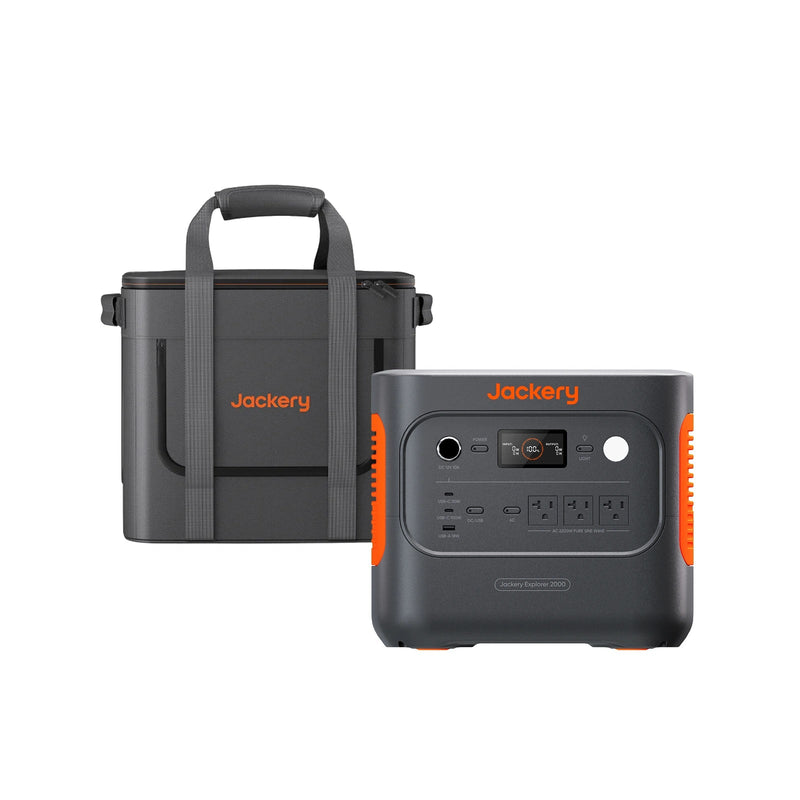
2042Wh | 2200W | ~$899 as of Oct 2026
At 39.5 lbs, the 2000 v2 is the lightest 2kWh station in its class — 22 lbs lighter than the Bluetti — and the easiest to move from garage to car to campsite. It adds a 52-minute emergency recharge (via the app), a 30dB quiet mode for indoor use, 4000-cycle LFP cells, and a 5-year warranty (3+2 on jackery.com). The trade-offs: no expansion, only three AC outlets, a 400W solar cap, and Jackery's own FAQ advises against medical-device use. For portable-first buyers, the weight advantage is decisive.
Best for: campers, anyone who moves their station often, quiet indoor backup. Skip if: you need expansion or run medical equipment.
4. EcoFlow Delta 3 Max — Fastest wall charging, premium pick
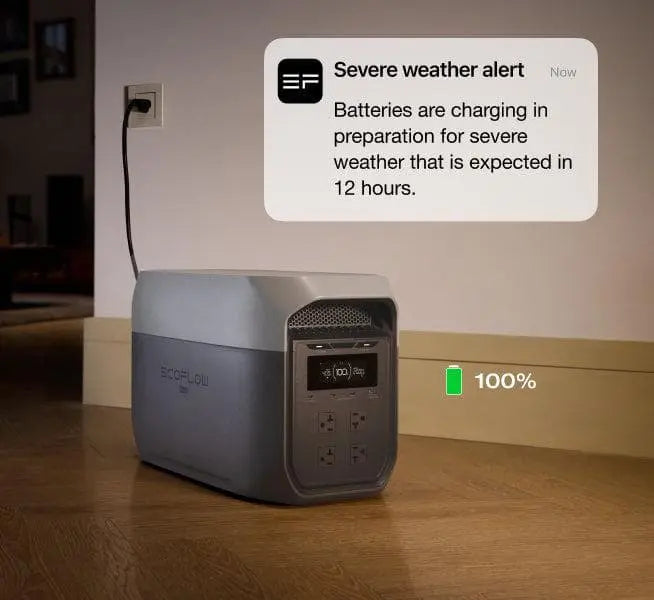
2048Wh | 2400W | ~$1,399 as of Oct 2026
The Delta 3 Max is EcoFlow's refinement play: 68-minute wall charging with no panels needed, a documented ≤25dB noise figure at 600W loads, sub-10ms UPS switchover, and Storm Guard — automatic pre-charging triggered by severe-weather alerts. It's 17 lbs lighter than the Bluetti and the best-documented quiet operator here. The catches: no battery expansion (unlike the older DELTA 2 Max), a 500W solar cap, and the highest price in the roundup. Worth it for storm-country homeowners and workshop users who'll use the fast recharge daily.
Best for: storm prep, quiet UPS duty, workshop daily drivers. Skip if: you want expansion or solar-first charging.
5. EcoFlow Delta 2 — Best 1kWh budget pick
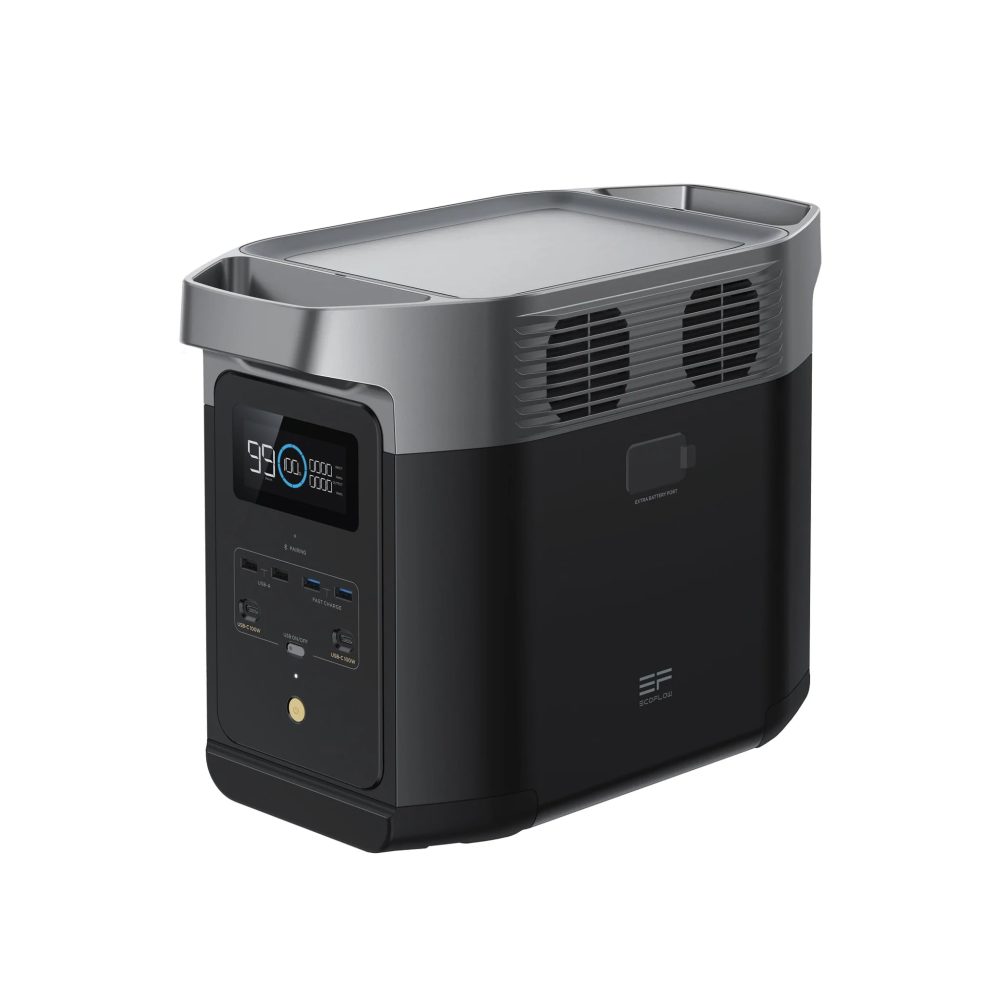
1024Wh | 1800W | ~$350–$600 on sale as of Oct 2026
Don't need 2kWh? The Delta 2 remains the benchmark 1kWh station: 1024Wh of 3000-cycle LiFePO4, 1800W of output (2200W X-Boost), and 0–80% in ~50 minutes — at sale prices that have dipped to ~$350 during 2026 promotional events. It runs a fridge for 7–14 hours, a CPAP for ~17 hours, and charges a laptop ~16 times. Expandable to 3040Wh with extra batteries, with a 5-year warranty. For short outages, camping, and CPAP backup on a budget, it's still the value king of the 1kWh class. See our full EcoFlow Delta 2 review.
Best for: budget buyers, short outages, camping, single-night CPAP backup. Skip if: you need multi-day runtime.
Buying advice: how to size a home-backup station
Match watt-hours to your outage, watts to your appliances
Two numbers matter. Watt-hours (Wh) = how long things run: a 2048Wh station runs a 120W fridge for roughly 12–14 hours (2048 × 0.85 efficiency ÷ 120). Watts (W) = what can run at once: a 2400W inverter starts a fridge, runs a microwave, or powers a circular saw; an 1800W unit covers the same essentials but not simultaneously with heavy tools. Size Wh for duration, W for the biggest thing you'll plug in.
The 2kWh sweet spot
For most homes, 2kWh (2000Wh class) is the sweet spot: it covers a fridge + router + phones + lights through a full-day outage, runs a CPAP for multiple nights, and handles power tools. Go 1kWh if outages are short and rare; go expandable (Bluetti AC200L) if you want multi-day resilience.
Don't overlook recharge speed
A station that refills in 45–68 minutes from the wall (Bluetti, EcoFlow) is back in service the same afternoon. One that takes 4+ hours might miss the next outage. If storms are your scenario, charge speed is as important as capacity.
Solar input decides off-grid usefulness
Wall charging covers storm prep; solar covers extended outages. The Bluetti's 1200W solar input refills in ~2 hours of good sun; the Jackery's 400W takes all day. If the grid might stay down for days, solar input is the spec to maximize.
UPS mode for always-on gear
All five picks switch to battery in ≤20ms — fast enough for routers, PCs, and NAS boxes. If you want a station permanently inline, favor low idle draw (Anker's 9W) and quiet operation (EcoFlow's ≤25dB, Jackery's 30dB quiet mode).
Battery chemistry and warranty
Every pick here uses LiFePO4 (3000–4000 cycles) with a 5-year warranty. Don't buy NMC-chemistry stations in 2026 — they cost less upfront and die years sooner.
FAQ
What size power station do I need for home backup?
For most homes, a 2kWh (2000Wh) station with 2200–2400W of output covers the essentials — fridge, router, phones, lights — through a 12–24 hour outage. Add up your critical loads in watts, multiply by the hours you need, and divide by 0.85 (inverter efficiency) to get the watt-hours required.
Can a portable power station run a refrigerator?
Yes. Any 1800W+ station starts a full-size fridge easily. A 2kWh unit runs a ~120W fridge for roughly 12–14 hours; a 1kWh unit for 7–14 hours depending on the fridge's duty cycle. For multi-day outages, pair with solar panels or an expandable unit like the Bluetti AC200L.
How long do portable power stations last?
The LiFePO4 units in this guide are rated for 3000–4000 full cycles — roughly 8–11 years of daily use — and all carry 5-year warranties. They'll outlast several phones and most appliances you plug into them.
Are portable power stations safe indoors?
Yes — unlike gas generators, battery stations produce no fumes or carbon monoxide and are safe indoors. Keep them ventilated (fans need airflow), away from water, and within their rated operating temperatures.
Which is better: EcoFlow, Bluetti, Jackery, or Anker?
All four make excellent stations in 2026 — the differences are in priorities, not quality. Anker wins on value, Bluetti on expansion and solar, Jackery on portability, EcoFlow on charging speed and smart features. Match the strength to your use case using the guide above.
The bottom line
For most homeowners in 2026, the Anker Solix C2000 Gen 2 (~$899) is the best balance of capacity, features, and price. RVers and off-gridders should step up to the Bluetti AC200L (~$1,199) for its solar input and 8kWh expansion. Movers and campers will love the Jackery Explorer 2000 v2 (~$899) at 39.5 lbs. Storm-preppers and workshop users get the fastest turnaround from the EcoFlow Delta 3 Max (~$1,399). And budget buyers are well served by the EcoFlow Delta 2 (~$350–$600 on sale). Whichever you choose, buy LiFePO4, size for your longest likely outage, and check current sale pricing — this market discounts aggressively.
About our reviews
Specs come from published manufacturer data sheets, cross-checked against owner feedback. Figures go stale. Check the current data sheet before you buy. This is not electrical or purchasing advice.
Related guides
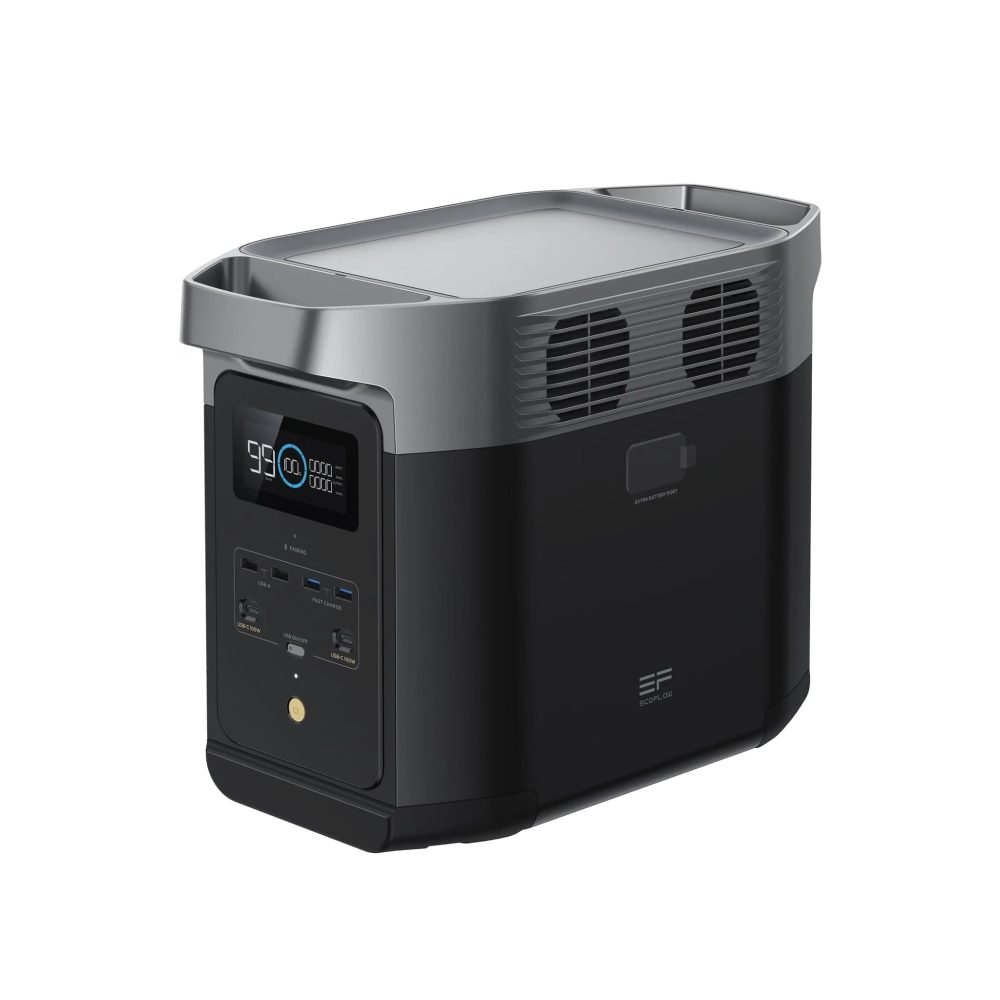 Buying guidesEcoFlow vs Jackery vs Bluetti: Which Brand to Buy in 2026?EcoFlow, Jackery, and Bluetti sell roughly 70% of all portable power stations — but they are not interchangeable. This…
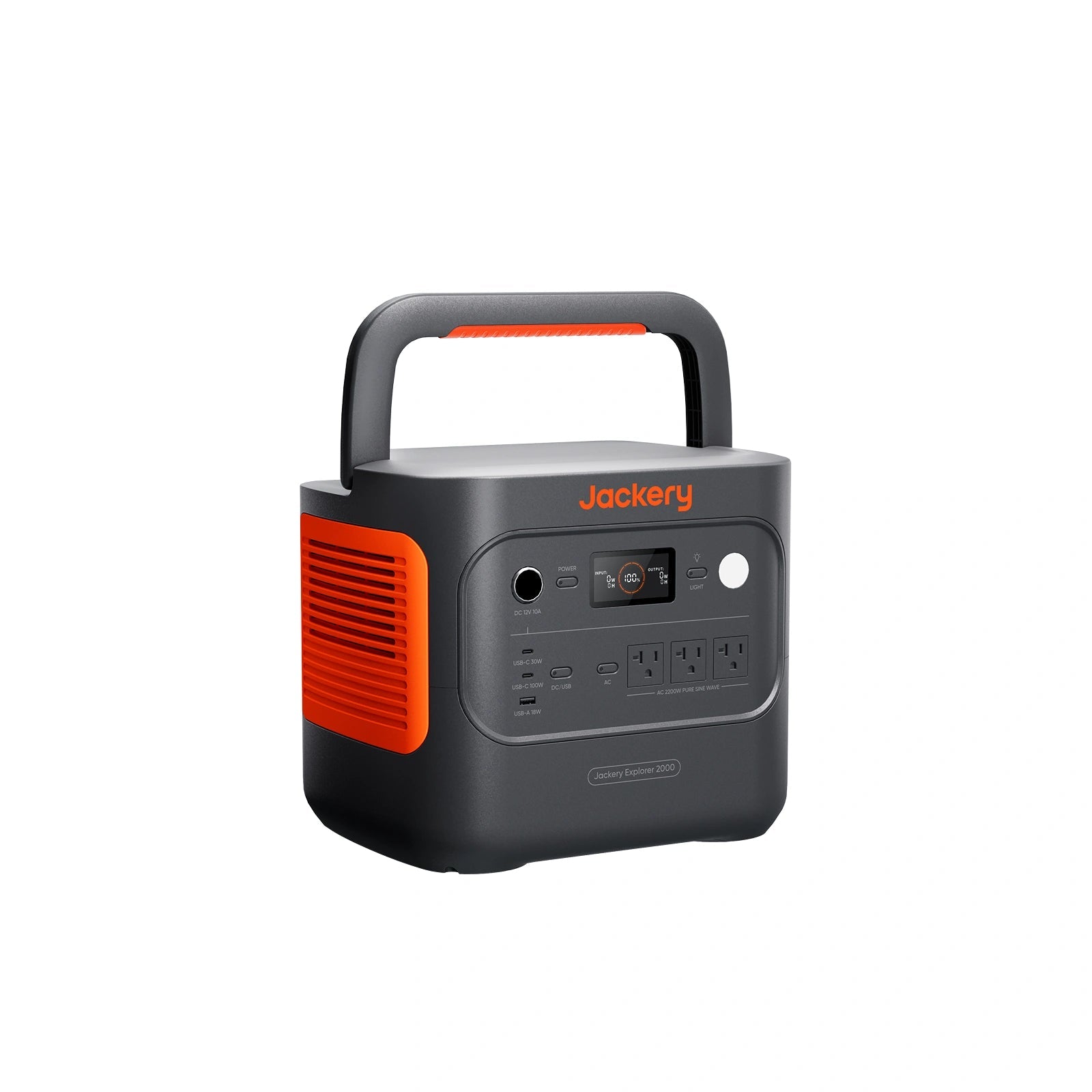 Buying guidesBest Portable Power Stations for Camping in 2026The best camping power stations of 2026, ranked by research: Jackery Explorer 2000 v2, Anker Solix C1000, Bluetti Elite 200 V2,…
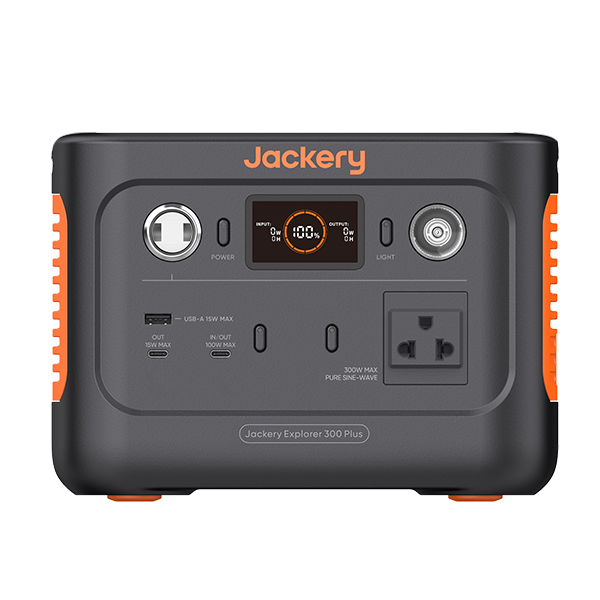 Buying guidesBest Portable Power Stations for CPAP Machines in 2026A CPAP needs 20–60W all night — but the heated humidifier can triple that. These four LiFePO4 power stations run a CPAP…