Bluetti Apex 300 vs Anker Solix F3800
5 min read
On this page
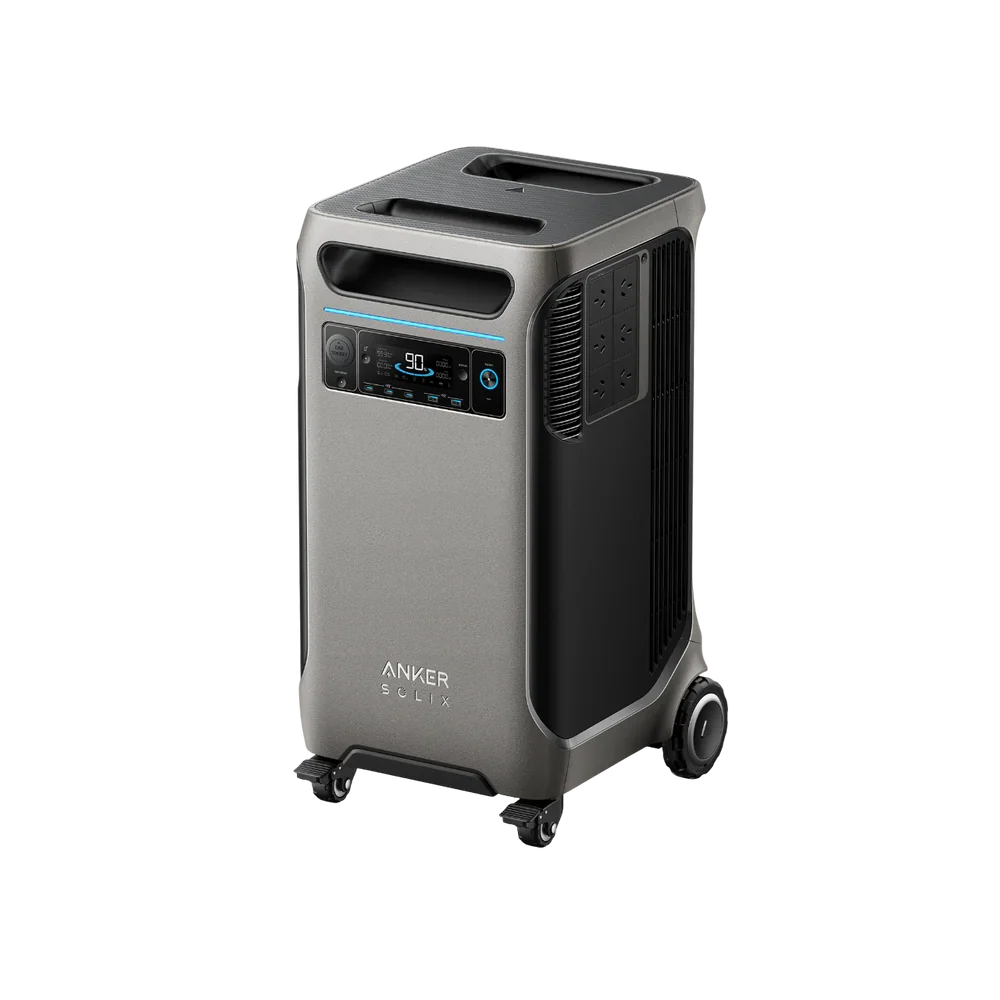
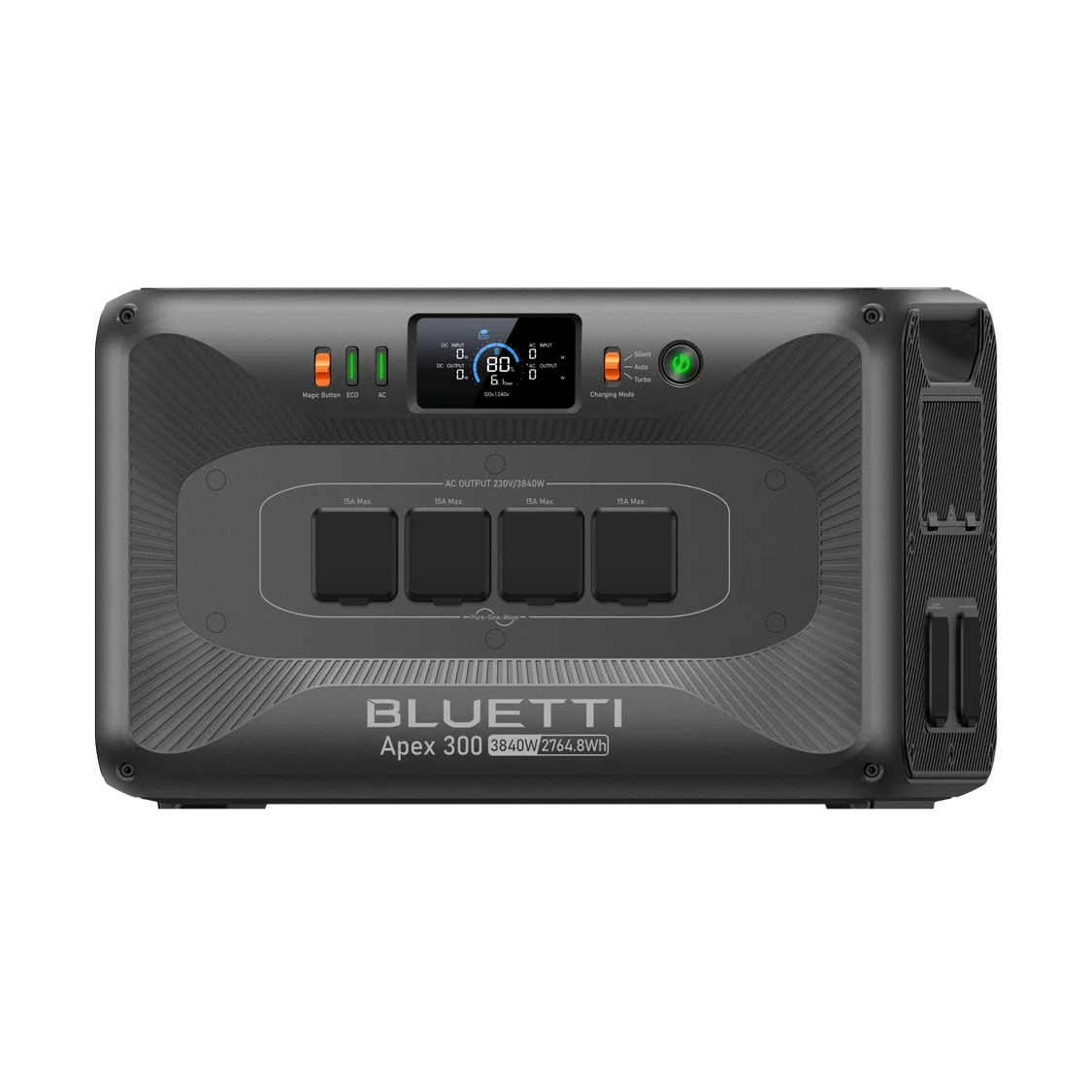
Two heavyweights of home backup: the Bluetti Apex 300 offers 3,840W and a 6,000-cycle battery, while the Anker Solix F3800 counters with 3,840Wh and 6,000W of output. Based on published specs, here's the honest head-to-head.
Two philosophies of serious backup
The Bluetti Apex 300 and the Anker Solix F3800 are the two most credible answers to the same question: what if the outage lasts days? But they answer it differently. Bluetti built the faster, longer-lived machine — 45-minute Turbo charging and a 6,000-cycle battery rated for up to 17 years. Anker built the bigger hammer — 3,840Wh of storage and a 6,000W inverter that runs things the Bluetti can't touch. Here's how they compare on published specifications, and which one fits which home.
This is a research-based comparison: every figure comes from BLUETTI's and Anker's official documentation. We did not bench-test either unit.

Side-by-side specs
| Spec | Bluetti Apex 300 | Anker Solix F3800 |
|---|---|---|
| Capacity | 2,764.8Wh LiFePO4 | 3,840Wh LFP |
| AC output | 3,840W continuous / 7,680W surge | 6,000W continuous / 9,000W surge |
| Voltage | 120V/240V dual-voltage | 120V/240V split-phase |
| AC outlets | 6, incl. NEMA TT-30R + 14-50R | 6× NEMA 5-20 + NEMA 14-50 + NEMA L14-30 |
| USB-C | 2× 100W | 3× 100W |
| Max solar input | 2,400W built-in (6,400W w/ SolarX 4K) | 2,400W (dual XT-60) |
| AC recharge | Up to 3,840W Turbo — 80% in ~45 min | Up to 1,800W — full in ~2.7 hrs |
| Cycle life | 6,000+ cycles to 80% | 3,000+ cycles |
| UPS switchover | 0 ms (US/JP) / 20 ms elsewhere | <20 ms |
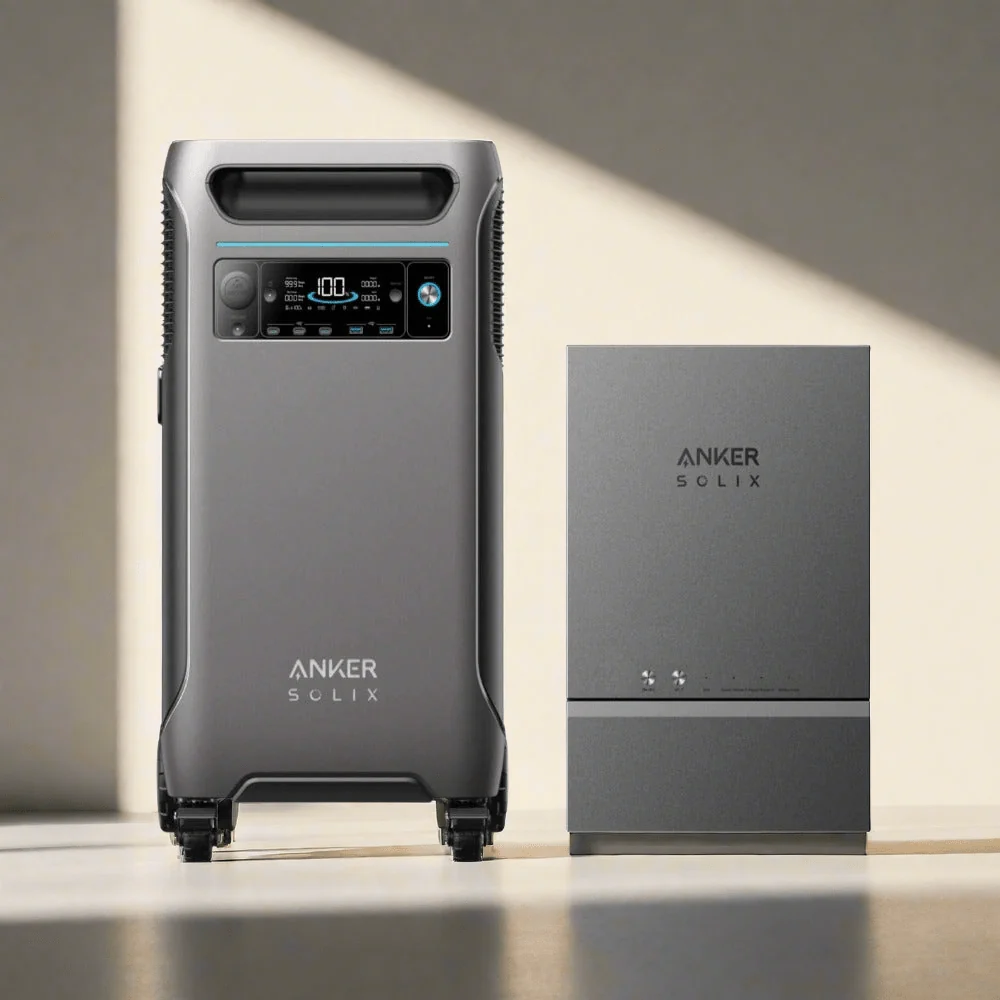
| Expandable | 6× B300K → ~19.4kWh; 3 units → 58kWh / 11.52kW | 6× BP3800 → 26.88kWh; 2 units → 53.8kWh / 12kW |
| Weight | 83.78 lbs | 132.3 lbs (wheeled) |
| Warranty | 5 years | 5 years |
| Typical price (Oct 2026) | ~$1,599 (seen ~$1,425 on sale) | ~$1,980 current (list $2,199.99) |
Head-to-head
Capacity: Anker
3,840Wh vs 2,764.8Wh is nearly 40% more storage — roughly an extra 8–9 hours of fridge runtime per charge. If your outage plan is measured in days, that gap compounds fast. The Anker also expands further per unit (26.88kWh with six BP3800 batteries vs ~19.4kWh with six B300K).
Output power: Anker, clearly
6,000W vs 3,840W continuous, 9,000W vs 7,680W surge. The F3800 runs a central air conditioner's startup, a 240V dryer circuit, or multiple heavy appliances at once — loads that would overload the Apex 300. If your goal is "run the house like normal," the Anker's inverter is in another league.
Charging speed: Bluetti, by a wide margin
This is the Apex 300's revenge: Turbo mode refills 80% in ~45 minutes, while the F3800's 1,800W AC input needs nearly 3 hours for a full charge. When the grid flickers back on for an hour between storm bands, the Bluetti grabs far more energy. (Note: the F3800's 2,400W solar input can refill it in under 2 hours in strong sun — solar narrows the gap.)
Battery longevity: Bluetti
6,000+ cycles vs 3,000+ — Bluetti's second-generation automotive-grade cells are rated for roughly twice the lifespan, up to ~17 years of daily use. For a unit that may cycle daily in a peak-shaving or solar-self-consumption role, that halves the long-term cost of the battery.
Portability: Bluetti
Neither is light, but 83.78 lbs vs 132.3 lbs is a real difference. The Bluetti is a two-person carry; the Anker is a roll-it-into-place appliance with industrial wheels. If the unit ever needs to move — RV trips, job sites, lending to family — the Bluetti is far more manageable.
240V and RV: tie, with caveats
Both offer 120V/240V output with RV-ready outlets (TT-30, 14-50, L14-30). Know the Anker's fine print: the 240V output can't be used while the unit is charging via 120V AC, and during AC charging only the 120V UPS outlet works for pass-through. The Bluetti's 50A/12kW bypass is the more flexible pass-through design.
Smart features: tie
Both offer Wi-Fi/Bluetooth apps with real-time monitoring, OTA updates, and energy-saving modes. Bluetti adds extreme-weather alerts with automatic emergency-backup mode; Anker adds time-of-use and peak-shaving controls for bill savings. Pick based on which automation matters to you.
Price and value: Anker (on sale)
At recent street prices (~$1,980 for the F3800 vs ~$1,599 for the Apex 300), the Anker costs about 24% more for 39% more capacity and 56% more output — better dollars-per-kWh and dollars-per-watt. The Bluetti's value case is longevity and charge speed, not raw capacity.
Winner by use case
- Maximum backup power (whole-home, HVAC, EV charging): Anker Solix F3800 — 6,000W and 3,840Wh are simply bigger.
- Fastest recovery between outages: Bluetti Apex 300 — 45-minute Turbo charging is unmatched here.
- Longest service life / daily cycling: Bluetti Apex 300 — 6,000-cycle battery.
- Best value per kWh: Anker Solix F3800 at sale prices.
- Needs to move occasionally: Bluetti Apex 300 — 84 lbs vs 132 lbs.
- Phased path to whole-home scale: Either — both scale past 50kWh; the Bluetti's hot-swappable batteries are friendlier to expand.
Total cost of ownership
Sticker prices (~$1,599 Apex 300 vs ~$1,980 F3800 at recent street pricing) only tell half the story. The Bluetti's 6,000-cycle battery is rated for roughly twice the lifespan of the Anker's 3,000-cycle pack — if you cycle daily (solar self-consumption, peak shaving), the Bluetti's battery could outlast the Anker's by the better part of a decade, which changes the lifetime math substantially. The Anker counters with better dollars-per-kWh and dollars-per-watt today: ~24% more money for ~39% more capacity and ~56% more output.
Then price the system you'd actually buy. A storm-resilience setup — base unit plus one expansion battery — runs roughly $2,500–$3,000 for either brand depending on sales. At that point the decision stops being about the base unit and starts being about the ecosystem: Bluetti's hot-swappable B300K batteries and faster Turbo recharging vs Anker's bigger per-unit capacity and 240V muscle. Get quotes on the full configuration, not just the headline unit.
FAQ
Which is better for whole-home backup: Apex 300 or F3800?
The F3800, for most homes — 6,000W and 3,840Wh cover more circuits and heavier loads out of the box. The Apex 300 catches up with expansion batteries and wins on recharge speed and battery lifespan.
Can either run central air conditioning?
Briefly, at best. A 3-ton central AC draws 3,500W+ running and far more at startup — it would drain either base unit in under an hour. Whole-home HVAC backup needs the expanded multi-battery configurations (or a permanently installed battery).
Which charges faster?
The Apex 300 by a wide margin on AC: ~45 minutes to 80% via Turbo mode vs ~2.7 hours for a full F3800 charge at 1,800W. On solar they're closer — both accept 2,400W.
Can I parallel multiple units?
Yes, both: up to three Apex 300s (58kWh / 11.52kW) and up to two F3800s (53.8kWh / 12kW). Both require the manufacturer's parallel hardware — it's not as simple as plugging two units together.
Verdict
Buy the Anker Solix F3800 if your priority is maximum power and capacity per dollar — it's the bigger, stronger machine and the better pure backup appliance. Buy the Bluetti Apex 300 if you value recharge speed, a battery that outlives the competition by years, and a unit you can still move without machinery. There's no wrong answer here; there's only the right match for your outage plan. Price both as complete systems (with the expansion batteries you'd actually buy) before deciding.
About our reviews
Specs come from published manufacturer data sheets, cross-checked against owner feedback. Figures go stale. Check the current data sheet before you buy. This is not electrical or purchasing advice.
Related guides
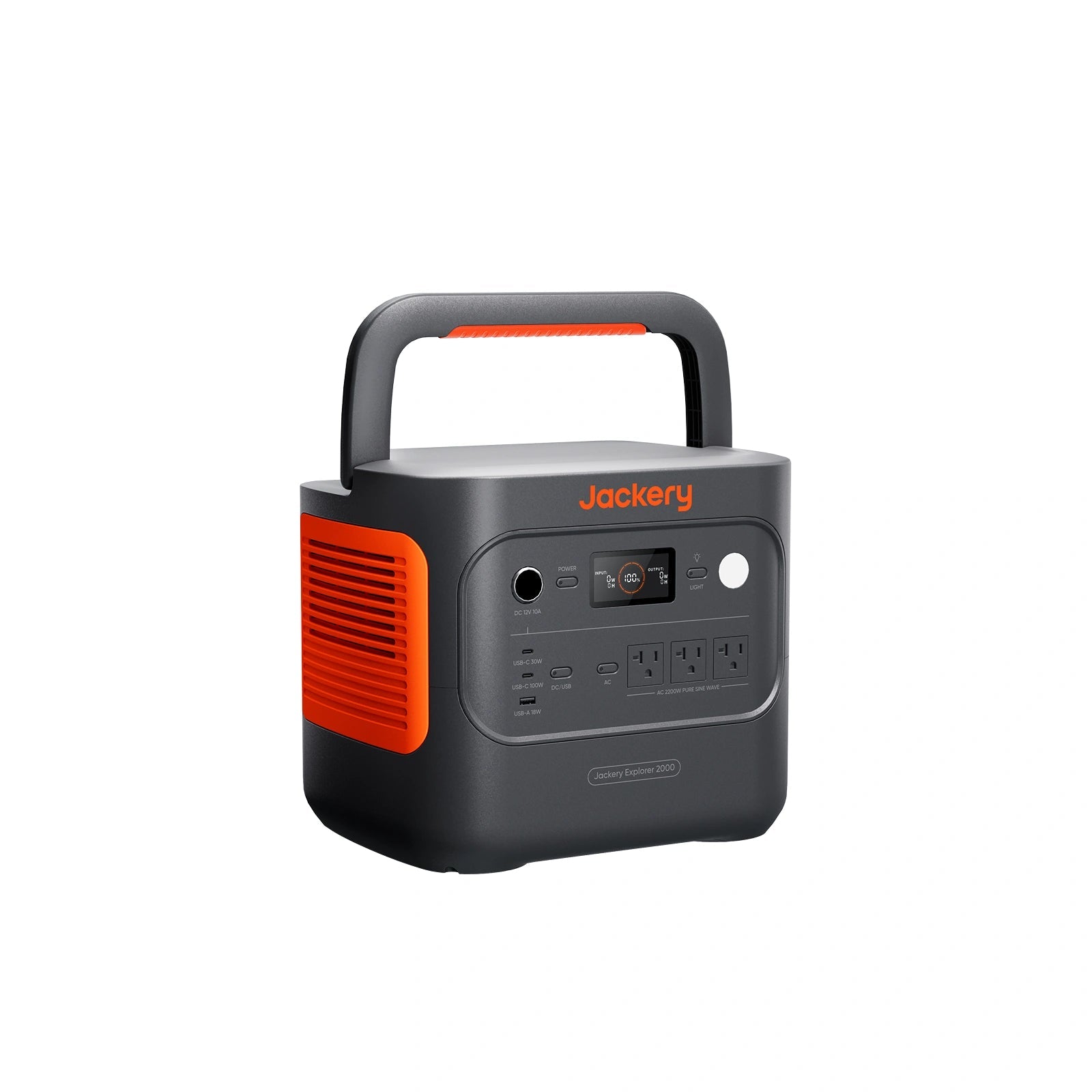 ComparisonsJackery Explorer 2000 v2 vs Bluetti Elite 200 V2The two best 2kWh values of 2026 head-to-head: Jackery Explorer 2000 v2 (2042Wh, 2200W, 39.5 lbs) vs Bluetti Elite 200 V2…
 ComparisonsEcoFlow Delta 3 vs Delta 2: Should You Upgrade?The EcoFlow Delta 3 keeps the Delta 2's winning 1024Wh/1800W formula but adds faster charging, a quieter fan, a 4,000-cycle…
 ComparisonsEcoFlow Delta Pro 3 vs Jackery HomePower 3000Two 3–4kWh home backup heavyweights: the EcoFlow Delta Pro 3 (4096Wh, 4000W, 240V) versus the Jackery HomePower 3000 (3072Wh,…