EcoFlow Delta 3 vs Delta 2: Should You Upgrade?
5 min read
On this page
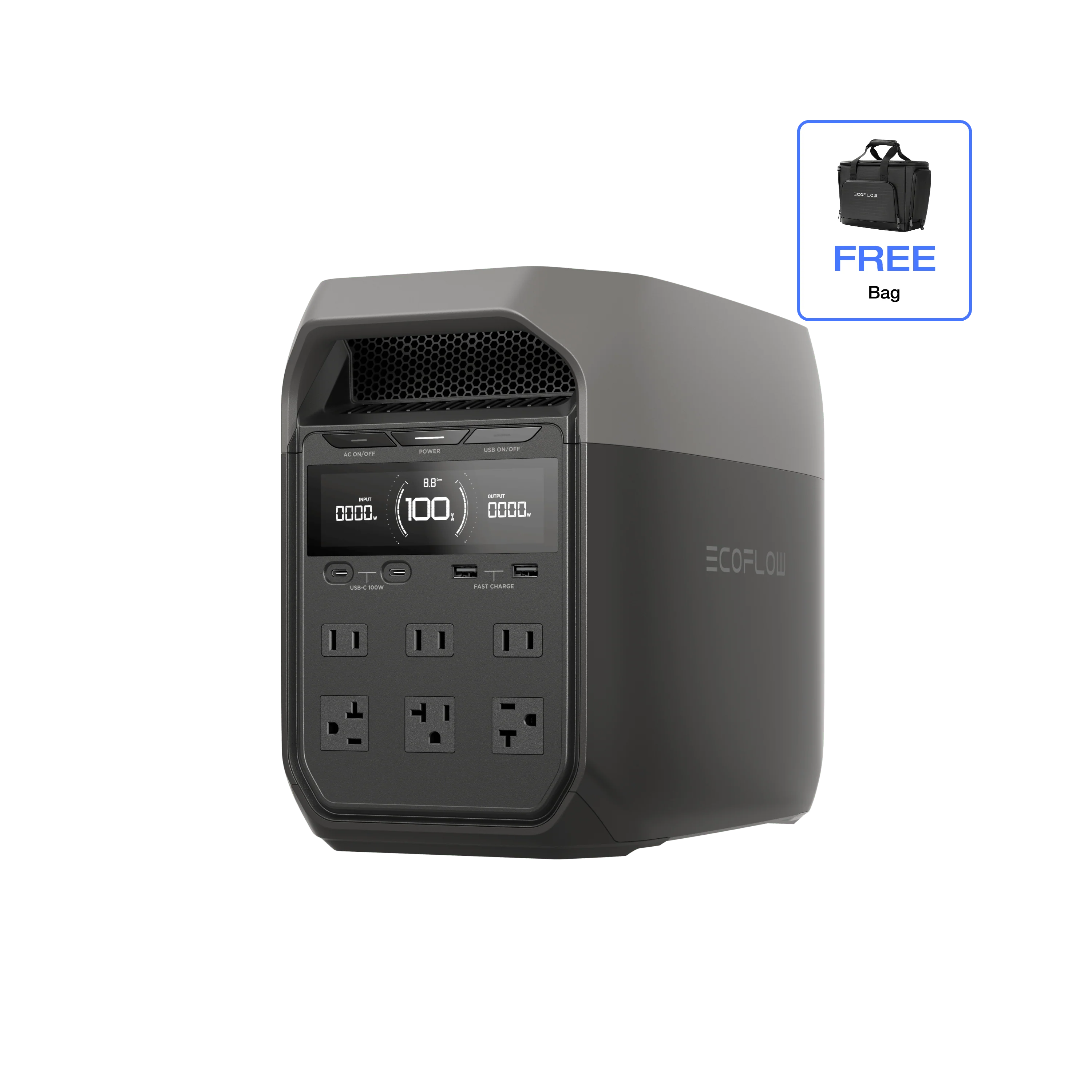
The EcoFlow Delta 3 keeps the Delta 2's winning 1024Wh/1800W formula but adds faster charging, a quieter fan, a 4,000-cycle battery, and Storm Guard auto-backup. Based on published specs, here's what's actually new — and whether your…
The question every Delta 2 owner is asking
The EcoFlow Delta 2 has been the default 1kWh recommendation for years. Now the Delta 3 (base model, not the Plus) keeps the same 1024Wh capacity and 1800W output — so is it actually an upgrade, or just a refresh? Based on EcoFlow's published specifications, the answer is nuanced: the Delta 3 is meaningfully better in daily use (faster, quieter, longer-lived battery, smarter storm features), but it doesn't do anything the Delta 2 can't do. Here's the full breakdown — including the confusing three-model Delta 3 lineup, so you don't buy the wrong variant.
This is a research-based comparison: every figure comes from EcoFlow's official documentation. We did not bench-test either unit.

Side-by-side specs
| Spec | EcoFlow Delta 3 (base) | EcoFlow Delta 2 |
|---|---|---|
| Capacity | 1024Wh LiFePO4 | 1024Wh LiFePO4 |
| AC output | 1800W / 3600W surge | 1800W / 2700W surge |
| X-Boost | Up to ~2600W | Up to 2200W |
| Cycle life | 4000 cycles to 80% | 3000 cycles to 80%+ |
| AC recharge | 1500W input — 0–100% in ~56 min | 1200W input — 0–80% in ~50 min, full in ~80 min |
| Solar input | 500W max | 500W max |
| UPS switchover | <10 ms | EPS mode (fast switchover) |
| Noise | ~30 dB under load (X-Quiet 3.0) | Fan noise widely noted under load (~57 dBA measured by one reviewer at 3 ft) |
| Smart features | Storm Guard auto-backup, generator auto start/stop, app scheduling | EcoFlow app (monitoring, scheduling, firmware) |
| Battery protection | IP65-rated battery pack | Standard BMS protection |
| Outlets (total) | 13 | 15 |
| Expandable | Yes — to 5kWh | Yes — to 2048Wh / 3040Wh |
| Weight | ~27.6 lbs | 27 lbs |
| Warranty | 5 years | 5 years |
| Typical price (Oct 2026) | ~$599 (list $699) | ~$350–$600 on sale (list ~$999) |
What's actually new in the Delta 3
1. Faster wall charging
The Delta 3's 1500W AC input fills the pack in about 56 minutes — roughly 25 minutes quicker than the Delta 2's 80-minute full charge. Both are fast; the Delta 3 is just faster, which matters when you're topping off between storm bands.
2. Meaningfully quieter
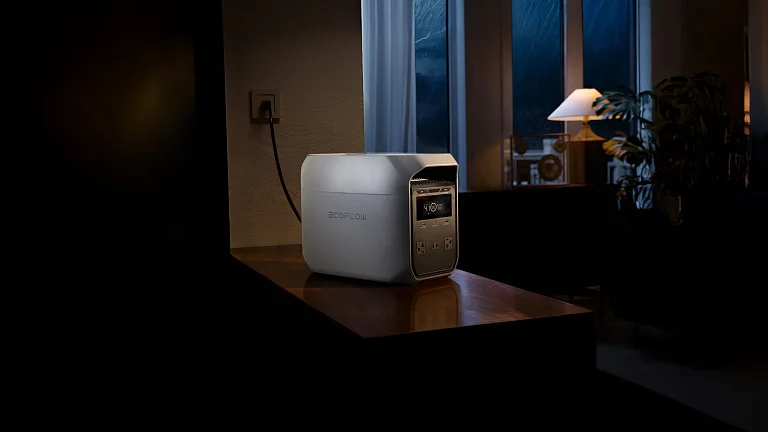
This is the upgrade owners will feel most. The Delta 2's fan noise under load is its most consistent complaint (one reviewer measured 57 dBA at three feet). The Delta 3's X-Quiet 3.0 stepless fan control targets ~30 dB under load — a different league for bedroom, office, or living-room use.
3. A longer-lived battery
4000 cycles to 80% vs 3000 — roughly 13 years of daily cycling vs 10. Both are excellent; the Delta 3 just stretches the replacement horizon further.
4. Storm Guard and smarter automation
The Delta 3's headline software feature: Storm Guard mode watches weather alerts and auto-starts charging when severe weather is forecast — so the unit is full before the storm even without you thinking about it. Generator auto start/stop adds hands-off extended backup for those with EcoFlow's smart generator.
5. Tougher build
An IP65-rated battery pack (dust-tight, water-jet resistant), a cell-to-chassis structure, and 95% humidity tolerance make the Delta 3 the more rugged unit — relevant for garages, sheds, and job sites.
What didn't change (and what got slightly worse)
Capacity and output are identical: 1024Wh and 1800W. If your Delta 2 already runs everything you need, the Delta 3 won't run anything new — it just does the same job faster, quieter, and longer. In day-to-day use, that means the same fridge runtime (7–14 hours), the same CPAP coverage (~17 hours at 40W), and the same set of appliances on the "yes" list. The upgrade is entirely about experience — less fan noise in the living room, less waiting by the wall outlet, fewer battery replacements over the decades — not capability.
Two small regressions to note: the Delta 3 has 13 total outlets vs the Delta 2's 15, and its surge rating structure changed (3600W surge but X-Boost behavior differs by variant — check the specific model's rating for motor loads).
Should you upgrade?
- Own a Delta 2 and it works fine? Don't upgrade. Same capacity, same output — you'd be paying for quieter fans and faster charging you may not need.
- Delta 2's fan noise bothers you? This is the best reason to switch. The ~30 dB target vs the Delta 2's widely criticized fan noise is the single biggest quality-of-life difference.
- Buying your first 1kWh unit? Buy the Delta 3 — it's the better product at a similar street price (~$599), with the longer-lived battery and Storm Guard.
- Delta 2 on deep clearance? At $350–$450, the Delta 2 remains the value king. The Delta 3's advantages aren't worth double the price.
- Need the absolute fastest recharge? The Delta 3's 56-minute full charge is the fastest in the 1kWh class.
A quick note on the Delta 3 lineup (don't buy the wrong one)
EcoFlow's naming is confusing right now, so be careful at checkout. There are three distinct 1kWh models:
- Delta 3 (base) — the one in this comparison: 1500W AC input, 500W solar, 13 outlets, expandable to 5kWh, Storm Guard, generator auto start/stop.
- Delta 3 Plus — the step up: 1000W solar input, faster USB-C (2× 140W), same expandability.
- Delta 3 Classic — the budget version: 1400W AC input, only 6 outlets, no 12V DC port, and not expandable. Cheaper, but you give up the growth path.
If a deal looks too good to be true, check which variant it is — the Classic's missing expandability is the catch most buyers overlook.
FAQ
Is the Delta 3 worth it if I already own a Delta 2?
Only for specific reasons: the quieter fan, the 56-minute recharge, or Storm Guard automation. Capacity and output are identical, so it won't power anything new.
Which is better for a first-time buyer?
The Delta 3 — same street price as the Delta 2 most of the time, with a longer-lived battery, quieter operation, and smarter storm features.
Does the Delta 3 work with my Delta 2 extra battery?
The Delta 3 supports EcoFlow's Delta 3, Delta 2, and Delta Pro 3 extra batteries for expansion to 5kWh — so existing Delta 2 battery owners keep their investment. Note that the Delta 3 Classic variant is the exception: it has no expansion port at all, so if growing capacity later matters to you, make sure you're buying the base Delta 3 or Plus, not the Classic.
Delta 3 vs Delta 3 Plus — which should I get?
The Plus doubles solar input (1000W vs 500W) and upgrades USB-C to 140W ports. If you'll charge heavily from solar or run USB-C laptops all day, the Plus earns its premium; otherwise the base Delta 3 is the value pick.
Verdict
The Delta 3 is a genuine generational improvement — quieter, faster-charging, longer-lived, and smarter — but it's an evolution, not a revolution. Delta 2 owners should only upgrade for the noise reduction or Storm Guard automation; everyone else should buy whichever of the two is cheaper at checkout, leaning Delta 3 at price parity. Either way, you're getting the best 1kWh platform EcoFlow has ever made — and with both units regularly discounted, the real winner is whoever checks the price on the day they buy.
About our reviews
Specs come from published manufacturer data sheets, cross-checked against owner feedback. Figures go stale. Check the current data sheet before you buy. This is not electrical or purchasing advice.
Related guides
 ComparisonsJackery Explorer 2000 v2 vs Bluetti Elite 200 V2The two best 2kWh values of 2026 head-to-head: Jackery Explorer 2000 v2 (2042Wh, 2200W, 39.5 lbs) vs Bluetti Elite 200 V2…
 ComparisonsBluetti Apex 300 vs Anker Solix F3800Two heavyweights of home backup: the Bluetti Apex 300 offers 3,840W and a 6,000-cycle battery, while the Anker Solix F3800…
 ComparisonsEcoFlow Delta Pro 3 vs Jackery HomePower 3000Two 3–4kWh home backup heavyweights: the EcoFlow Delta Pro 3 (4096Wh, 4000W, 240V) versus the Jackery HomePower 3000 (3072Wh,…