Anker Solix C1000 vs EcoFlow Delta 2: 1kWh Duel
4 min read
On this page
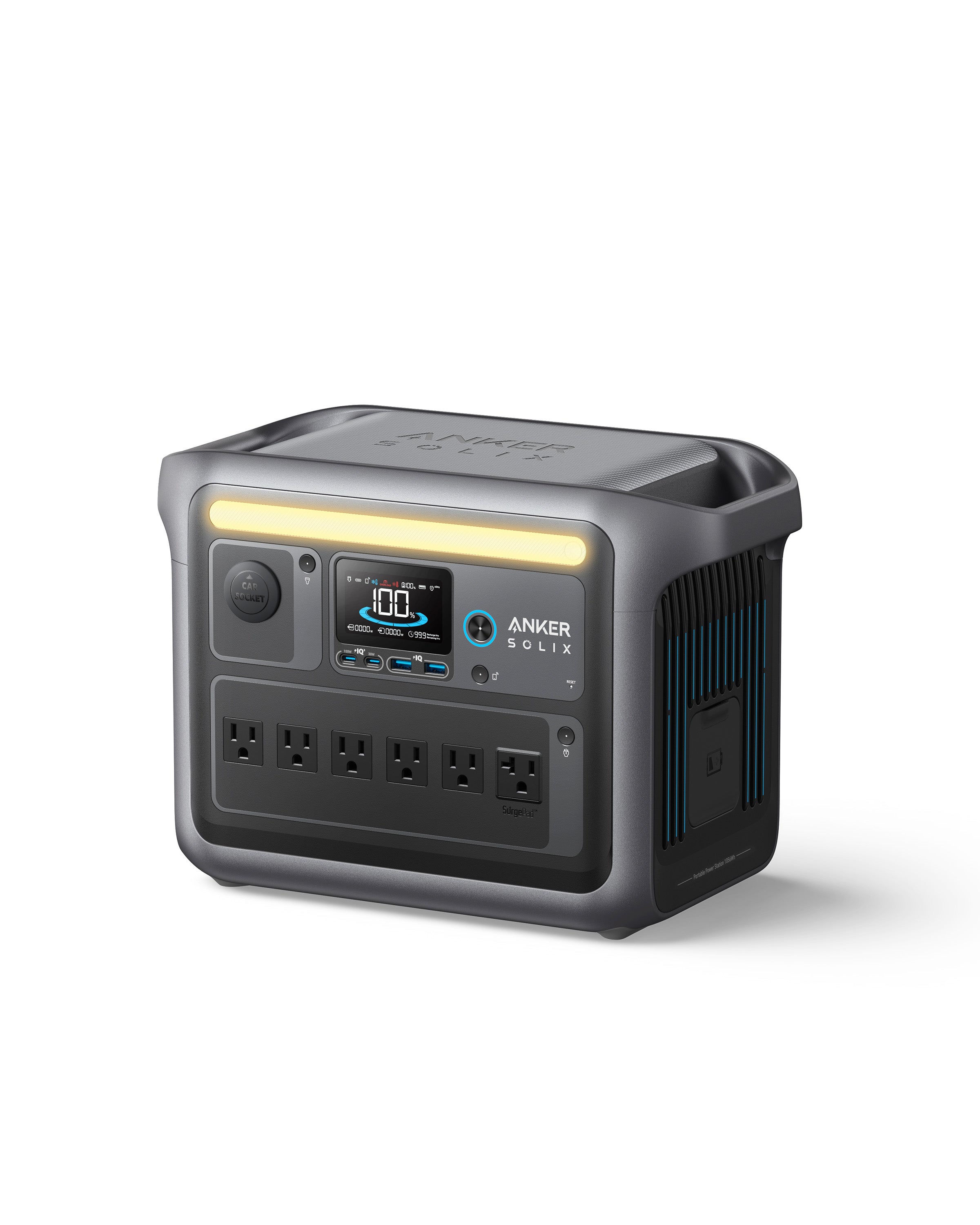
The two defining 1kWh power stations compared: Anker Solix C1000 (1056Wh, 1800W, 58-min recharge) vs EcoFlow Delta 2 (1024Wh, 1800W, 80-min recharge). Based on published specs and owner feedback — charging, solar, expandability, and…
The 1kWh class, settled (mostly)
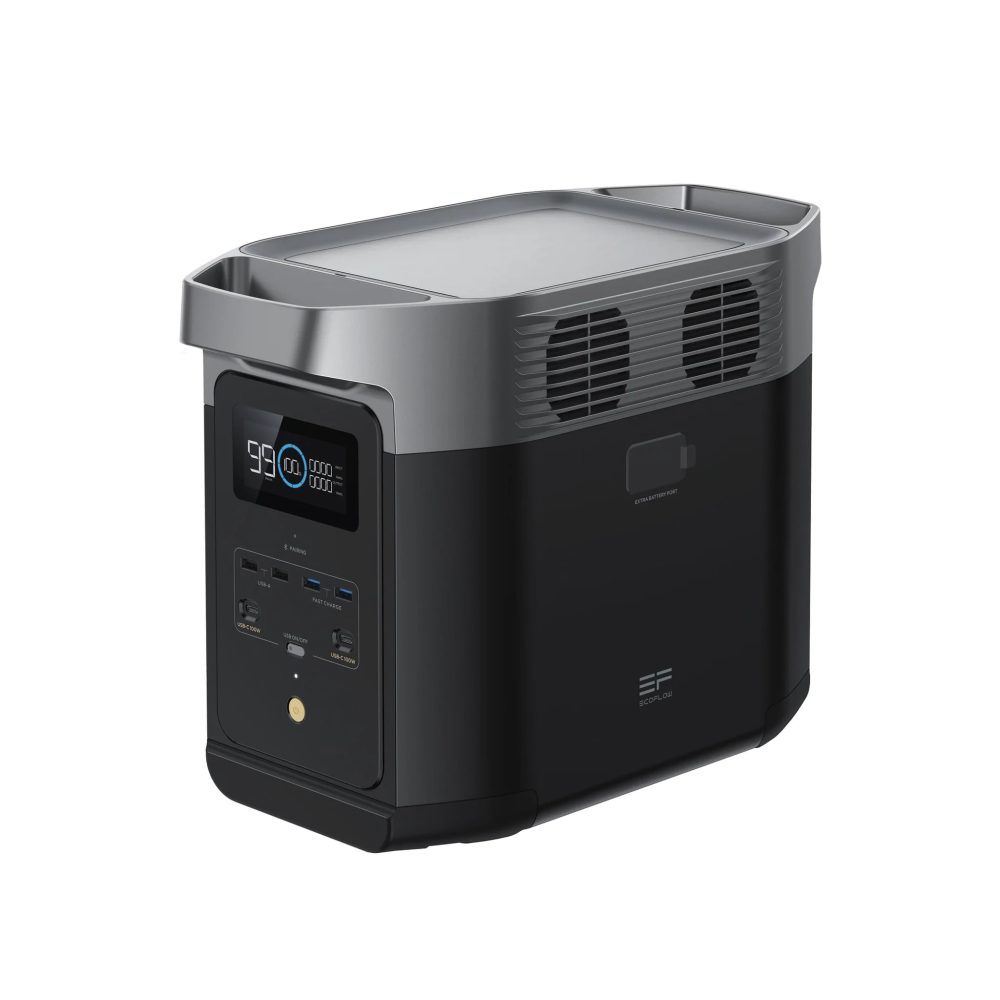
Few rivalries in portable power are as close as this one. The Anker Solix C1000 (1056Wh, 1800W) and the EcoFlow Delta 2 (1024Wh, 1800W) are both LiFePO4, both 3000-cycle, both 5-year-warranty, both ~28 lbs, and both frequently on sale in the $350–$600 range. The differences are in the details: the Anker charges faster and takes more solar; the EcoFlow expands further and costs less on deep discount. This is a research-based comparison from official specs and owner feedback — we did not bench-test either unit. (Note: Anker has since released the C1000 Gen 2 with 2000W output; this compares the original C1000.)
The bottom line up front: you can't lose here — both are 1800W/1kWh LiFePO4 with 3000-cycle batteries and 5-year warranties. The Anker Solix C1000 wins on charging speed (58-minute full recharge) and solar input (600W). The EcoFlow Delta 2 wins on expansion ceiling (3040Wh vs 2112Wh) and deep-sale pricing (as low as ~$350). Pick by whichever is cheaper the week you buy, unless fast recharging is your priority.

Side-by-side specs (verified)
| Spec | Anker Solix C1000 | EcoFlow Delta 2 |
|---|---|---|
| Capacity | 1056Wh (LiFePO4) | 1024Wh (LiFePO4) |
| AC output | 1800W (2400W SurgePad) | 1800W (2700W surge, 2200W X-Boost) |
| AC outlets | 6× | 6× |
| Cycle life | 3000 cycles to 80% | 3000 cycles to 80%+ |
| AC recharge | 80% in 43 min / 100% in 58 min (UltraFast) | 80% in ~50 min / 100% in ~80 min (X-Stream) |
| Solar input | 600W max (11–60V MPPT) | 500W max (11–60V, 15A) |
| UPS | <20ms | EPS (fast switchover) |
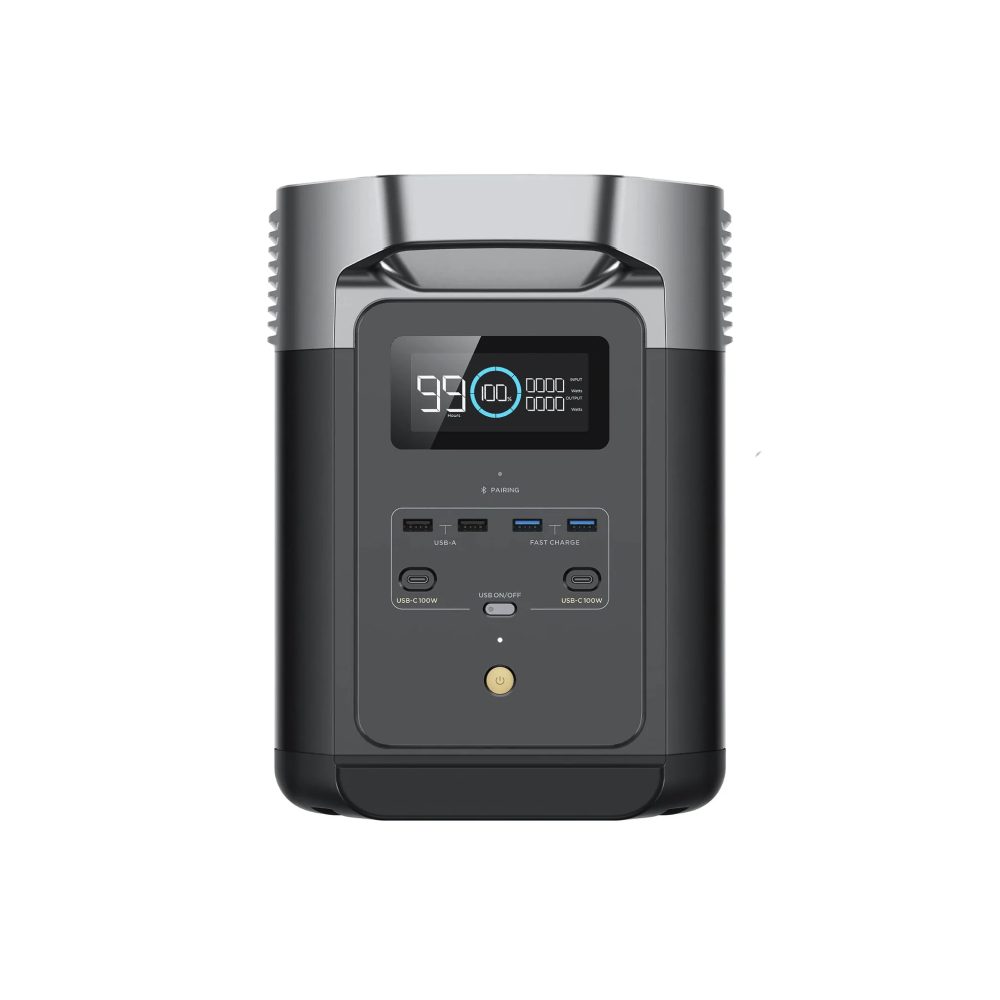
| USB | USB-C 100W + 30W, 2× USB-A 12W | 2× USB-C 100W, 2× USB-A 12W + 2× 18W |
| Expandable | Yes — to 2112Wh (BP1000 battery) | Yes — to 3040Wh (extra batteries) |
| Extras | Light bar, smart app | EcoFlow app, 15 outlets total |
| Weight | 28.44 lbs (12.9 kg) | 27 lbs (12 kg) |
| Warranty | 5 years | 5 years |
| Typical sale price (Oct 2026) | ~$470 | ~$350–$600 on sale |
Specs from Anker's and EcoFlow's official product pages; prices observed October 2026 and subject to change.
Head-to-head
Capacity and output: tie
1056Wh vs 1024Wh and 1800W vs 1800W — functionally identical. Both run a fridge 7–14 hours, a 40W CPAP ~17 hours, and a 12V car fridge 16–32 hours. Surge handling differs slightly (Anker's 2400W SurgePad vs EcoFlow's 2700W surge / 2200W X-Boost), but both cover 99% of household appliances.
Charging speed: C1000 wins
Anker's UltraFast mode does 0–100% in 58 minutes — the fastest full recharge in the 1kWh class — versus ~80 minutes for the Delta 2's X-Stream. The 80% marks are closer (43 vs ~50 min), but if you top off frequently, the Anker's pace is noticeable.
Solar: C1000 wins
600W vs 500W max solar input. Neither is a solar monster, but the Anker refills ~20% faster from the sun — about 1.8 hours with a full 600W array in ideal conditions vs ~3 hours for the Delta 2.
Expandability: Delta 2 wins
The Delta 2 scales to 3040Wh with EcoFlow's extra batteries; the C1000 tops out at 2112Wh with the BP1000. If you might outgrow 1kWh, the EcoFlow's ceiling is 50% higher.
Ports and extras: slight edge Delta 2
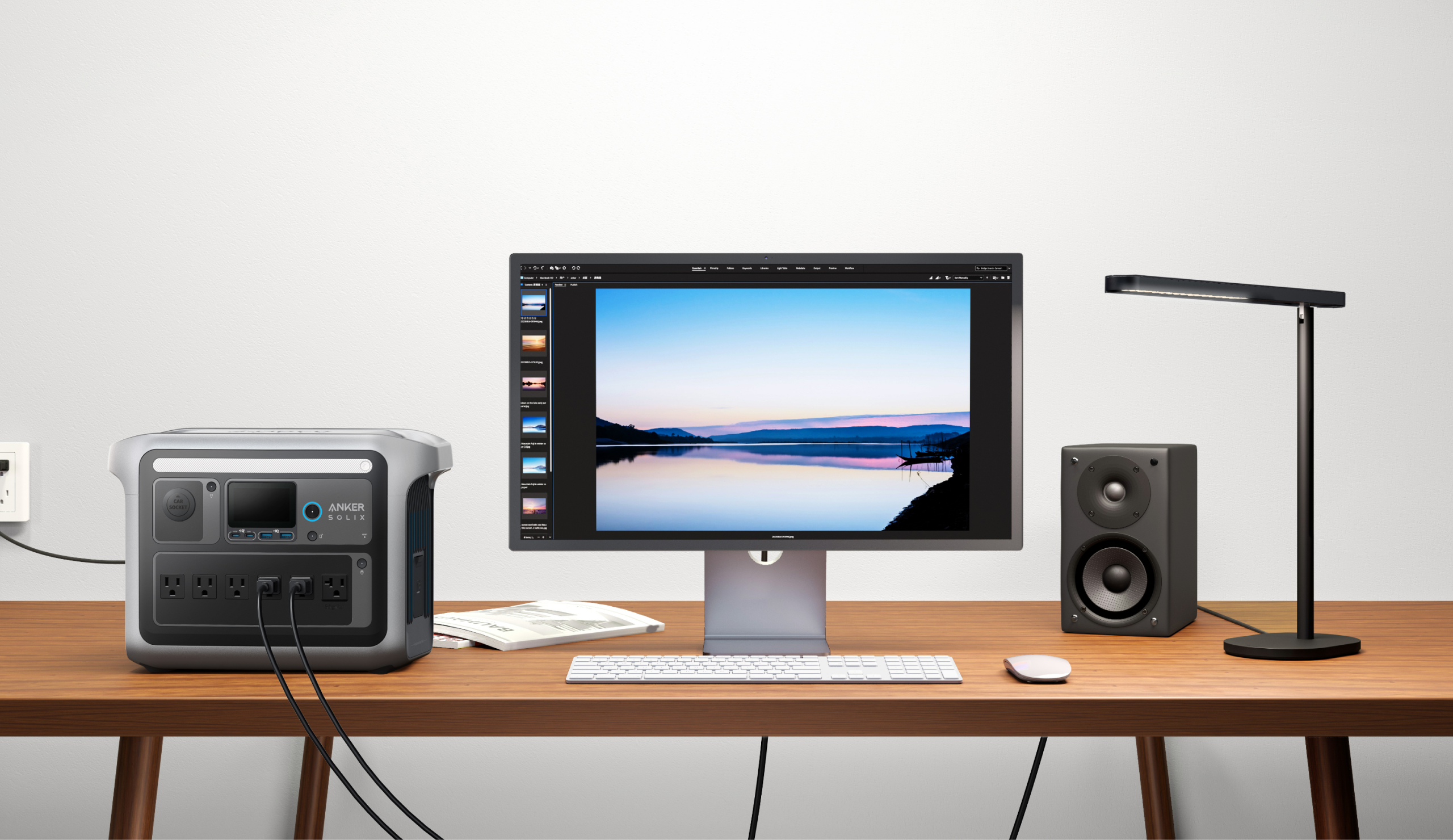
Both have 6 AC outlets and 100W USB-C. The Delta 2 packs 15 total outlets (including DC5521 barrel ports and a 126W car port); the Anker counters with a handy built-in light bar — genuinely useful at a campsite.
Portability: tie
27 vs 28.4 lbs — both are one-hand carries for short distances and car-camping-friendly. Neither is a backpacking unit.
Price: Delta 2 wins on deep sales
The C1000 sat around $470 in October 2026 sales; the Delta 2 has dipped as low as ~$350 during 2026 promotions (typically $350–$600). At list-ish prices they're close; on a deep Delta 2 sale, the EcoFlow is the value pick.
Winner by use case
- Fastest daily recharge → Solix C1000. 58-minute full charge is class-leading.
- Biggest expansion headroom → Delta 2. 3040Wh max vs 2112Wh.
- Solar-first camping → Solix C1000. 600W input + light bar.
- Maximum outlets/devices → Delta 2. 15 total ports.
- Lowest price on sale → Delta 2. Watch for sub-$400 deals.
- Set-and-forget home backup → either. Both have UPS/EPS modes and 5-year warranties.
Verdict
You can't go wrong here — these are the two best 1kWh stations ever made, and the "loser" is excellent. Buy the Anker Solix C1000 if charging speed and solar matter most: 58-minute full recharges and 600W solar are genuinely best-in-class. Buy the EcoFlow Delta 2 if you want the bigger expansion ceiling (3040Wh), more ports, or the lowest sale price — it regularly dips toward $350. Either way, you're getting 1kWh of decade-grade LiFePO4 with a 5-year warranty for well under $600.
FAQ
Which is better, Solix C1000 or Delta 2?
The C1000 charges faster (58 min full) and takes more solar (600W); the Delta 2 expands further (3040Wh) and goes cheaper on sale (~$350). For most buyers it's a toss-up decided by the current sale price.
Can either power a refrigerator?
Yes, both. Their 1800W inverters start any household fridge; expect roughly 7–14 hours of runtime depending on the fridge's duty cycle.
How fast do they charge?
C1000: 80% in 43 min, 100% in 58 min (UltraFast mode). Delta 2: 80% in ~50 min, 100% in ~80 min (X-Stream).
Should I get the C1000 Gen 2 instead?
The Gen 2 bumps output to 2000W with 1024Wh at a similar price (~$500 on sale). If you need the extra 200W of headroom, it's worth considering — but the original C1000's deeper discounts often make it the better value.
About our reviews
Specs come from published manufacturer data sheets, cross-checked against owner feedback. Figures go stale. Check the current data sheet before you buy. This is not electrical or purchasing advice.
Related guides
 ComparisonsJackery Explorer 2000 v2 vs Bluetti Elite 200 V2The two best 2kWh values of 2026 head-to-head: Jackery Explorer 2000 v2 (2042Wh, 2200W, 39.5 lbs) vs Bluetti Elite 200 V2…
 ComparisonsBluetti Apex 300 vs Anker Solix F3800Two heavyweights of home backup: the Bluetti Apex 300 offers 3,840W and a 6,000-cycle battery, while the Anker Solix F3800…
 ComparisonsEcoFlow Delta 3 vs Delta 2: Should You Upgrade?The EcoFlow Delta 3 keeps the Delta 2's winning 1024Wh/1800W formula but adds faster charging, a quieter fan, a 4,000-cycle…