Anker Solix C2000 Gen 2 Review: Value 2kWh King
7 min read
On this page
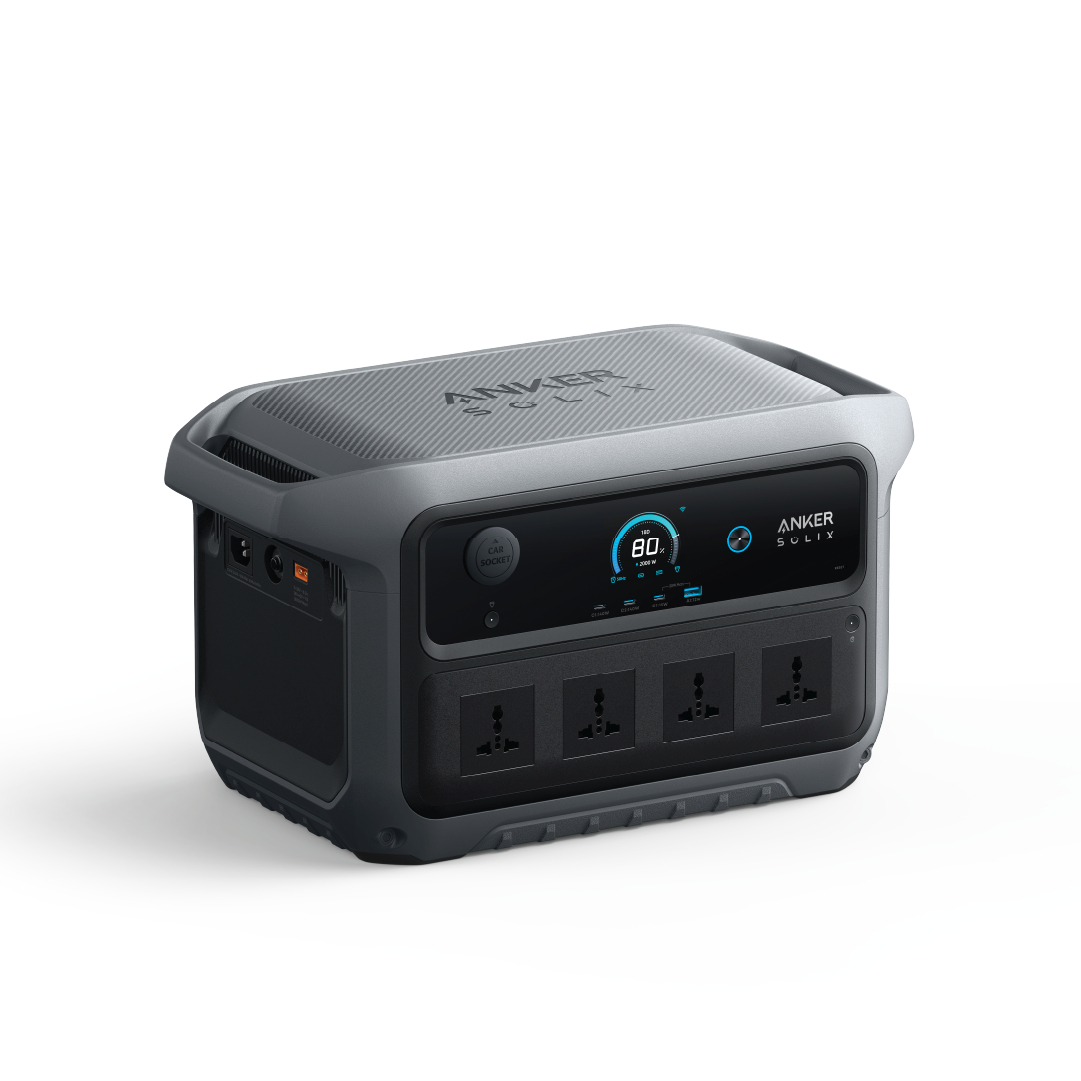
The Anker Solix C2000 Gen 2 delivers 2048Wh of LiFePO4 storage, 2400W of output, dual 140W USB-C ports, and an 800W solar input for around $899 — hundreds less than EcoFlow and Bluetti rivals. Based on published specs, expert reviews,…
The short version
The Anker Solix C2000 Gen 2 is the value disruptor of the 2kWh class. For around $899 as of Oct 2026 — hundreds less than the EcoFlow Delta 3 Max (~$1,399) and Bluetti AC200L (~$1,199) — you get 2048Wh of 4000-cycle LiFePO4 storage, 2400W of continuous output (4000W peak), a 58-minute full recharge with combined AC+solar input, dual 140W USB-C ports, a TT-30 RV outlet, an 800W solar input, and expansion to 4kWh with the BP2000 battery. Its party trick is efficiency: a 9W idle draw (Anker's OptiSave) means it sips power in UPS standby instead of draining itself. The trade-offs are a slower wall-only recharge than EcoFlow's 68-minute X-Stream, a brand with less backup-power heritage than EcoFlow or Bluetti, and high demand that has caused shipping delays. If you want maximum 2kWh capability per dollar, this is the current benchmark.
This is a research-based review: every spec below comes from Anker's official documentation, and the strengths and weaknesses reflect patterns across published expert reviews and verified owner feedback. We did not bench-test this unit.

Anker Solix C2000 Gen 2 key specs (verified)
| Spec | Anker Solix C2000 Gen 2 |
|---|---|
| Capacity | 2048Wh (51.2V / 40000mAh LiFePO4) |
| AC output | 2400W continuous, 4000W peak; NEMA 5-20R outlets + TT-30R RV outlet + bi-directional inlet box |
| Battery chemistry / cycle life | LiFePO4 — 4000 cycles (Anker rates it for ~10 years of use) |
| AC + solar recharge | 80% in ~45 min, 100% in ~58 min with combined AC + solar input |
| AC recharge (wall only) | 1800W max input, under 3 hours |
| Solar input | 800W max via XT-60i (11–60V, 17A max) |
| Alternator charging | 800W UltraFast alternator charging (accessory) — 100% in ~3 hrs, ~8× faster than a car socket |
| USB ports | 2× USB-C (140W each), 1× USB-C (15W), 1× USB-A (12W) |
| Other DC | 1× car charger output (12V/10A) |
| Expandable | Yes — +BP2000 (Gen 2) expansion battery for 4096Wh total |
| Idle power draw | 9W (OptiSave) — among the lowest in the class |
| Connectivity | Wi-Fi + Bluetooth, Anker app (monitoring, Time-of-Use, Storm Guard, Fast Charging Plan modes) |
| UPS mode | 10ms automatic switchover |
| Weight / dimensions | 41.7 lbs (18.9 kg) / 18.1 × 9.8 × 10.1 in |
| Warranty | 5-year warranty |
Specs sourced from Anker's official product pages (US + PH) and Anker's published spec tables.
Standout features
1. The best dollars-per-watt-hour in the 2kWh class
At ~$899 on ankersolix.com as of Oct 2026 (and as low as ~$850 during October Prime Day sales), the C2000 Gen 2 undercuts the EcoFlow Delta 3 Max by roughly $500 and the Bluetti AC200L by roughly $300 — while matching them on the specs that matter: 2048Wh, 2400W, LFP chemistry, 5-year warranty. This is the unit that forced the whole class to justify its pricing.
2. 58-minute full recharge (with solar assist)
Anker claims 80% in 45 minutes and 100% in 58 minutes using combined AC + solar input — the fastest full recharge claim in the class. Wall-only charging is slower (1800W, under 3 hours), so the headline number needs the solar panels — but for anyone with panels, it's genuinely the quickest turnaround available.
3. 9W idle draw: the UPS standby champion
Most power stations burn 15–30W just sitting in UPS mode, silently draining themselves between outages. Anker's 9W idle consumption (OptiSave) is roughly half the class average — a real, practical advantage for the "plugged in 24/7 waiting for a blackout" use case. Anker rates a dual-door fridge at up to 32 hours on the base unit, 64 hours with the expansion battery.
4. Dual 140W USB-C + TT-30 RV port
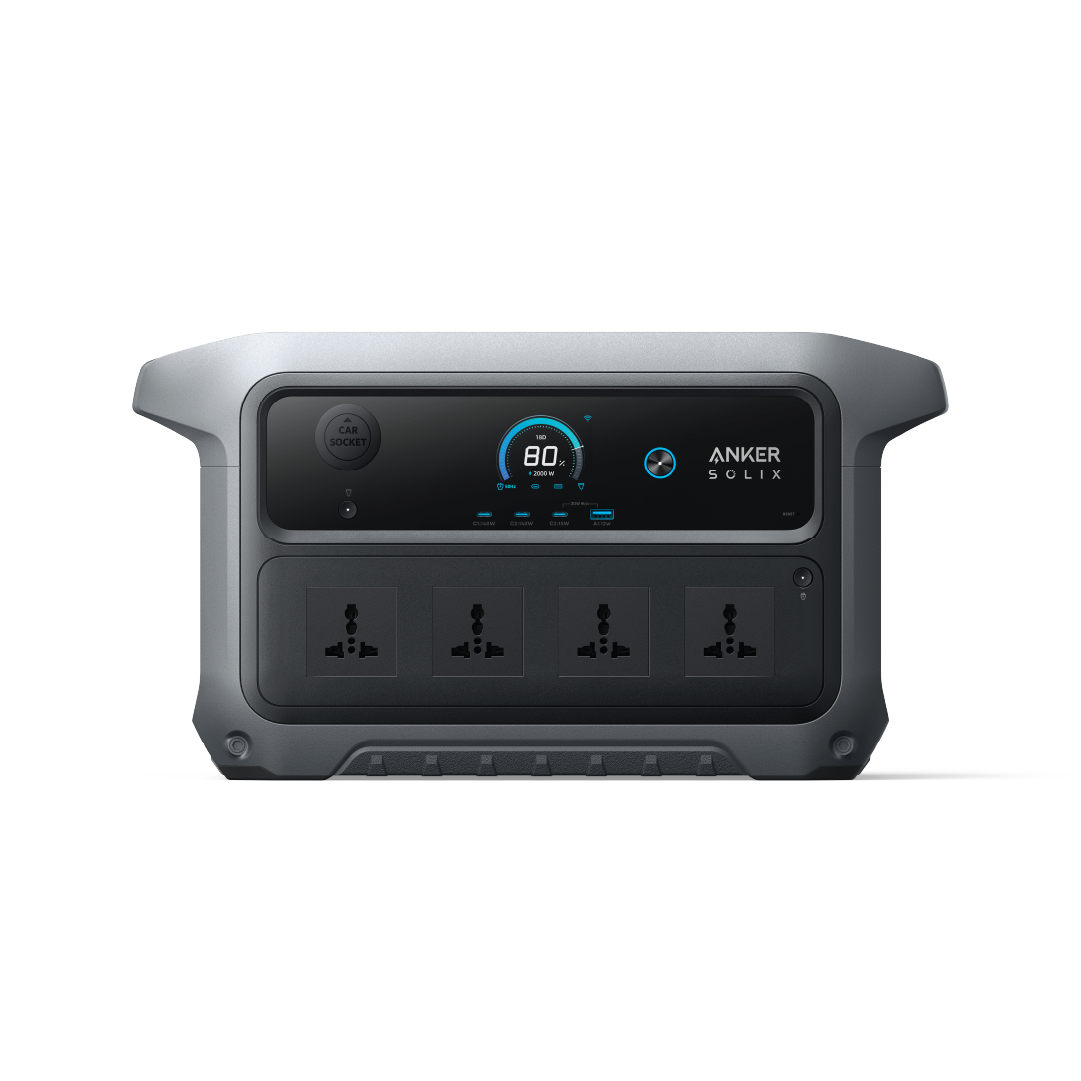
Two full 140W USB-C ports charge modern laptops at full speed simultaneously — better than EcoFlow's 100W+30W setup and Jackery's 100W+30W. The TT-30R RV outlet means direct connection to a travel trailer without adapters, and the 800W alternator charger accessory tops up from your vehicle ~8× faster than a cigarette-lighter socket.
Battery & charging, in detail
Six recharge paths: wall (1800W), solar (800W via XT-60i), car socket, generator, alternator charger (800W accessory), and combined AC+solar for the headline 58-minute full charge. The app offers four working modes — Standard, Time-of-Use (charge off-peak, discharge on-peak to cut electricity bills), Storm Guard, and Fast Charging Plan. The 4000-cycle LFP rating matches Jackery's best and beats Bluetti's 3000, and Anker designs for a 10-year service life. Operating range is -4°F to 104°F discharge, 32°F to 104°F charge.
Real-world use cases (with honest capacity math)
Using Anker's published figures and straightforward watt-hour math (2048Wh × ~85% efficiency ÷ load):
Home backup during an outage
Anker's headline figure: a dual-door fridge runs up to 32 hours — roughly two days of food safety per charge. A ~120W full-size fridge runs an estimated 14 hours by the math; Anker's 32-hour figure likely assumes a smaller or efficient fridge, so treat it as a best case. A microwave (1300W) gets roughly an hour of cumulative use. The 10ms UPS keeps routers, PCs, and NAS boxes online through the switchover.
CPAP overnight
A 40W CPAP runs an estimated 40+ hours — several nights per charge. One owner report cited ~21% battery used over 6 hours with a heated humidifier and hose warmer running (roughly 70W average draw) — consistent with the math. The 10ms UPS makes it a solid bedside backup. (Check with your doctor about backup-power use regardless of brand.)
RV and camping
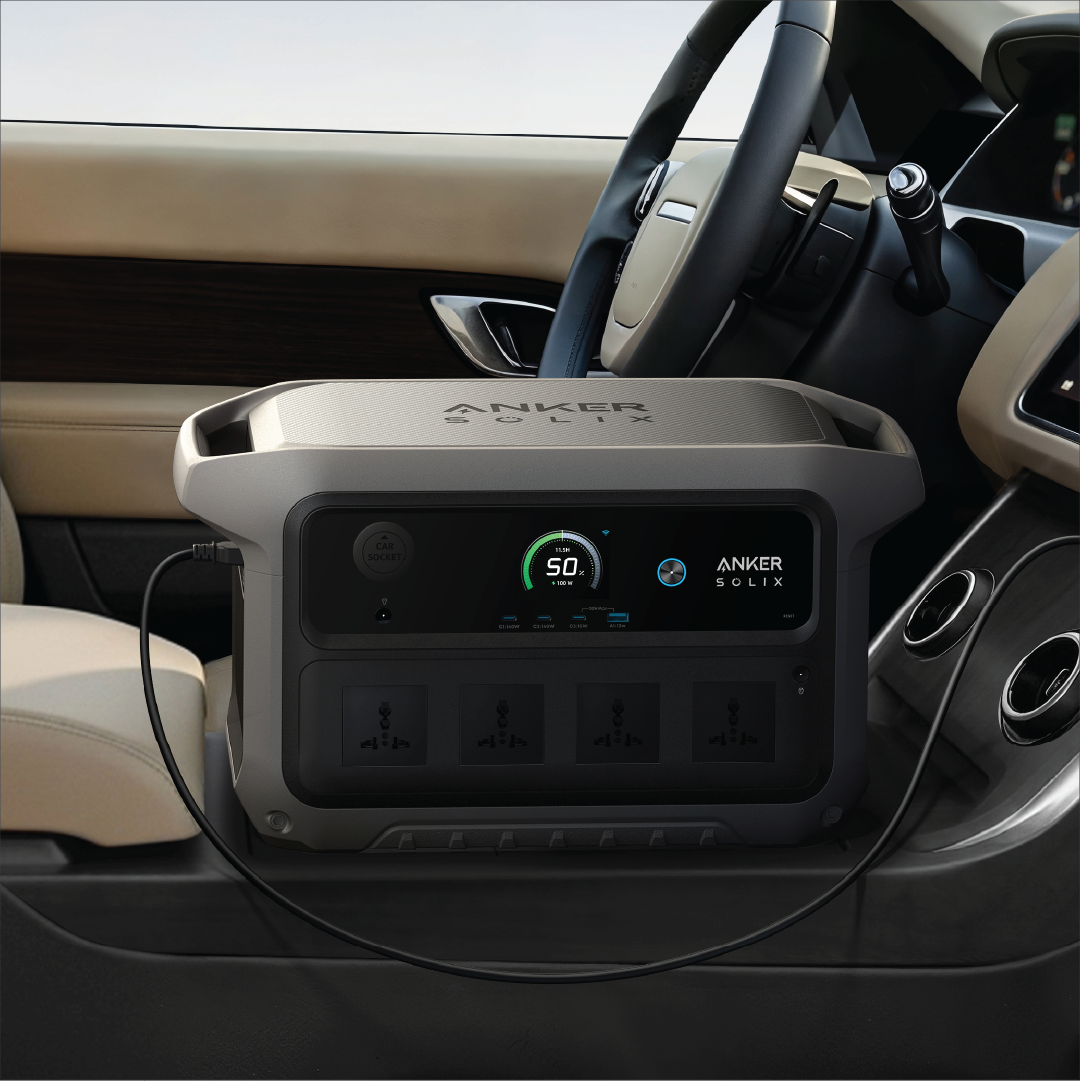
The TT-30R outlet connects directly to a travel trailer; the 800W alternator charger refills the unit while driving between campsites. A 12V fridge (~60W) runs an estimated 29+ hours. At 41.7 lbs it's lighter than the EcoFlow and far lighter than the Bluetti — a manageable one-person carry.
Window AC and heavy loads
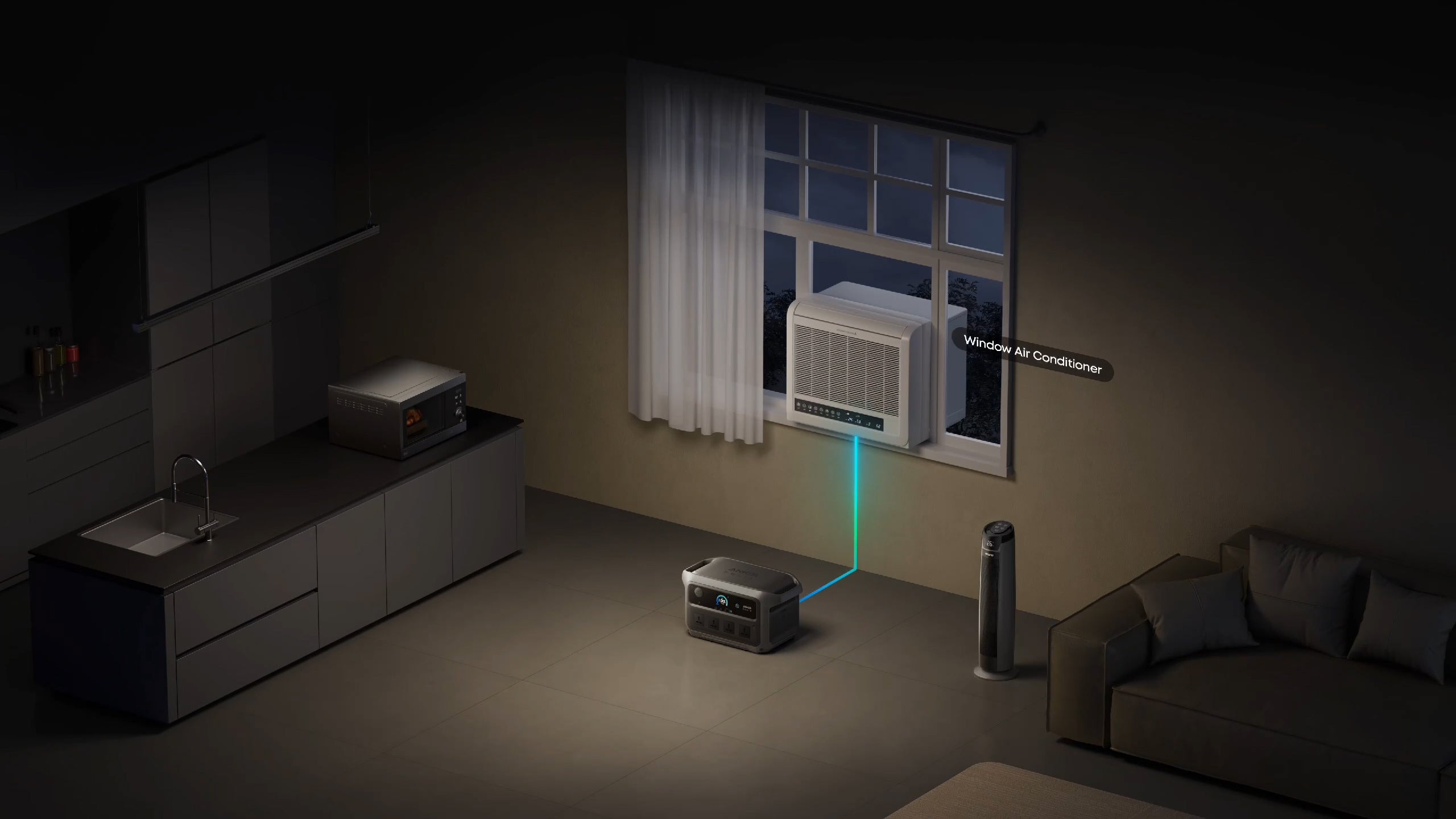
Anker's own marketing shows the C2000 Gen 2 running a window air conditioner — a ~1000W unit gets roughly 1.7 hours. The 4000W peak handles motor startup surges that trip lesser inverters. This is short-burst territory, not all-night cooling, but it works for the hottest hours of an outage.
What it won't do
It won't recharge from the wall as fast as the EcoFlow Delta 3 Max (68 min wall-only vs under 3 hours here) — the 58-minute claim needs solar panels connected. It won't expand past 4kWh (one BP2000 only), where the Bluetti goes to 8kWh. And it won't run central AC or an electric furnace for any meaningful duration.
What could be better
The consistent criticisms across expert reviews and owner feedback:
- Wall-only charging is mid-pack. 1800W / under 3 hours is fine, but EcoFlow's 2300W X-Stream (68 min) and Bluetti's 2400W (45 min) are much faster from the wall alone. The 58-minute headline needs solar connected.
- High demand, shipping delays. Anker's own US page noted orders shipping from October 16 due to demand at the time of writing. Stock comes and goes around sales.
- One expansion battery only. The BP2000 takes you to 4kWh — good, but the Bluetti AC200L scales to 8kWh for serious whole-home ambitions.
- Newer to the backup-power game. Anker's power-station track record is shorter than EcoFlow's or Bluetti's. The 5-year warranty mitigates this, but brand trust is earned over years.
- USB-A is weak. A single 12W USB-A port (and a 20W combined limit when used with the 15W USB-C) is stingy — though the dual 140W USB-C ports are the real story anyway.
Who should buy it
- Value-first buyers — the most 2kWh capability per dollar in this roundup, full stop.
- Always-plugged-in UPS users — the 9W idle draw is the best in class for standby backup duty.
- Solar owners who can use the 800W solar input to hit the 58-minute full recharge.
- Multi-laptop households and RVers — dual 140W USB-C and the TT-30 RV port cover both.
Who should skip it
- If wall-charge speed is the top priority, the EcoFlow Delta 3 Max (68 min) and Bluetti AC200L (45 min) are faster without needing solar.
- If you plan to scale past 4kWh, the Bluetti AC200L's 8kWh ceiling is the better platform.
- If you need the unit immediately and it's backordered, the Jackery 2000 v2 is widely available at a similar price.
FAQ
How long does the Anker Solix C2000 Gen 2 take to charge?
80% in ~45 minutes and 100% in ~58 minutes with combined AC + solar input, per Anker. Wall-only charging takes under 3 hours (1800W max). The 800W alternator charger accessory refills it in ~3 hours of driving.
Is the Anker Solix C2000 Gen 2 expandable?
Yes — pair it with the Anker Solix BP2000 (Gen 2) expansion battery for 4096Wh total. Only one expansion battery is supported.
Can the Anker Solix C2000 Gen 2 power a refrigerator?
Yes. Anker rates a dual-door fridge at up to 32 hours (64 hours with the expansion battery). Real-world runtime depends on the fridge's size and duty cycle.
What is the idle power consumption of the Anker Solix C2000 Gen 2?
Just 9W, per Anker — roughly half the class average. That makes it unusually efficient as an always-plugged-in UPS backup.
What is the Anker Solix C2000 Gen 2's warranty?
A 5-year warranty, matching EcoFlow, Bluetti, and Jackery's extended coverage.
Verdict
The C2000 Gen 2 is the easiest recommendation in the 2kWh class for one reason: it gives you ~95% of what the $1,200–$1,400 flagships offer for ~$899. The 9W idle draw, dual 140W USB-C, TT-30 RV port, and 58-minute solar-assisted recharge are genuinely best-in-class features, not spec-sheet padding. The wall-only charge speed and single-battery expansion ceiling are real compromises, but they're the right ones to make at this price. If you're buying one 2kWh station for home backup in 2026 and value matters, start here — and check for sale pricing, because Anker discounts this unit aggressively.
Pricing note: the C2000 Gen 2 listed around $899 on ankersolix.com as of Oct 2026 (list ~$1,599), with event pricing observed as low as ~$850. Check the current price before buying.
About our reviews
Specs come from published manufacturer data sheets, cross-checked against owner feedback. Figures go stale. Check the current data sheet before you buy. This is not electrical or purchasing advice.
Related guides
 ReviewsDJI Power 500 Review: The Drone Pilot's 512Wh StationThe DJI Power 500 packs 512Wh of LFP storage with 1000W of continuous output, a full recharge in 70 minutes, and DJI's SDC…
 ReviewsDJI Power 1000 Review: The Drone Pilot's 1kWh StationThe DJI Power 1000 packs 1024Wh of LiFePO4 storage with 2200W of continuous output — the strongest 1kWh inverter in its class…
 ReviewsJackery Explorer 2000 v2 Review: Light & FastThe Jackery Explorer 2000 v2 is the lightest 2kWh power station in its class at 39.5 lbs, with a 52-minute emergency recharge,…