DJI Power 1000 Review: The Drone Pilot's 1kWh Station
8 min read
On this page
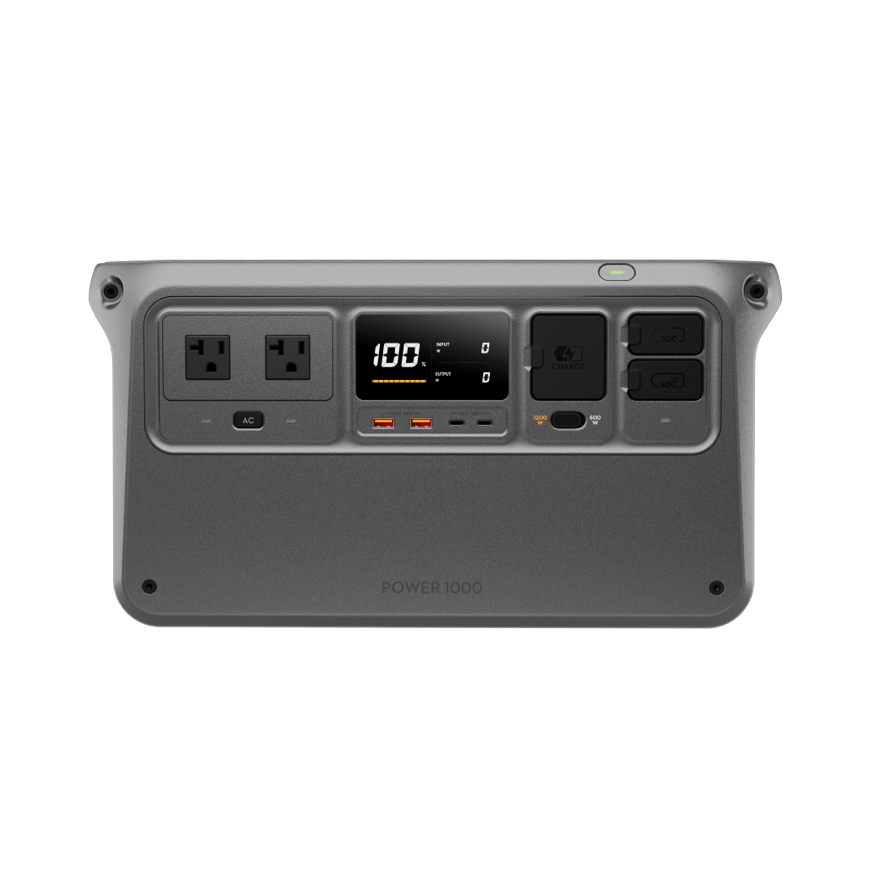
The DJI Power 1000 packs 1024Wh of LiFePO4 storage with 2200W of continuous output — the strongest 1kWh inverter in its class — plus a full recharge in 70 minutes and DJI's SDC super-fast charging for drone batteries. Based on DJI's…
The short version
The DJI Power 1000 is the 1kWh power station for people who own DJI drones — and it's also one of the strongest 1kWh stations anyone can buy. The headline numbers: 1024Wh of LiFePO4 storage, 2200W of continuous AC output (with 2600W max and 4400W peak), a 0–100% wall recharge in about 70 minutes, and DJI's SDC super-fast charging that refills compatible drone batteries in roughly half an hour. DJI rates the battery for 4000 cycles (about 10 years of daily use) and backs the unit with up to a 5-year warranty from its official store. The tradeoffs: solar charging requires a separate MPPT adapter module, there's no app or expansion battery port, and the newer Power 1000 V2 adds true UPS and app control at a similar price. At current DJI store pricing (around £699 in the UK; it launched at $999 in the US), it's a specialist pick — unbeatable for drone crews, merely very good for everyone else.
This is a research-based review: every spec below comes from DJI's official documentation, and the strengths and weaknesses reflect patterns across published expert reviews and verified owner feedback. We did not bench-test this unit.

DJI Power 1000 key specs (verified)
| Spec | DJI Power 1000 |
|---|---|
| Capacity | 1024Wh (LiFePO4) |
| AC output | 2 outlets (US), 2200W continuous, 2600W max, 4400W peak |
| Battery chemistry / cycle life | LiFePO4 — 4000 cycles to 70%+ capacity (~10 years of daily cycling, per DJI) |
| Safety certification | 26 SGS product test certifications |
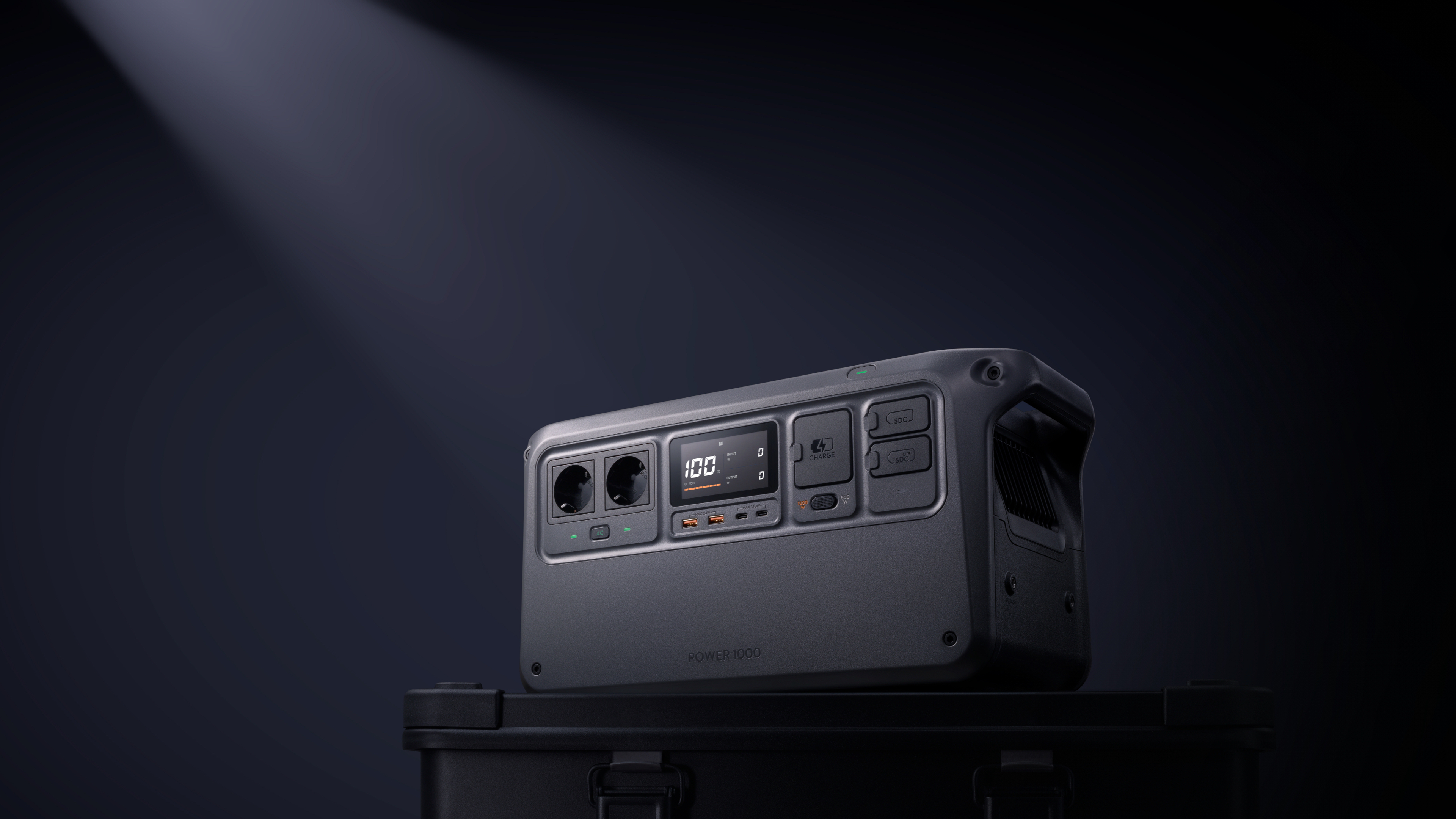
| AC recharge | 1200W fast: 0–100% in ~70 min; 600W standard: 80% in ~50 min (physical charge-rate toggle) |
| Solar input | Via DJI Power Solar Panel Adapter Module (MPPT), sold separately — up to 2 modules / 6 panels; 400W cap per module |
| Car charging | Via DJI Power Car Power Outlet to SDC Power Cable (12V/24V), sold separately |
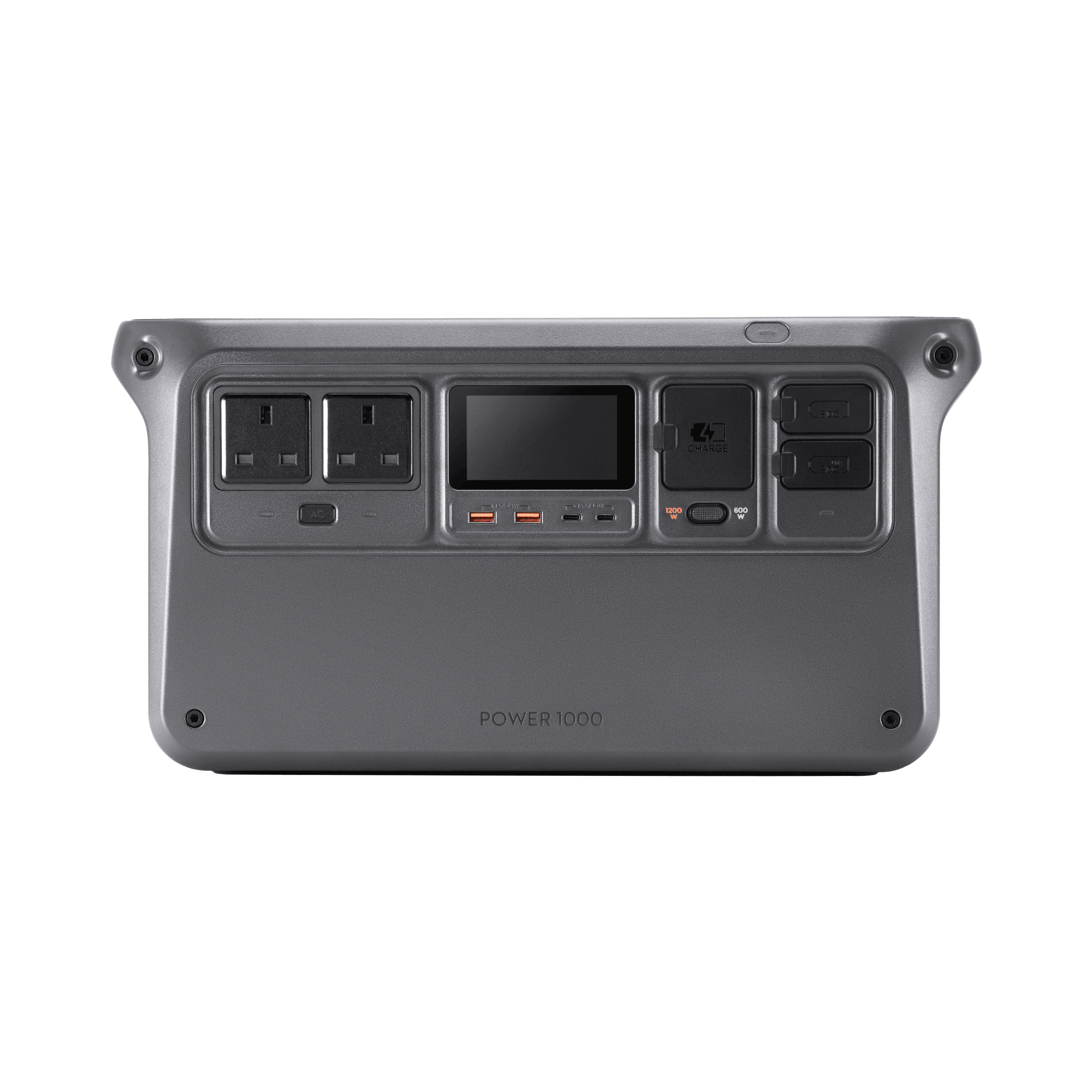
| USB ports | 2× USB-C 140W (PD 3.1 EPR, 280W combined), 2× USB-A 24W |
| Other DC | 1× SDC port, 1× SDC Lite port, 2× 1/4″ thread mounts |
| Drone fast charging | SDC super-fast charge: Mavic 3 series (~32 min 10–95%), Air 3, Inspire 3, Matrice 30 series — model-specific cables sold separately |
| UPS | No UPS mode (the newer Power 1000 V2 adds 10 ms UPS) |
| App | None (V2 adds DJI Home app support) |
| Expandable | No expansion battery port |
| Weight / dimensions | ~13 kg (28.6 lbs) / 45 × 22.5 × 23 cm (17.6 × 8.8 × 9 in) |
| Max operating altitude | 3000 m |
| Warranty | Up to 5 years from the DJI Official Online Store |
Specs sourced from DJI's official Power 1000 product and store pages and DJI's published spec footnotes. AC outlet count and type vary by region; specs above are the US variant where stated.
Standout features
1. The strongest inverter in the 1kWh class
2200W of continuous output — stable at 2200W until the battery runs out, per DJI's lab data — is the most in this size class, beating the 1800W norm from EcoFlow, Anker, and Jackery. The 2600W max and 4400W peak ceilings mean it starts stubborn loads (power tools, high-draw appliances) that choke 1kWh rivals. If raw output matters more than anything else, this is the 1kWh unit to beat.
2. SDC super-fast charging for DJI drones
This is the feature no competitor can match. Through DJI's proprietary SDC ports, compatible drone batteries fast-charge dramatically quicker than through a standard AC adapter — DJI cites about 32 minutes from 10% to 95% for Mavic 3 series batteries with the right cable. For drone crews shooting all day in the field, one Power 1000 replaces a wall of chargers. Catch: each drone series needs its own model-specific fast-charge cable, sold separately.
3. A full recharge in 70 minutes
The 1200W fast-charge mode fills the battery from empty in about 70 minutes (80% in 50), and there's a physical toggle to switch down to the quieter 600W standard mode. In DJI's lab testing the unit also reaches a recharge-safe temperature up to an hour faster than conventional stations after a full-power discharge — a small detail that matters when you're cycling the battery hard.
4. A battery rated for a decade of daily use
The LiFePO4 cells are rated for 4000 cycles to 70%+ capacity — roughly 10 years on a one-cycle-per-day basis, per DJI's methodology — and the unit passed 26 SGS product test certifications. That longevity, plus up to a 5-year store warranty, is the core of the value argument for a premium-priced station.
Battery & charging, in detail
Wall charging is straightforward and fast (1200W / 70 min or 600W / 50-min-to-80%), but off-grid recharging is where the DJI ecosystem shows its proprietary streak. There's no built-in MPPT controller: solar charging requires the DJI Power Solar Panel Adapter Module (MPPT), sold separately, which accepts up to 400W and can be doubled up (two modules, up to six panels total). DJI certifies Zignes solar panels, and third-party panels need an MC4-to-XT60 adapter with under-30V open-circuit panels under 200W per interface. Car charging runs through the SDC port with a dedicated cable. The USB-C ports are genuinely best-in-class — dual 140W with PD 3.1 EPR, 280W combined — enough to run two full-speed laptops. There's no Wi-Fi/Bluetooth app, no UPS mode, and no expansion battery port on this generation: what you buy is what you get.
Real-world use cases (with honest capacity math)
The following estimates use DJI's published figures and straightforward watt-hour math at ~85% inverter efficiency:
Home backup during an outage
A full-size refrigerator (~150W average draw) should run an estimated 5–6 hours on a full charge if the compressor runs constantly — realistically longer, since compressors cycle, and DJI's own guidance puts a portable car fridge (lower draw) at 19 hours. Two AC outlets is the weak spot for whole-kitchen setups: plan a power strip. The 2200W inverter starts anything a fridge can throw at it.
CPAP overnight
A 40W CPAP runs an estimated ~20 hours — two full nights with margin. Note the absence of a UPS mode: it won't switch over automatically in a blackout the way a true UPS station does, so use it as a charged-and-ready backup rather than an inline unit.
Field work and content creation
This is the home turf. A drone battery charges about 12 times from one full unit (DJI's figure), a camera about 59 times, a phone about 57. The 2× 1/4″ thread mounts accept accessories directly, and at ~23 dB-ish quiet operation during standard charging it won't ruin a shoot's audio. At 28.6 lbs it's car-kit territory, not backpack territory.
What it won't do
1024Wh is 1024Wh: a 1500W space heater drains it in about 40 minutes, and it won't run central AC or a well pump for any meaningful duration. And without an expansion port, you can't grow past 1kWh — size the battery to the load from day one.
What could be better
The consistent criticisms across expert reviews and owner feedback:
- No built-in solar charging. The MPPT adapter module is a required separate purchase, and solar ends up costing more and taking more space than on rivals with integrated controllers. For solar-first off-grid users, that's a real handicap.
- The SDC ecosystem nickel-and-dimes you. Drone fast-charge cables are model-specific (~$20 each) and sold separately, and the SDC ports are shared between drone charging, solar input, and car output — you can't do all three at once.
- No app, no UPS, no expansion. Competing 1kWh stations offer Wi-Fi/Bluetooth monitoring, true UPS switchover, and expansion batteries. The Power 1000 has none of these — the V2 generation added all of them.
- Heavy for the class. At 28.6 lbs it's among the heaviest 1kWh stations — the Jackery Explorer 1000 v2 is roughly 4 lbs lighter. Fine room-to-room; a chore on long carries.
- Know which generation you're buying. The newer Power 1000 V2 (2600W output, 37-min 80% recharge, 10 ms UPS, Home app, expansion support) lists around $699 in the US — similar money to what the original now sells for. Compare both before buying.
Who should buy it
- DJI drone owners and field crews — SDC super-fast drone charging is genuinely unique and worth the premium if you shoot regularly.
- Buyers who want maximum AC output in a 1kWh box — 2200W continuous beats every mainstream rival.
- Backup users who recharge in a hurry — the 70-minute full recharge means "top it off when the storm warning hits" is a real strategy.
- Long-horizon buyers — 4000 cycles and SGS certification make a strong case for a decade of service.
Who should skip it
- Solar-first off-grid users — the add-on MPPT module makes solar clumsy and expensive versus integrated rivals.
- Anyone who wants an app, UPS mode, or expansion batteries — look at the Power 1000 V2 or a competitor instead.
- If you'll never touch a DJI drone, the core specs are strong but the premium is harder to justify against cheaper 1kWh rivals.
FAQ
How fast does the DJI Power 1000 recharge?
About 70 minutes from empty to full at 1200W fast-charge, or to 80% in about 50 minutes at 600W standard mode. Solar refills depend on your panels and the separate MPPT module.
Can the DJI Power 1000 run a refrigerator?
Yes — the 2200W inverter starts a full-size fridge easily. Expect roughly 5–6 hours of runtime at a constant 150W draw (~85% efficiency), longer in practice since compressor fridges cycle. A portable 12V car fridge runs about 19 hours per DJI's figures.
Which drones can it fast-charge?
Mavic 3 series (about 32 minutes from 10–95%), Air 3, Inspire 3, and Matrice 30 series batteries via the SDC ports — each needs its own model-specific fast-charge cable, sold separately.
What's the difference between the DJI Power 1000 and the Power 1000 V2?
The V2 keeps the 1024Wh capacity but raises output to 2600W, recharges to 80% in 37 minutes, adds true 10 ms UPS, the DJI Home app, and expansion-battery support, at a lighter 14.2 kg. If you want app control or UPS, buy the V2.
Does the DJI Power 1000 have an app?
No — the original Power 1000 has no Wi-Fi or Bluetooth connectivity. The newer Power 1000 V2 works with DJI's Home app.
What is the DJI Power 1000 warranty?
Up to 5 years when purchased from the DJI Official Online Store.
Verdict
The DJI Power 1000 is a specialist station wearing generalist specs. Its 2200W output, 70-minute recharge, and 4000-cycle battery are legitimately best-in-class numbers — and for DJI drone owners, the SDC super-fast charging is a feature nothing else on the market offers. The price is the friction: with the newer Power 1000 V2 adding UPS, app control, and expansion at similar money, the original only makes sense if you find it discounted well below the V2. Buy it for the drones; appreciate it for the power.
Pricing note: the Power 1000 launched at $999 in the US; DJI's official store lists it around £699 in the UK as of Oct 2026, and the newer Power 1000 V2 lists around $699 in the US. Prices move with promotions — check the current price and confirm which generation you're buying before ordering.
About our reviews
Specs come from published manufacturer data sheets, cross-checked against owner feedback. Figures go stale. Check the current data sheet before you buy. This is not electrical or purchasing advice.
Related guides
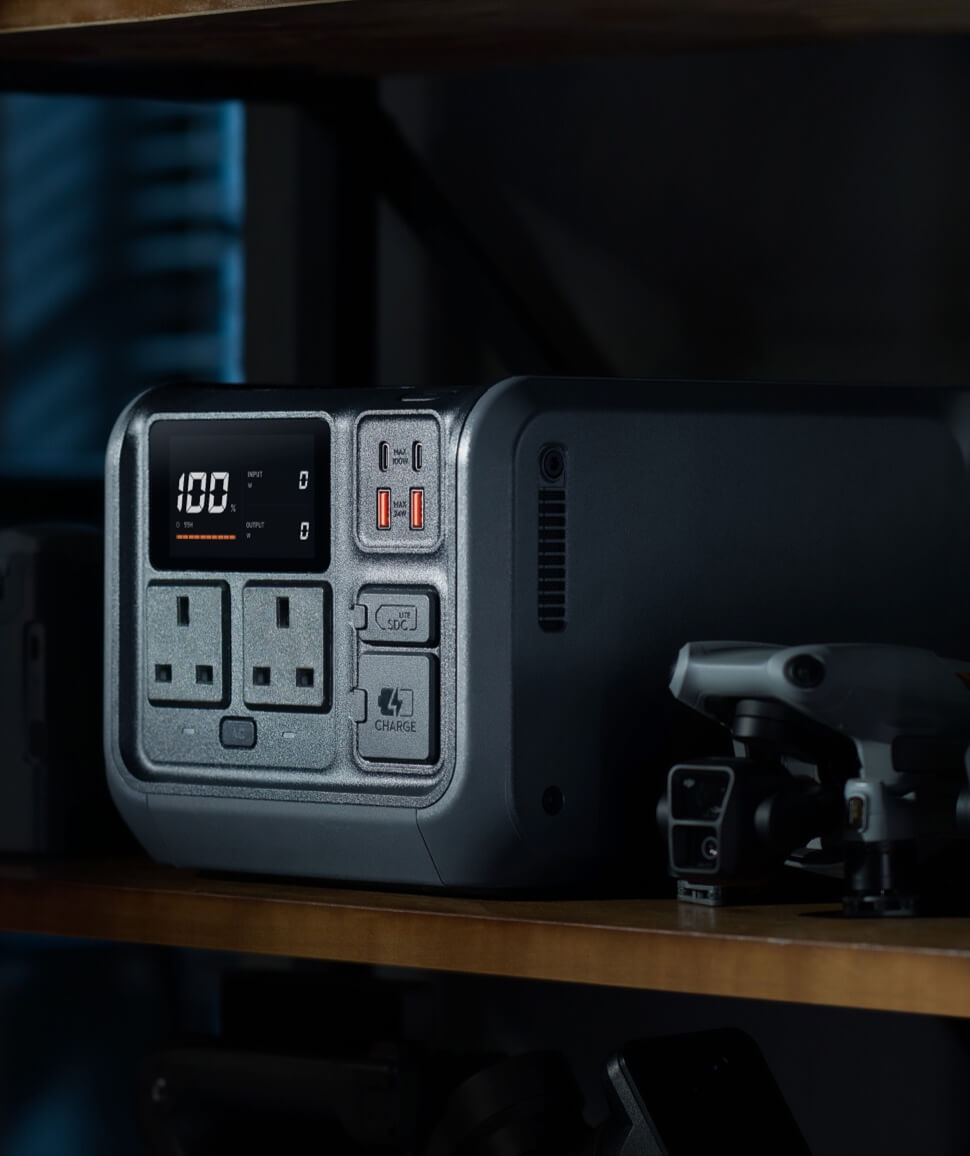 ReviewsDJI Power 500 Review: The Drone Pilot's 512Wh StationThe DJI Power 500 packs 512Wh of LFP storage with 1000W of continuous output, a full recharge in 70 minutes, and DJI's SDC…
 ReviewsJackery Explorer 2000 v2 Review: Light & FastThe Jackery Explorer 2000 v2 is the lightest 2kWh power station in its class at 39.5 lbs, with a 52-minute emergency recharge,…
 ReviewsJackery Explorer 300 Plus Review: Small and SimpleThe Jackery Explorer 300 Plus pairs 288Wh of LiFePO4 storage with a 300W inverter in an 8.27-lb box built for camping and travel.…