EcoFlow Delta 2 Review: The 1kWh Sweet Spot
7 min read
On this page
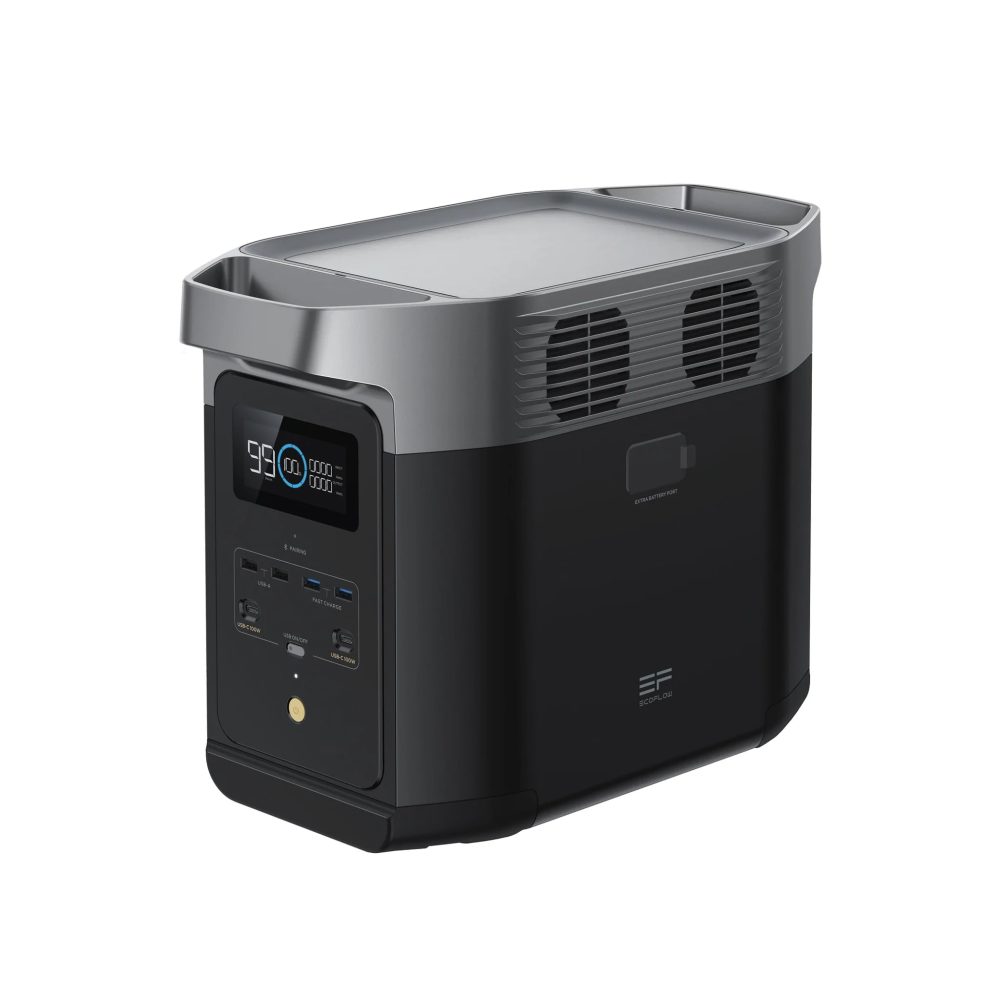
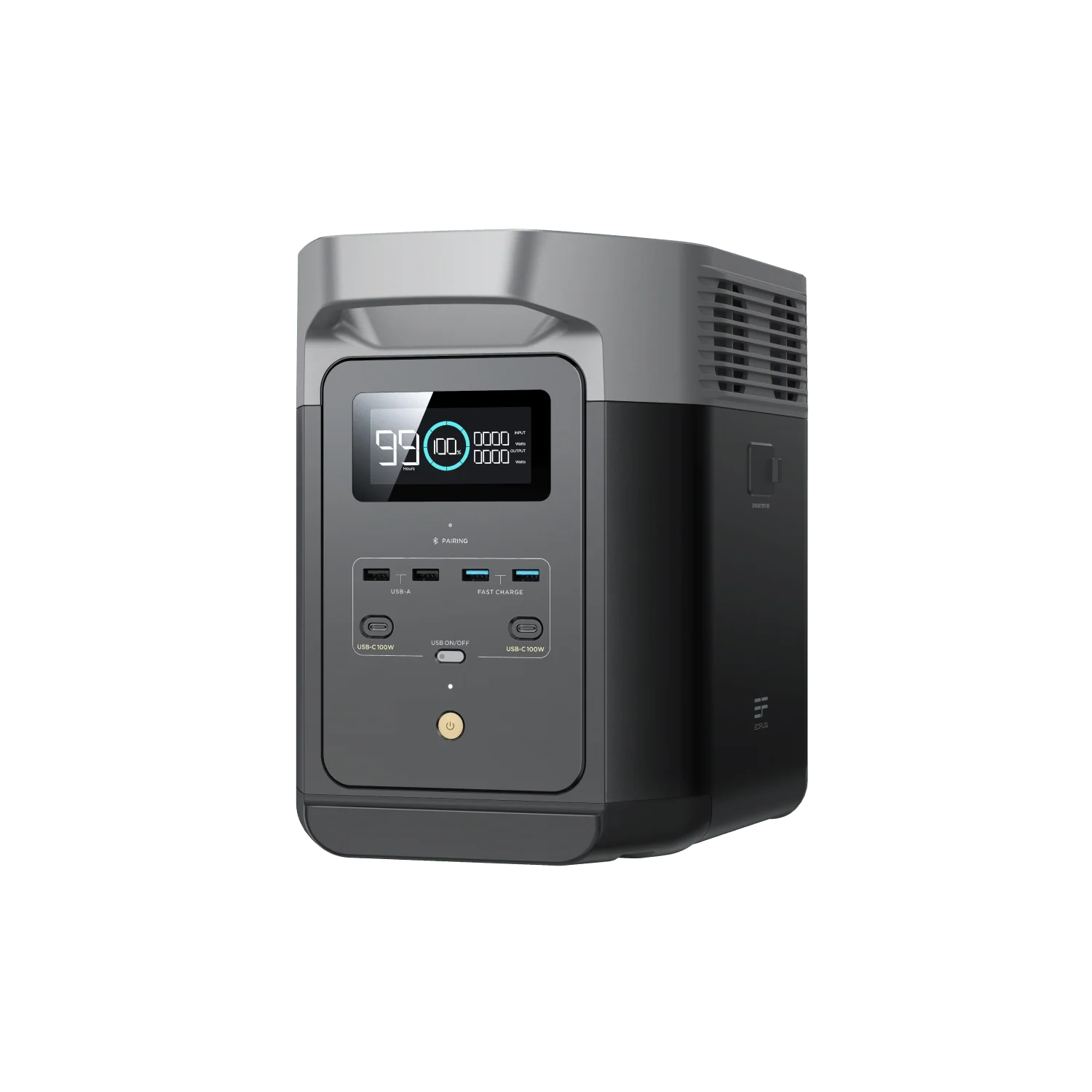
The EcoFlow Delta 2 pairs 1024Wh of LiFePO4 storage with 1800W of output and the fastest AC recharge in its class — 0–80% in 50 minutes. Based on published specs, expert reviews, and owner feedback, here's what it does well, where it…
The short version
The EcoFlow Delta 2 is the benchmark mid-size portable power station: 1024Wh of long-life LiFePO4 storage, a 1800W pure-sine-wave inverter, and AC recharging that hits 80% in about 50 minutes — several times faster than most rivals. It's the right size for keeping a fridge cold through an outage, running a CPAP overnight, or powering a campsite for a weekend. It isn't silent under heavy load, and at 27 lbs it's not a backpacking companion, but for home backup and car camping it remains one of the best values in its class — especially at 2026 sale prices.
This is a research-based review: every spec below comes from EcoFlow's official documentation, and the strengths and weaknesses reflect patterns across published expert reviews and verified owner feedback. We did not bench-test this unit.

EcoFlow Delta 2 key specs (verified)
| Spec | EcoFlow Delta 2 |
|---|---|
| Capacity | 1024Wh (51.2V LiFePO4) |
| AC output | 6 outlets, 1800W continuous, 2700W surge |
| X-Boost | Up to 2200W for high-draw resistive appliances |
| Battery chemistry / cycle life | LiFePO4 — 3000 cycles to 80%+ capacity |
| AC recharge | 1200W X-Stream: 0–80% in ~50 min, 0–100% in ~80 min |
| Solar input | 11–60V, 15A, 500W max (~3 hrs with full solar) |
| Car charging | 12V/24V, 8A default |
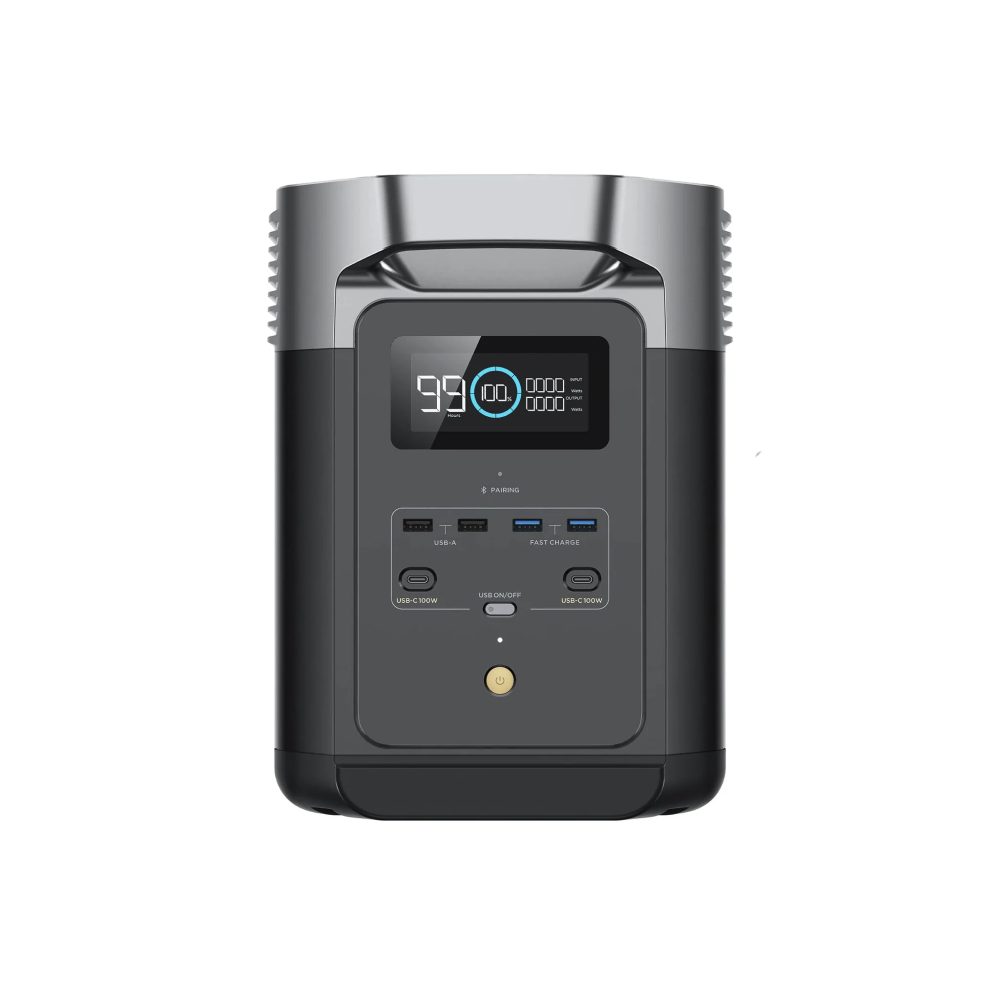
| USB ports | 2× USB-A (12W), 2× USB-A fast charge (18W), 2× USB-C (100W each) |
| Other DC | 1× car port (126W), 2× DC5521 (38W each) — 15 outlets total |
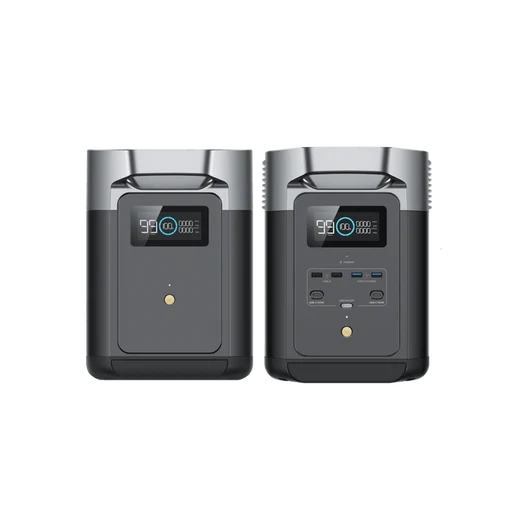
| Expandable | Yes — +DELTA 2 Smart Extra Battery (2048Wh) or +DELTA Max Extra Battery (3040Wh) |
| Connectivity | Wi-Fi + Bluetooth, EcoFlow app (monitoring, scheduling, firmware) |
| Weight / dimensions | 27 lbs (12 kg) / 15.7 × 8.3 × 11 in |
| Warranty | 5-year warranty |
Specs sourced from EcoFlow's official product page and the DELTA 2 user manual.
Standout features
1. The fastest AC charging in its class
X-Stream charging pulls up to 1200W from a wall outlet, taking the Delta 2 from empty to 80% in about 50 minutes and to full in roughly 80. Multiple expert reviewers flag this as the feature that changes how you actually use the unit: topping it off takes an hour, not half a day, so it works as a daily-use tool — for remote work, van life, or workshop duty — not just a box that sits in a closet waiting for an emergency.
2. A battery built for a decade
The LiFePO4 cells are rated for 3000 full cycles before dropping to 80% capacity — roughly 10 years of daily use. That's 4–6× the cycle life of the older NMC chemistry still found in some competitors, and it's the single biggest reason the Delta 2 holds its value.
3. 1800W that covers 90% of household appliances
Six AC outlets delivering 1800W continuous (2700W surge) will run a full-size fridge, microwave, coffee maker, or power tools. X-Boost mode pushes resistive loads like heaters and kettles up to 2200W by lowering voltage — handy, though it's not a substitute for raw capacity on long runs.
4. Genuinely useful app, plus expandability
The EcoFlow app (Wi-Fi/Bluetooth) shows real-time input/output wattage and estimated runtime, lets you toggle outlets remotely, throttle charging speed, and schedule charging. And if 1024Wh isn't enough, the Delta 2 accepts EcoFlow's Smart Extra Batteries up to 3040Wh total.
Battery & charging, in detail
Charging flexibility is a strong suit: wall (1200W), solar (500W max), car (12V/24V), and even EcoFlow's 800W alternator charger for topping up from your vehicle while driving. Solar recharging takes around 3 hours with a full 500W of panels in good sun — fine for topping off, though the 500W cap means it can't refill as fast from the sun as it can from the wall. The unit also works as an EPS (emergency power supply) with fast auto-switchover, so it can sit inline keeping a router or CPAP alive through a blackout.
Real-world use cases (with honest capacity math)
Using EcoFlow's published runtime figures and straightforward watt-hour math:
Home backup during an outage
A standard refrigerator (~120W) runs an estimated 7–14 hours on a full charge — enough to ride out most short-to-medium outages, especially since fridges cycle on and off. Add a Wi-Fi router (10W, ~58 hrs) and phone charging, and the essentials stay up. For multi-day outages, pair it with solar panels or the extra battery.
CPAP overnight
EcoFlow rates a 40W CPAP at about 17 hours — comfortably more than a full night's sleep, even with the heated humidifier off. (Heated humidifiers draw far more; check your machine's wattage.) The EPS mode makes it a credible bedside backup.
Camping and road trips
A 12V car fridge (~60W) runs an estimated 16–32 hours, a laptop charges ~16 times, and LED camp lights run for days. At 27 lbs it's car-camping territory, not backpacking — but it replaces a noisy gas generator at the campsite.
What it won't do
It won't run central air conditioning, an electric furnace, or a well pump for long — those need a 3kWh+ class unit like the Delta Pro 3. And 1024Wh disappears fast against a 1500W space heater (under 45 minutes). Size the battery to the load, not the other way around.
What could be better
These are the consistent complaints across expert reviews and owner feedback — none are deal-breakers, but all are worth knowing:
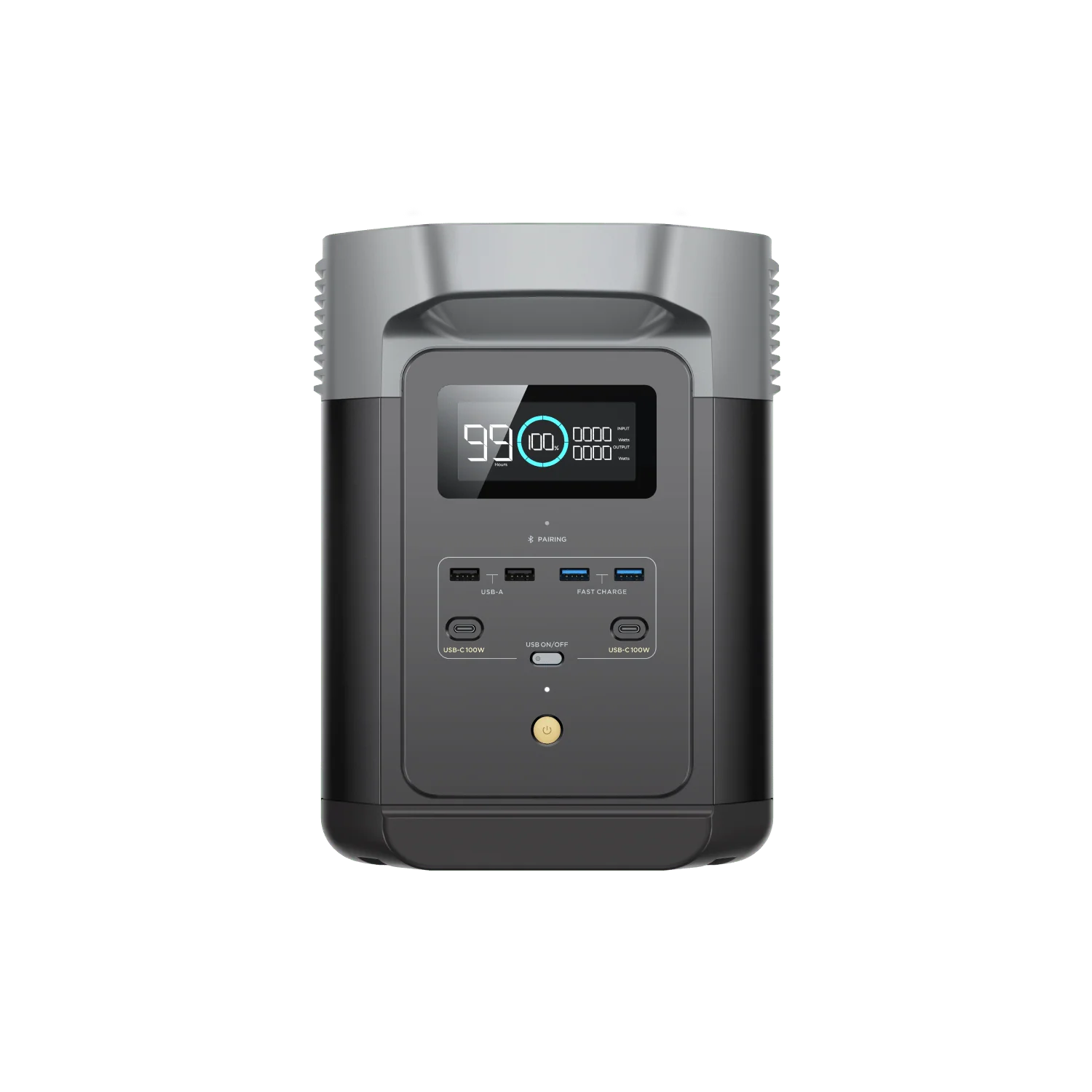
- Fan noise under load. The most common criticism. The cooling fans spin up hard during fast charging and above ~900W discharge; one reviewer measured 57 dBA at three feet. It's fine outdoors or in a garage, but you wouldn't want it humming next to your bed at high draw.
- 27 lbs is hefty for 1kWh. Fine to carry room-to-room, less fun to haul to a distant campsite. Rivals with wheels or lighter builds exist if portability is the priority.
- Solar input capped at 500W. Great for topping off, but a full solar refill takes ~3 hours in ideal sun — slower than the wall by a wide margin.
- Accessories add up. The extra battery and EcoFlow's own solar panels are priced at a premium, which can double the total system cost.
- App quirks. Occasional Bluetooth/Wi-Fi reconnection hiccups are reported; the app is a complement, not something to rely on for critical control.
Who should buy it
- Homeowners wanting outage insurance for the fridge, router, phones, and a CPAP — the core use case, and the Delta 2 nails it.
- Car campers and RVers who want silent, fume-free power for a fridge, lights, and laptops.
- Remote workers / van-lifers who'll use the fast recharge daily — the 50-minute top-up is the killer feature here.
- Anyone replacing a small gas generator for occasional backup: no fuel, no fumes, safe indoors.
Who should skip it
- If you only need phones and a light for rare short outages, a smaller ~500Wh unit costs half as much.
- If you need multi-day whole-home backup, step up to the 2–3kWh class (Delta 2 Max, Delta Pro 3) instead.
- If silence at high loads is non-negotiable (bedroom medical equipment), check quieter rivals or plan on an extension cord.
FAQ
How long does the EcoFlow Delta 2 take to charge?
About 50 minutes to 80% and 80 minutes to full from a wall outlet (1200W X-Stream). Solar takes around 3 hours with a full 500W of panels in good sun. Car charging is the slowest option.
Can the EcoFlow Delta 2 power a refrigerator?
Yes. Its 1800W inverter easily starts a full-size fridge, and EcoFlow estimates 7–14 hours of runtime depending on the fridge's duty cycle. For outages longer than a day, add solar panels or the extra battery.
Can I use the EcoFlow Delta 2 with a CPAP machine?
Yes — EcoFlow rates a 40W CPAP at roughly 17 hours, more than a full night. Turn off the heated humidifier to maximize runtime, and the EPS mode keeps it running through a blackout without interruption.
Is the EcoFlow Delta 2 expandable?
Yes. Add the DELTA 2 Smart Extra Battery for 2048Wh total, or the DELTA Max Smart Extra Battery for 3040Wh. Both are sold separately.
What is the EcoFlow Delta 2's warranty?
EcoFlow backs the Delta 2 with a 5-year warranty, well above the 1–2 years typical in this class.
Verdict
The Delta 2 earned its status as the default recommendation in the 1kWh class: fast charging that changes daily habits, a decade-grade LiFePO4 battery, enough output for real appliances, and a 5-year warranty. The fan noise and 27-lb weight are real compromises, and the newer Delta 3 exists — but at 2026 street prices (often $350–$600 on sale versus ~$999 list), the Delta 2 remains the value pick for home backup and camping. If your needs fit inside 1024Wh, it's an easy recommendation.
Pricing note: the Delta 2's street price fluctuates heavily with sales — it has ranged from roughly $350 to $600 during 2026 promotional periods. Check the current price before buying.
About our reviews
Specs come from published manufacturer data sheets, cross-checked against owner feedback. Figures go stale. Check the current data sheet before you buy. This is not electrical or purchasing advice.
Related guides
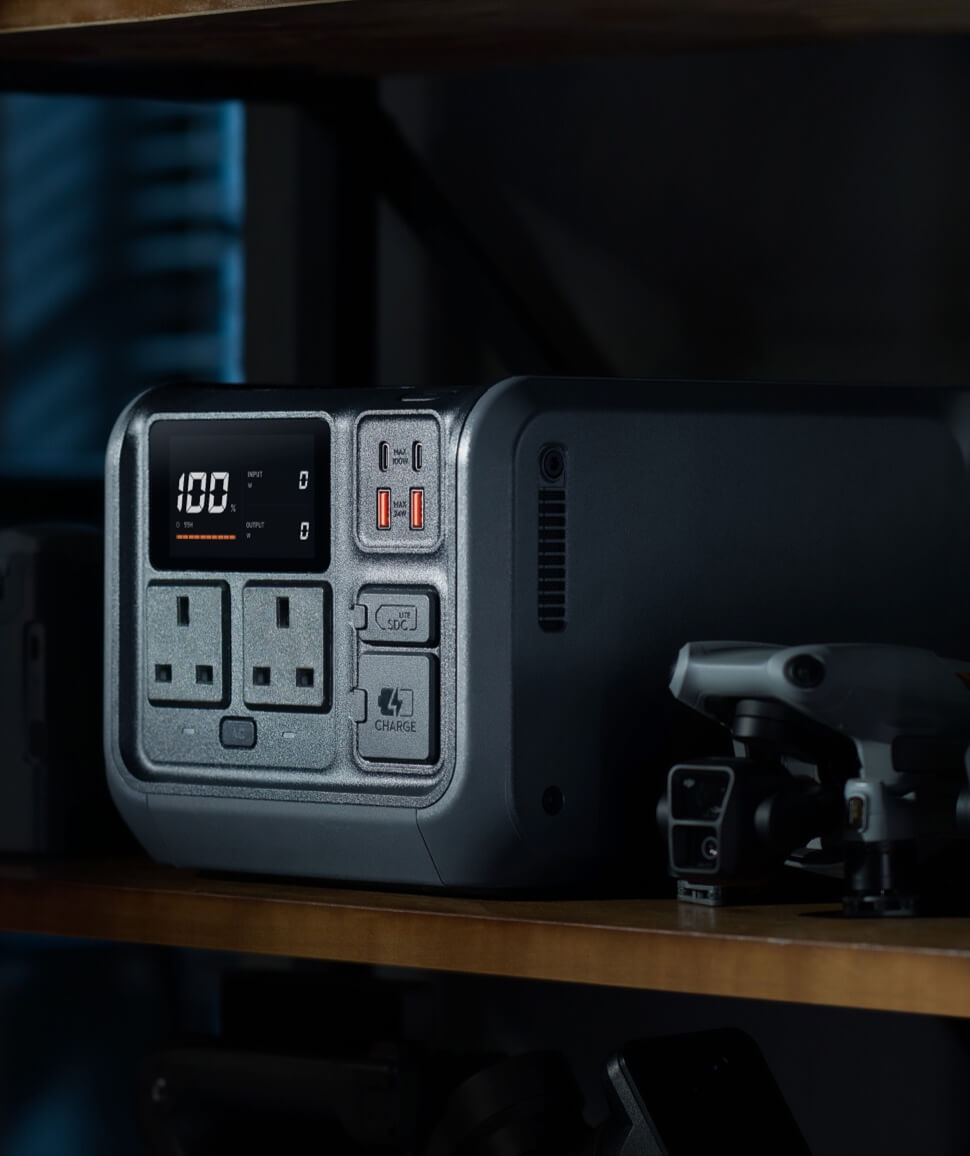 ReviewsDJI Power 500 Review: The Drone Pilot's 512Wh StationThe DJI Power 500 packs 512Wh of LFP storage with 1000W of continuous output, a full recharge in 70 minutes, and DJI's SDC…
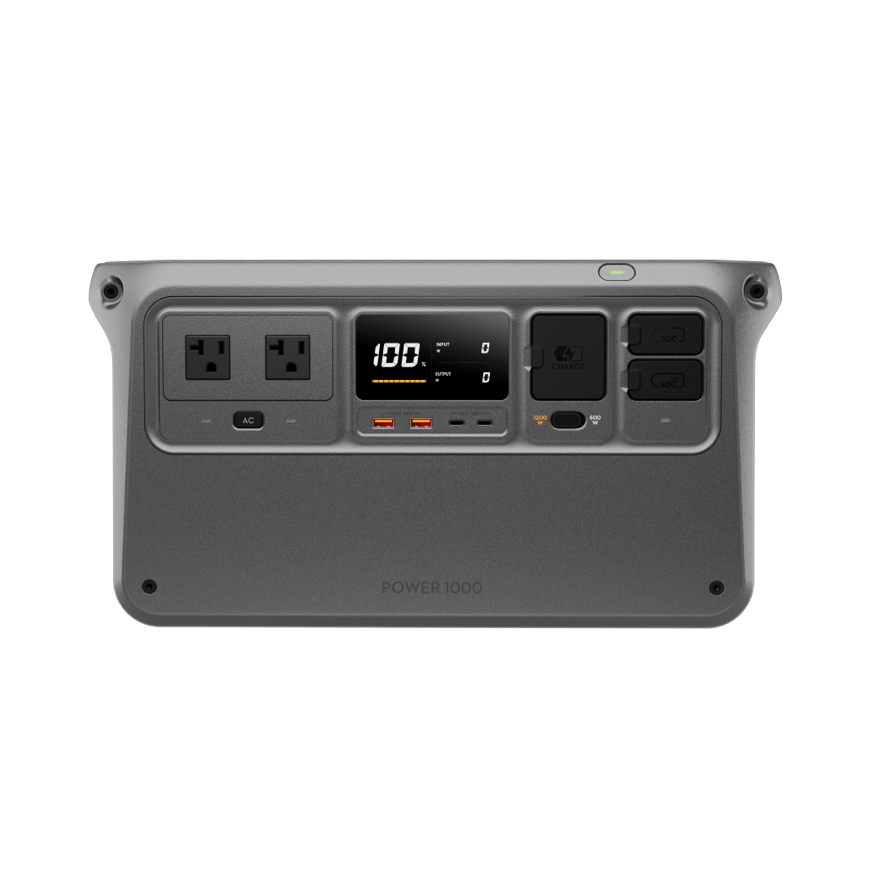 ReviewsDJI Power 1000 Review: The Drone Pilot's 1kWh StationThe DJI Power 1000 packs 1024Wh of LiFePO4 storage with 2200W of continuous output — the strongest 1kWh inverter in its class…
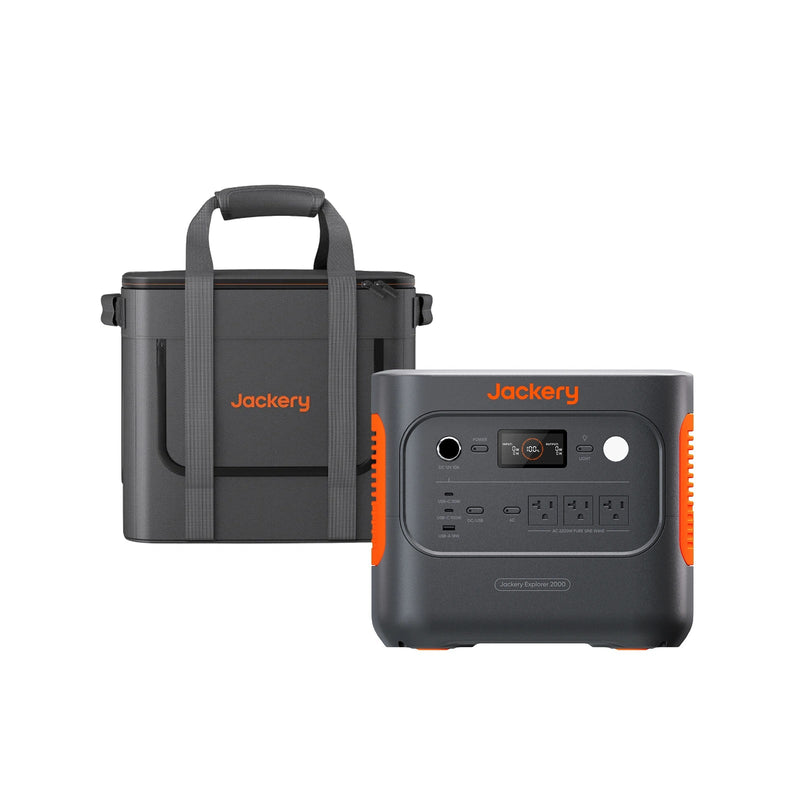 ReviewsJackery Explorer 2000 v2 Review: Light & FastThe Jackery Explorer 2000 v2 is the lightest 2kWh power station in its class at 39.5 lbs, with a 52-minute emergency recharge,…