EcoFlow Delta 3 Plus Review: The 1kWh All-Rounder
7 min read
On this page
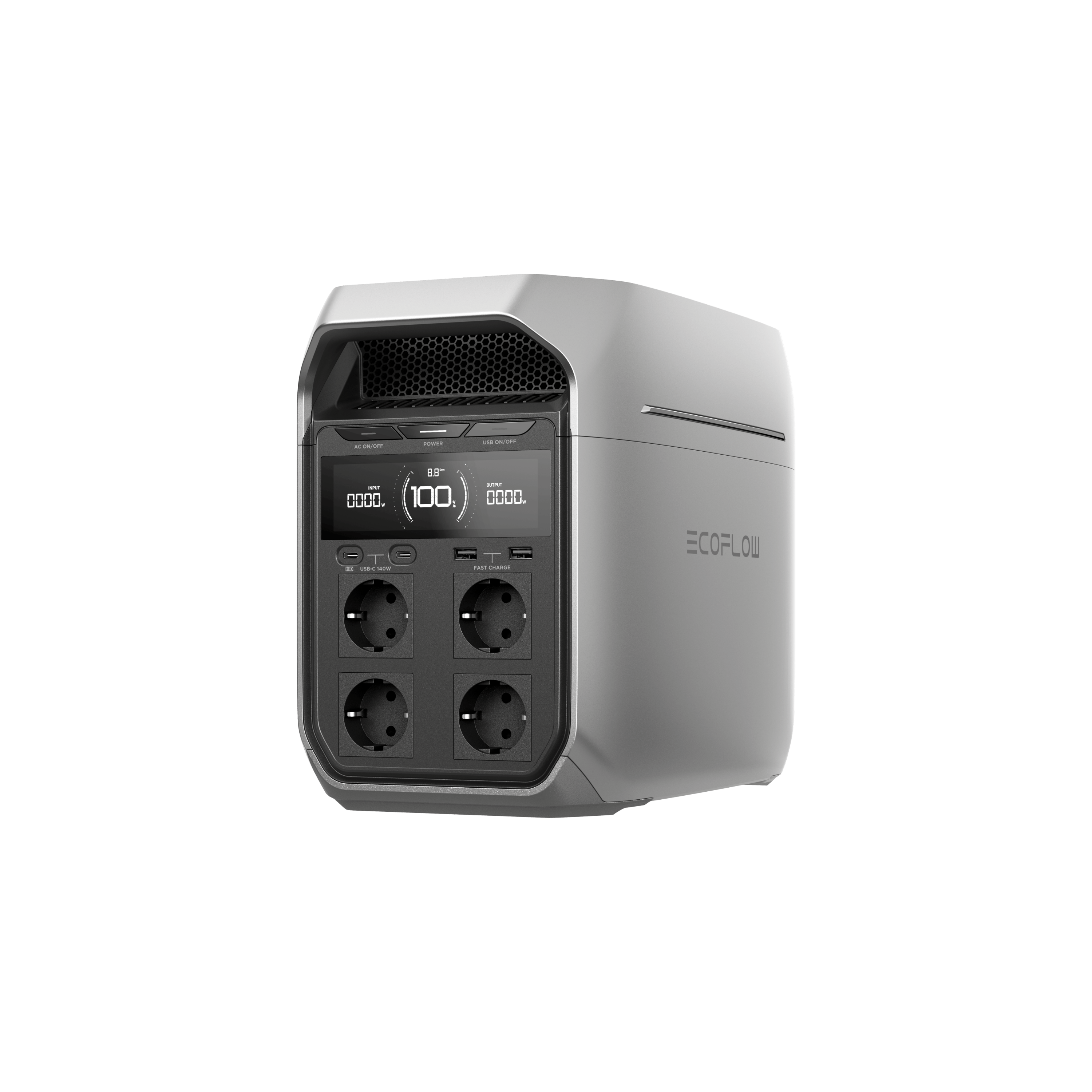
The EcoFlow Delta 3 Plus packs 1024Wh of LiFePO4 storage, 1800W of output, and a full recharge in about 56 minutes — plus dual solar inputs and expansion to 5kWh. Based on published specs, expert reviews, and owner feedback, here's what…
The short version
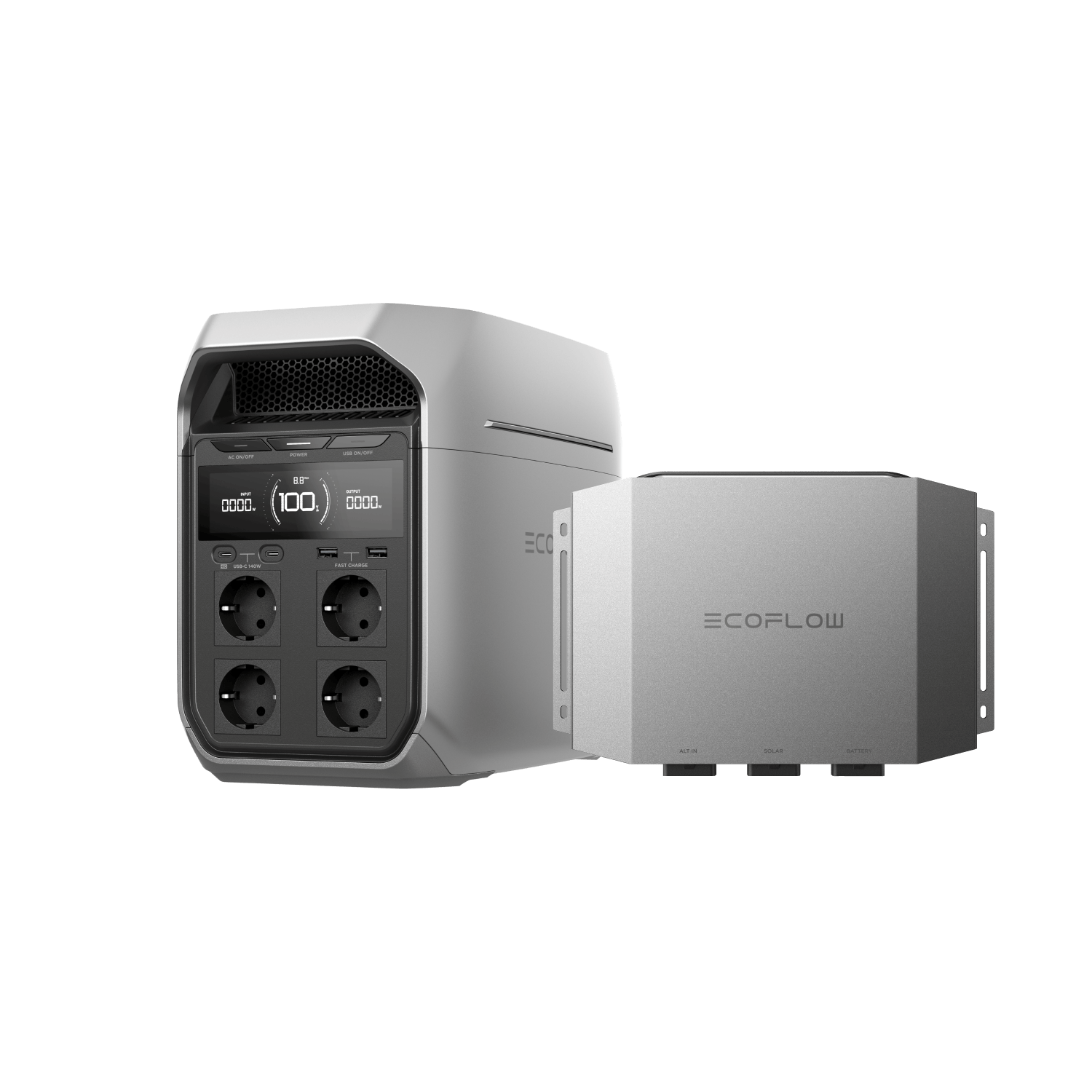
The EcoFlow Delta 3 Plus is EcoFlow's answer to the "one unit that does everything" question in the 1kWh class: 1024Wh of long-life LiFePO4 storage, 1800W of continuous output (with a 2400W X-Boost ceiling for stubborn appliances), and an AC recharge that fills the battery in about 56 minutes. Compared with the older Delta 2, the Plus adds a second 500W solar input for up to 1000W of solar, quieter operation, an IP65-rated battery pack, and expansion up to 5kWh. It's not the cheapest 1kWh station on the market — at 2026 sale prices it usually runs $420–$600 against a ~$799 list — but if you want fast charging, strong solar input, and room to grow, it's one of the most complete packages in its class.
This is a research-based review: every spec below comes from EcoFlow's official documentation, and the strengths and weaknesses reflect patterns across published expert reviews and verified owner feedback. We did not bench-test this unit.

EcoFlow Delta 3 Plus key specs (verified)
| Spec | Delta 3 Plus |
|---|---|
| Capacity | 1024Wh (LiFePO4) |
| AC output | 1800W continuous, 3600W surge |
| X-Boost | Up to 2400W for high-draw resistive appliances |
| Battery chemistry / cycle life | LiFePO4 — 4000 cycles to 80%+ capacity |
| AC recharge | 1500W input: 0–100% in ~56 minutes |
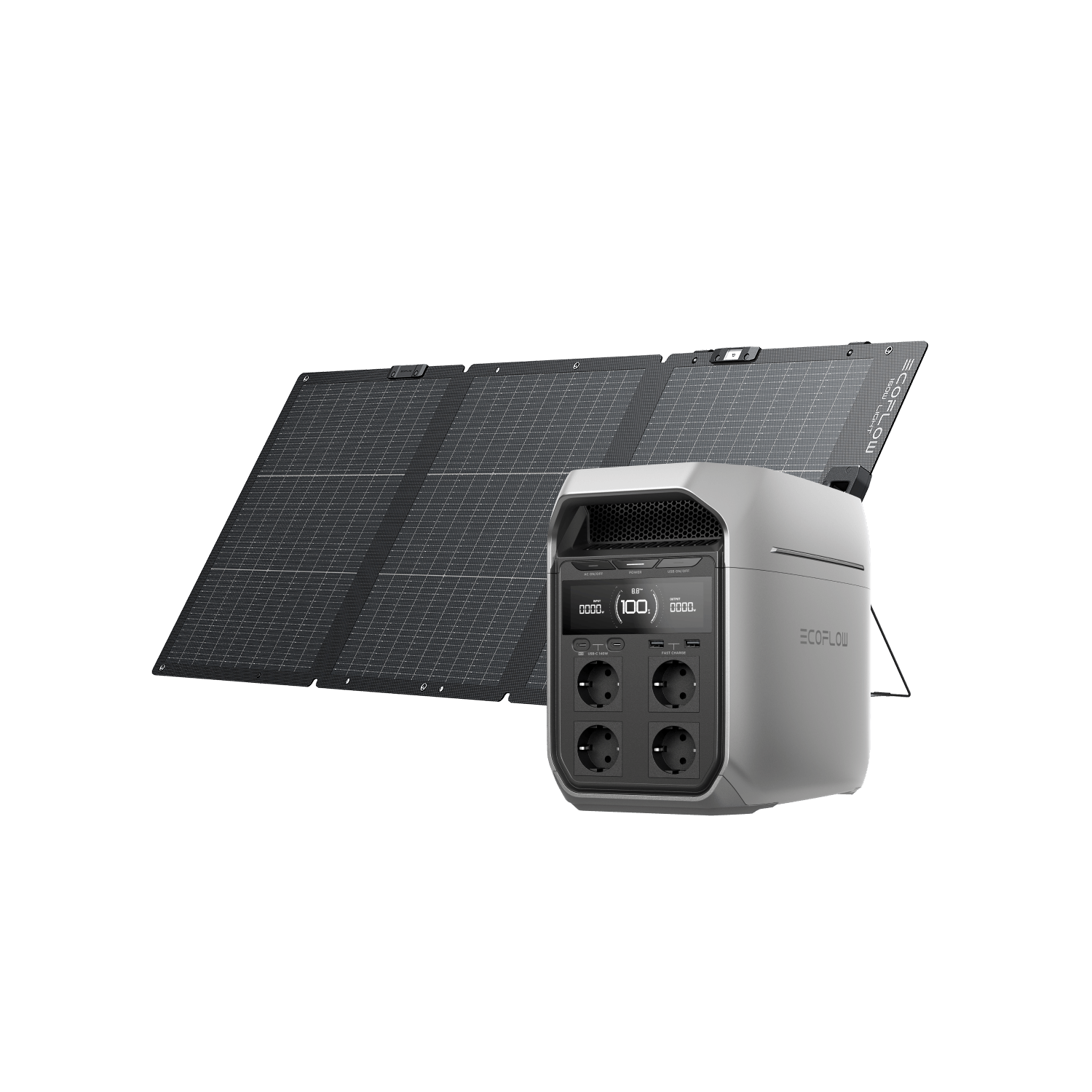
| Solar input | Dual MPPT, 2 × 500W max (1000W total), 11–60V — full in ~70 min in ideal sun |
| Car / generator charging | 800W car input (~1.3 hrs); 1500W smart generator |
| UPS | <10 ms switchover |
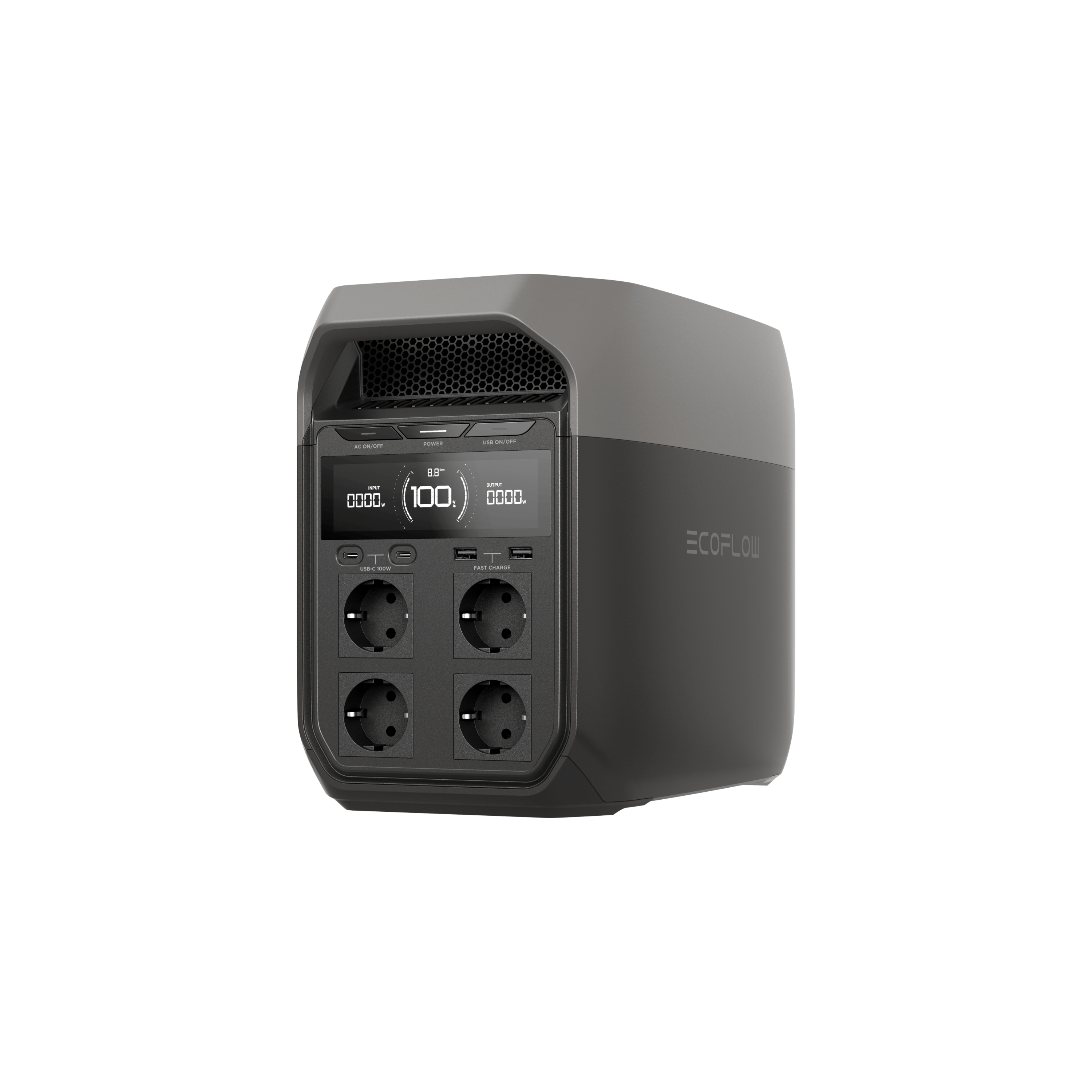
| USB ports | 2× USB-A (36W each), 2× USB-C (140W each) |
| Other DC | 1× car port (126W), 2× DC5521 |
| Expandable | Yes — up to 5kWh with DELTA 3 / DELTA 2 / DELTA 2 Max / DELTA Pro 3 extra batteries |
| Noise | <30 dB at 600W, <40 dB at 1200W (per EcoFlow lab tests) |
| Weather resistance | IP65-rated battery pack |
| Weight / dimensions | ≤12.5 kg (27.6 lbs) / 16 × 8 × 11 in |
| Warranty | 5-year warranty |
Specs sourced from EcoFlow's official Delta 3 series product pages and EcoFlow's Delta 3 series model-comparison guide. AC outlet count varies by region (4 on EU units, 6 on US units).
Standout features
1. A full recharge in under an hour
The 1500W AC input fills the 1024Wh battery in about 56 minutes — on par with the fastest stations in the class. As with the Delta 2 before it, this changes the ownership experience: the unit can live in active duty (workshop, home office backup, van life) instead of sitting in a closet fully charged "just in case." Storm approaching? An hour before landfall is enough to top it off.
2. Dual solar inputs — 1000W total
This is the Delta 3 Plus's biggest upgrade over the Delta 2. Two 500W MPPT inputs let it refill from the sun in roughly 70 minutes with 1000W of panels in good conditions — genuinely competitive with wall charging, and a real advantage for off-grid setups where the grid simply isn't available to fall back on.
3. A battery rated for a decade of daily use
The LiFePO4 cells are rated for 4000 cycles to 80% capacity — a full third more cycle life than the Delta 2's 3000. At one full cycle per day, that's roughly 11 years before the battery degrades to 80%. For a product category where the battery is the single most expensive component, this is the spec that matters most for long-term value.
4. Expandability without buying a new station
The Delta 3 Plus accepts extra batteries up to 5kWh total, and — usefully — it's backward compatible with the DELTA 2, DELTA 2 Max, and DELTA Pro 3 extra batteries, not just its own. If your backup needs grow from "fridge overnight" to "fridge plus furnace blower for two days," you buy a battery, not a whole new station.
Battery & charging, in detail
Five charging paths cover essentially every scenario: wall (1500W, ~56 min), dual solar (1000W max, ~70 min in ideal sun), car (800W via the alternator charger, ~1.3 hrs), smart generator (1500W), and AC+solar combined. The <10 ms UPS switchover means it can sit inline as a true uninterruptible supply for a desktop, NAS, or CPAP — the switchover is fast enough that sensitive electronics never notice the grid dropped. The EcoFlow app adds time-of-use scheduling and storm-warning alerts, so the unit can charge itself from cheap off-peak power or top off automatically when severe weather is forecast.
Real-world use cases (with honest capacity math)
The following estimates use EcoFlow's published figures and straightforward watt-hour math at ~85% inverter efficiency:
Home backup during an outage
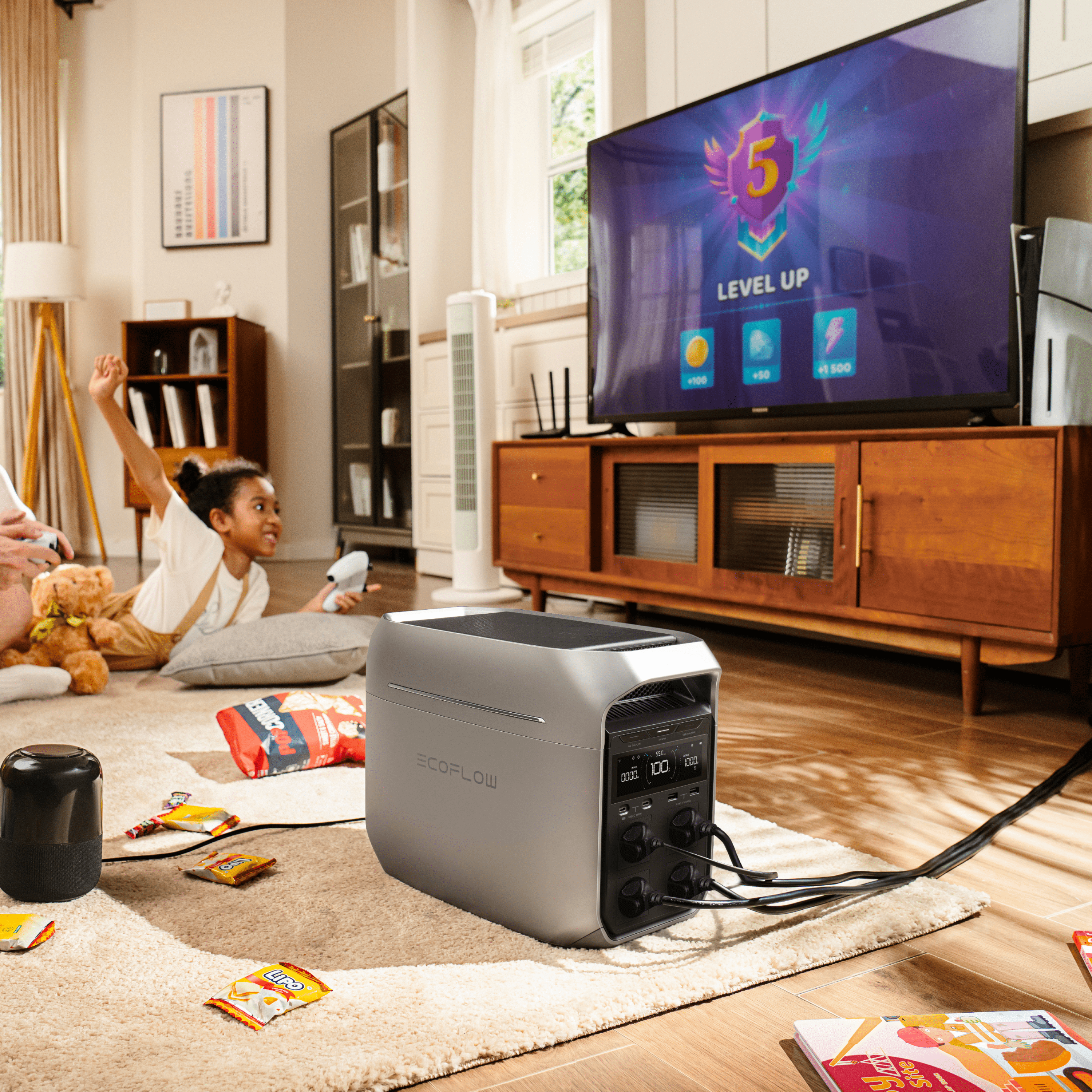
A full-size refrigerator (~150W average while cycling) should run roughly 12–16 hours on a full charge — enough for most outages, especially if you keep the door closed. Add a Wi-Fi router (10W, ~85 hrs) and phones, and the essentials stay alive. For multi-day outages, the dual solar inputs or an extra battery take over.
CPAP overnight
A 40W CPAP runs an estimated ~20 hours — two full nights with margin. With the <10 ms UPS mode, it doubles as a bedside backup that keeps the machine running through a blackout without waking you.
Camping and road trips
A 12V portable fridge (~60W) runs an estimated 14–20 hours, a 65W laptop charges roughly 12–13 times, and the sub-40 dB noise floor at moderate loads keeps it campsite-friendly. At 27.6 lbs it's car-camping territory, but the IP65 battery pack shrugs off dust and rain splashes at the site.
What it won't do
1024Wh is 1024Wh: a 1500W space heater drains it in about 40 minutes, and it won't run central AC, an electric furnace, or a well pump for any meaningful duration. Those loads belong to the 2–4kWh class. Size the battery to the load.
What could be better
The consistent criticisms across expert reviews and owner feedback:
- Same 1024Wh as the cheaper Delta 3. The Plus costs noticeably more than the standard Delta 3 while offering identical capacity and output — you're paying for the second solar input, higher USB wattage, and expandability. If you don't need those, the base Delta 3 (or the older Delta 2 on clearance) is the better value.
- 27.6 lbs is heavy for 1kWh. Lighter 1kWh rivals exist (the Jackery Explorer 1000 v2 is ~24 lbs). Fine room-to-room; less fun on a long carry.
- US/EU spec fragmentation is confusing. Outlet counts, USB wattages, and even X-Boost ceilings differ between regions, and EcoFlow's own pages don't always make the variant clear. Confirm which version you're buying.
- Accessories are premium-priced. The extra batteries and EcoFlow's own solar panels carry premium price tags — the full 5kWh system costs several times the base unit.
- Fan noise at high draw. Quieter than the Delta 2 at moderate loads, but the fans still spin up audibly above ~900W. Not a bedroom-at-full-blast device.
Who should buy it
- Homeowners who want outage insurance with room to grow — the expansion path to 5kWh is the differentiator here.
- Solar-first users — the dual 500W inputs make it one of the best 1kWh stations for panel refilling.
- Van-lifers and RVers who'll use the 800W car charging and fast wall top-ups regularly.
- Home-office workers wanting a true <10 ms UPS for a desktop or NAS.
Who should skip it
- If you'll never expand beyond 1kWh and don't need dual solar, the standard Delta 3 or a clearance Delta 2 saves real money.
- If absolute lowest weight matters, the Jackery Explorer 1000 v2 is ~4 lbs lighter.
- If you need multi-day whole-home backup, step up to the 2–3kWh class instead of expanding this one — the math usually favors the bigger unit.
FAQ
How fast does the EcoFlow Delta 3 Plus charge?
About 56 minutes from empty to full on AC (1500W input). With 1000W of solar panels in good sun, roughly 70 minutes. Car charging at 800W takes about 1.3 hours.
Can the Delta 3 Plus power a refrigerator?
Yes — the 1800W inverter starts a full-size fridge easily, and the 1024Wh battery should keep one cold for roughly 12–16 hours depending on the fridge's duty cycle. For longer outages, add solar panels or an extra battery.
Is the Delta 3 Plus expandable?
Yes, up to 5kWh total. It works with the DELTA 3 Smart Extra Battery and is backward compatible with DELTA 2, DELTA 2 Max, and DELTA Pro 3 extra batteries.
What's the difference between the Delta 3 and Delta 3 Plus?
Same 1024Wh capacity and 1800W output. The Plus adds a second 500W solar input (1000W total vs 500W), higher-wattage USB ports (2×140W USB-C vs 2×100W), and is the variant aimed at expansion-battery and alternator-charger ecosystems.
What is the Delta 3 Plus warranty?
5 years, per EcoFlow — well above the 2–3 years typical in this class.
Verdict
The Delta 3 Plus is the most complete 1kWh station EcoFlow has made: sub-hour charging, class-leading dual solar input, a decade-grade 4000-cycle battery, true UPS, and a 5kWh expansion path. Its only real problem is value positioning — the standard Delta 3 and clearance Delta 2 deliver the same core 1024Wh/1800W for less. Buy the Plus if you'll actually use the second solar input or the expansion path; otherwise save the difference. At 2026 sale prices (often $420–$600 against a ~$799 list), it's a strong pick for buyers who want one station that can grow with them.
Pricing note: Delta 3 Plus pricing swings heavily with promotions — observed from around $420 (warehouse clubs, summer 2026) to $600 during seasonal sales, against a ~$799 list price. Check the current price before buying.
About our reviews
Specs come from published manufacturer data sheets, cross-checked against owner feedback. Figures go stale. Check the current data sheet before you buy. This is not electrical or purchasing advice.
Related guides
 ReviewsDJI Power 500 Review: The Drone Pilot's 512Wh StationThe DJI Power 500 packs 512Wh of LFP storage with 1000W of continuous output, a full recharge in 70 minutes, and DJI's SDC…
 ReviewsDJI Power 1000 Review: The Drone Pilot's 1kWh StationThe DJI Power 1000 packs 1024Wh of LiFePO4 storage with 2200W of continuous output — the strongest 1kWh inverter in its class…
 ReviewsJackery Explorer 2000 v2 Review: Light & FastThe Jackery Explorer 2000 v2 is the lightest 2kWh power station in its class at 39.5 lbs, with a 52-minute emergency recharge,…