EcoFlow River 3 Plus Review: The Compact UPS Pick
1 min read
On this page
The EcoFlow River 3 Plus packs 286Wh of LiFePO4 storage, 600W of output, and a true
The short version
The EcoFlow River 3 Plus is the most complete small power station you can buy right now: 286Wh of long-life LiFePO4 storage, 600W of pure-sine output, a genuine <10ms UPS that protects your router and NAS, whisper-quiet sub-30dB operation, and a full recharge in about an hour from a wall outlet. At 10.4 lbs it's genuinely portable, and an extra battery can grow it to 858Wh if your needs grow. The catch is physics: 286Wh only stretches so far — this is a device-charger and short-outage box, not a fridge saver. But at around $279 (often less on sale), it's the best-built entry point into the power-station world.
This is a research-based review: every spec below comes from EcoFlow's official documentation, and the strengths and weaknesses reflect patterns across published reviews and verified owner feedback. We did not bench-test this unit.

EcoFlow River 3 Plus key specs (verified)
| Spec | EcoFlow River 3 Plus |
|---|---|
| Capacity | 286Wh (LiFePO4) |
| AC output | 3 outlets, 600W continuous, 1200W surge, X-Boost to 1200W |
| Battery chemistry / cycle life | LiFePO4 — 3000 cycles to 80% capacity (~10 years of daily use) |
| UPS switchover | <10 ms (true UPS, PC/NAS-compatible with data cable) |
| Noise | <30 dB (manufacturer-rated, lab conditions) |
| AC recharge | 380W X-Stream: 0–100% in ~60 minutes |
| Solar input | 220W max — 0–100% in ~1.5 hours |
| Car input | 220W — 0–100% in ~3.3 hours |
| Generator input | 380W — 0–100% in ~60 minutes |
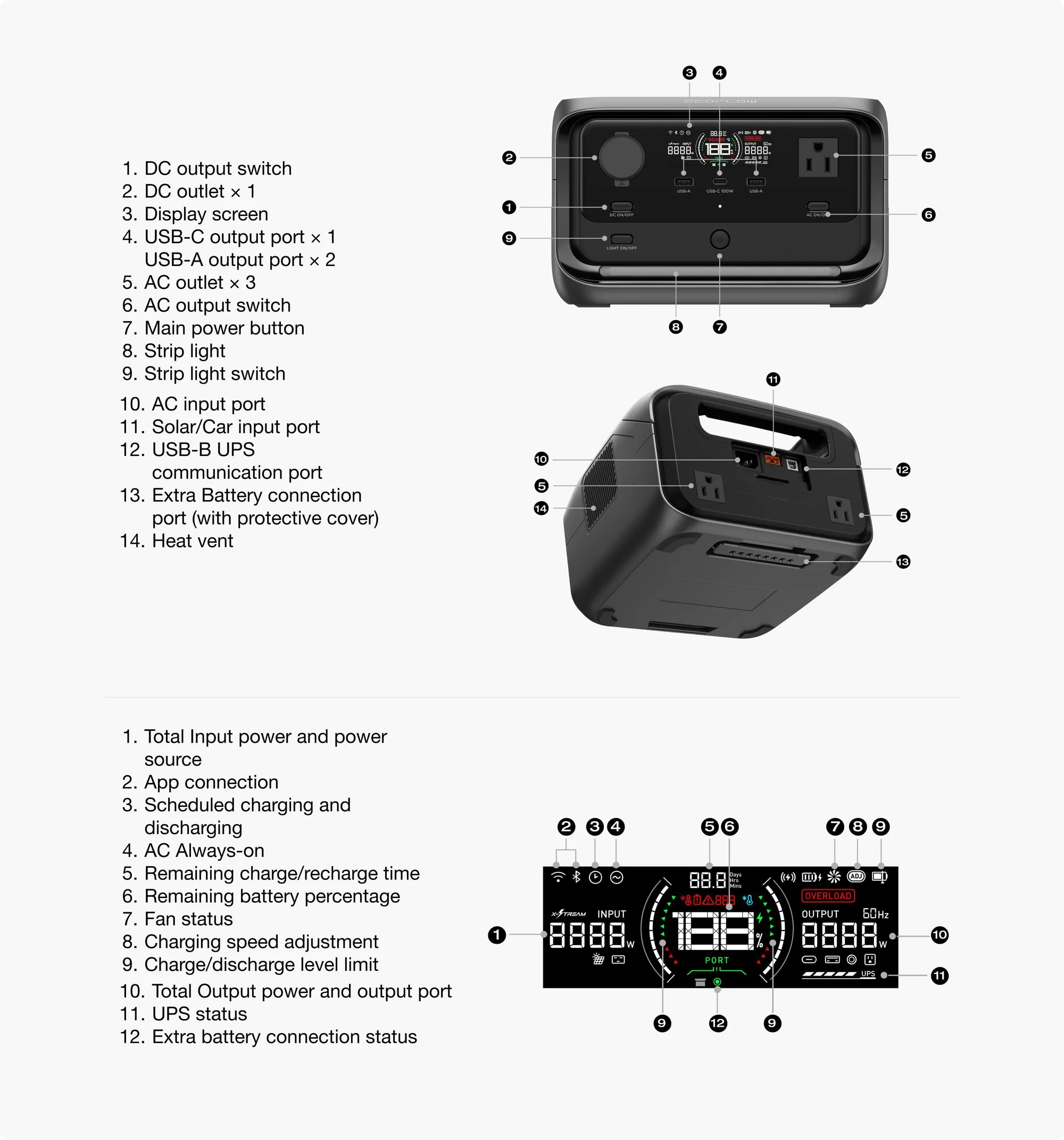
| USB ports | 2× USB-A (12W each), 1× USB-C (100W max) |
| Other DC | 1× car port (126W), built-in LED light |
| Durability | IP54-rated battery pack, fire-retardant shell, drop-rated chassis |
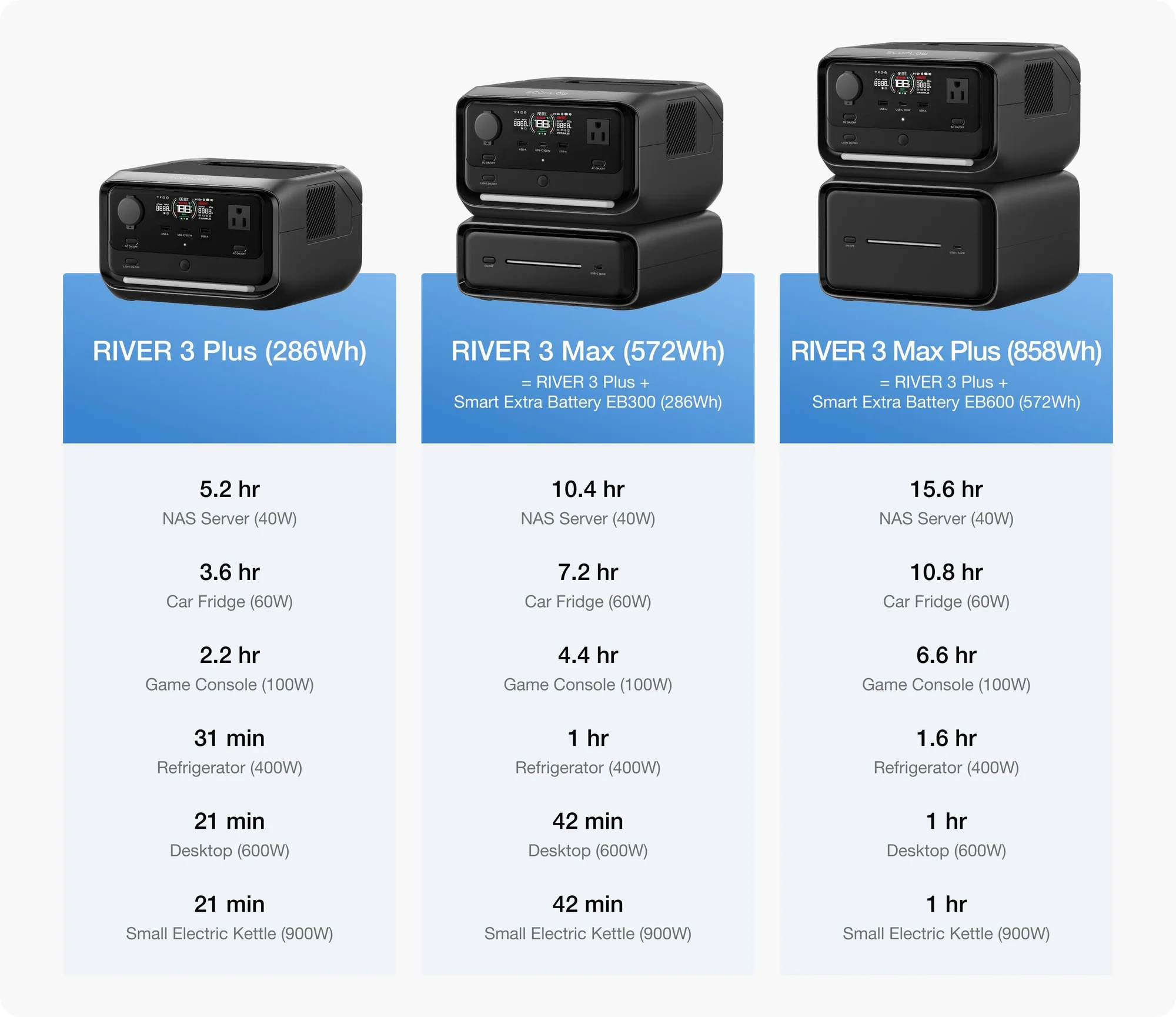
| Expandable | Yes — +EB300 Smart Extra Battery (572Wh) or +EB600 (858Wh) |
| Connectivity | Wi-Fi + Bluetooth, EcoFlow app (monitoring, scheduling, outage alerts) |
| Weight / dimensions | 10.4 lbs (4.7 kg) / 9.2 × 9.1 × 5.8 in |
| Warranty | 5-year warranty |
Specs sourced from EcoFlow's official US product page and launch specifications.
Standout features
1. A real UPS, not just "EPS"
This is the River 3 Plus's headline trick. Most small stations offer a slow emergency-power switchover (30ms+) that reboots your PC. The River 3 Plus switches in under 10ms — fast enough to keep a desktop, NAS, or router alive through a blackout — and EcoFlow includes a USB-B UPS communication cable in the box so the unit can signal your PC/NAS to save data and shut down gracefully. Two of the three AC outlets sit on the rear for clean cable management when it's parked under a desk as a permanent UPS.
2. One-hour recharging
X-Stream charging pulls 380W from the wall and fills the 286Wh pack in about 60 minutes — no trickle-charge anxiety before a storm or a trip. Solar isn't far behind at 220W max (0–100% in ~1.5 hours with a full panel array). For a unit this small, that's fast enough that you stop thinking about charge time entirely.
3. Quiet enough for a bedroom or desk
EcoFlow rates noise below 30 dB in lab conditions — roughly a whisper. Owners consistently describe it as nearly silent at low loads, which matters because this is a unit you'll actually keep in living spaces: as a desk UPS, a nightstand CPAP backup, or a nursery power reserve.
4. Built to survive real life
The battery pack carries an IP54 rating (splash and dust protection), the shell is fire-retardant, and the chassis is drop-rated to around a meter. That's unusual in this price class and makes it a credible garage, jobsite-adjacent, and campsite companion. The 3000-cycle LiFePO4 cells are rated for roughly a decade of daily use.
Battery & charging, in detail
The 286Wh LiFePO4 pack is the right chemistry at this size: 3000 cycles to 80% capacity means even daily cycling gives you around 10 years before noticeable degradation — roughly 4–6× the lifespan of the older NMC cells still found in some budget rivals. Four charging paths are supported: wall (380W), solar (220W max), car (220W), and generator (380W). EcoFlow also advertises direct solar-panel-to-USB charging for small electronics and a 45W portable USB-C panel option for topping up phones and tablets without touching the main battery.
One honest limit: the 220W solar ceiling means a single mid-size panel is about all it can use. That's fine — this is a top-up-and-maintain use case, not a solar farm — but don't expect to chain large rigid panels to it.
Real-world use cases (with honest capacity math)
Using EcoFlow's published runtime figures and straightforward watt-hour math:
Home internet + desk during an outage
This is the sweet spot. EcoFlow rates a 3W Wi-Fi router at up to 35 hours, and a 600W desktop at 21+ minutes — enough for a safe shutdown. A realistic desk bundle (router 10W + laptop 60W + monitor 25W ≈ 95W) runs roughly 2.5 hours. For the 1–3 hour outages that make up most blackouts, the River 3 Plus keeps you online and working.
CPAP and medical-adjacent backup
A 40W CPAP draws about 40W with the humidifier off — roughly 6 hours on the River 3 Plus, which covers most of a night. The <10ms UPS means it can sit inline as a bedside backup that takes over instantly when the grid drops. (Heated humidifiers draw far more; check your machine's wattage.)
Camping and travel
A 60W car fridge runs an estimated 4 hours, phones recharge dozens of times, and camera batteries and drones stay topped up. At 10.4 lbs with a built-in handle it's genuinely one-hand portable — the rare power station that doesn't feel like a workout.
What it won't do
286Wh is small, and 600W of output rules out most kitchen appliances and anything with a heating element. A full-size fridge, microwave, or coffee maker is out of scope — those need the 1kWh class (Delta 2, Delta 3) or larger. X-Boost stretches resistive loads to 1200W (a travel kettle for a few minutes), but it works by lowering voltage and isn't a substitute for raw capacity.

What could be better
Consistent observations from reviews and owner feedback — none are disqualifying at this price, but worth knowing:
- 286Wh goes fast. The single biggest limitation is the one you already know: capacity. Power users will want the EB600 extra battery (858Wh total), which pushes the system price up significantly.
- One USB-C port. A single 100W USB-C port means charging two USB-C laptops at once requires a hub or the AC outlet. Rivals in this class are starting to offer two.
- 220W solar cap. Fine for topping off, but it can't use the output of a large residential-style panel — a deliberate design choice for a unit this size, but worth knowing if you already own big panels.
- IP54 applies to the battery pack only. EcoFlow's footnote is explicit: the rating covers the battery, not the whole unit. Don't leave it out in the rain.
- Accessories are separate. Extra batteries and EcoFlow's solar panels are sold separately and priced at a premium.
Who should buy it
- Anyone wanting a proper desk UPS for a router, NAS, or PC — the <10ms switchover and included UPS cable make this its killer application.
- Apartment dwellers and renters who need blackout coverage for phones, laptops, lights, and internet without a big, heavy box.
- Campers and road-trippers who want silent, fume-free power for fridges, cameras, and drones in a genuinely portable package.
- CPAP users looking for a quiet, affordable bedside backup.
Who should skip it
- If you need to run a fridge, microwave, or any kitchen appliance, step up to the 1kWh class (EcoFlow Delta 2 or Delta 3).
- If you need multi-day off-grid power, the 286Wh base capacity will frustrate you — look at expandable 1kWh+ units or add the EB600 battery.
- If you only need phone charging for rare outages, a basic power bank costs far less.
FAQ
How long does the EcoFlow River 3 Plus take to charge?
About 60 minutes from a wall outlet (380W X-Stream) or generator. Solar takes around 1.5 hours with a full 220W of panels in good sun; car charging takes about 3.3 hours.
Can the EcoFlow River 3 Plus run a refrigerator?
Not a full-size one. A 600W output and 286Wh capacity can't start or sustain a household fridge. A 60W car/camping fridge runs an estimated 4 hours. For full-size fridges, look at the 1kWh class.
Is the River 3 Plus a real UPS?
Yes — it switches in under 10ms, fast enough to keep a PC, NAS, or router running through a blackout, and includes a USB-B UPS communication cable for graceful PC/NAS shutdown.
Is the EcoFlow River 3 Plus expandable?
Yes. Add the EB300 Smart Extra Battery for 572Wh total (River 3 Max configuration) or the EB600 for 858Wh (River 3 Max Plus). Batteries are sold separately.
How loud is the River 3 Plus?
EcoFlow rates it below 30 dB under lab conditions, and owner feedback describes it as nearly silent at typical low loads — quiet enough for a bedroom or desk.
Verdict
The River 3 Plus is the rare small power station with no obvious corner-cutting: a true UPS, one-hour charging, near-silent operation, a decade-grade battery, and a tough, splash-resistant build — all in a 10.4-lb box for around $279 (often less on sale). Its only real weakness is capacity, and that's a physics problem, not a design flaw. If your needs fit inside 286Wh — desk backup, internet continuity, camping electronics, CPAP — it's the small unit we'd recommend first.
Pricing note: the River 3 Plus lists at $279 on EcoFlow's US store and has been seen around $246–$299 during 2026 sale events. Check the current price before buying.
About our reviews
Specs come from published manufacturer data sheets, cross-checked against owner feedback. Figures go stale. Check the current data sheet before you buy. This is not electrical or purchasing advice.
Related guides
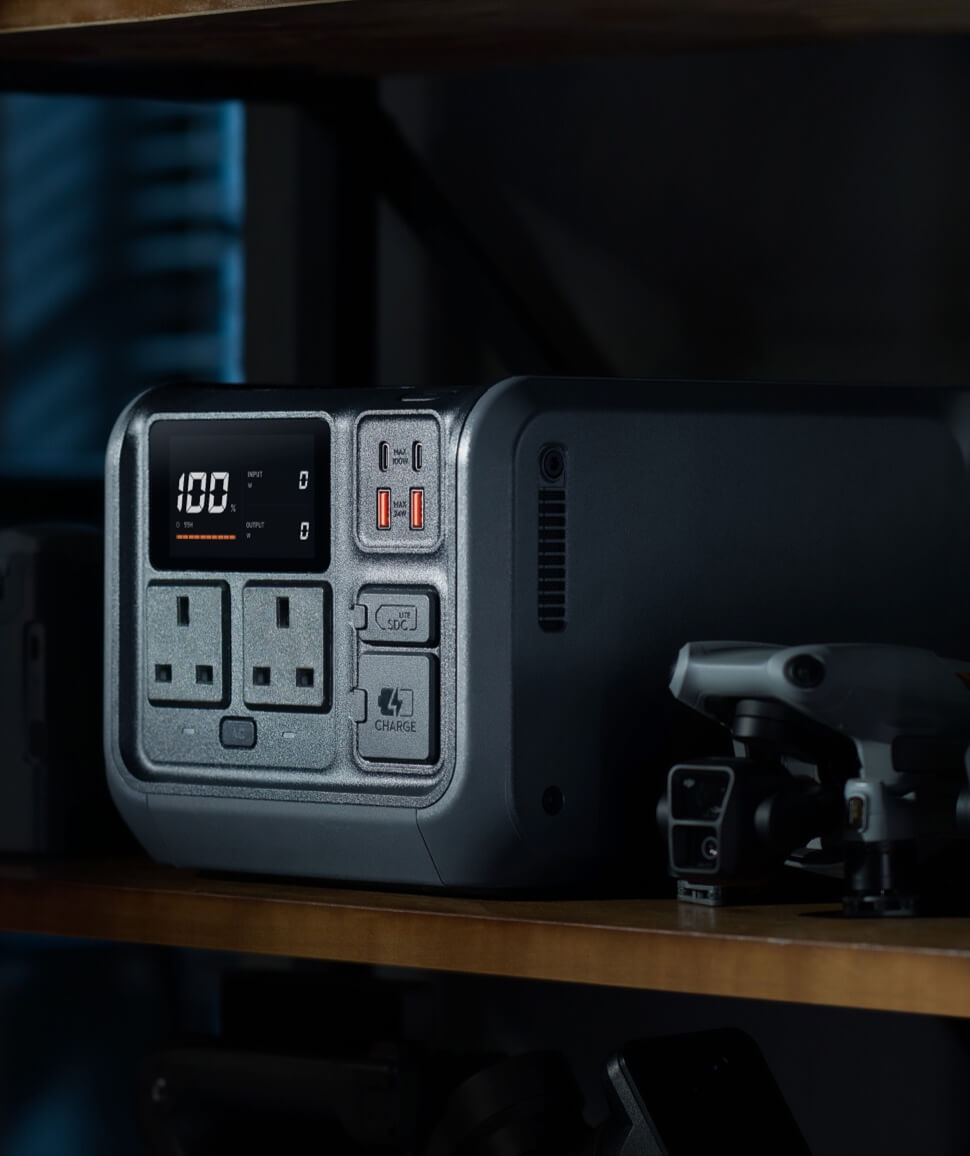 ReviewsDJI Power 500 Review: The Drone Pilot's 512Wh StationThe DJI Power 500 packs 512Wh of LFP storage with 1000W of continuous output, a full recharge in 70 minutes, and DJI's SDC…
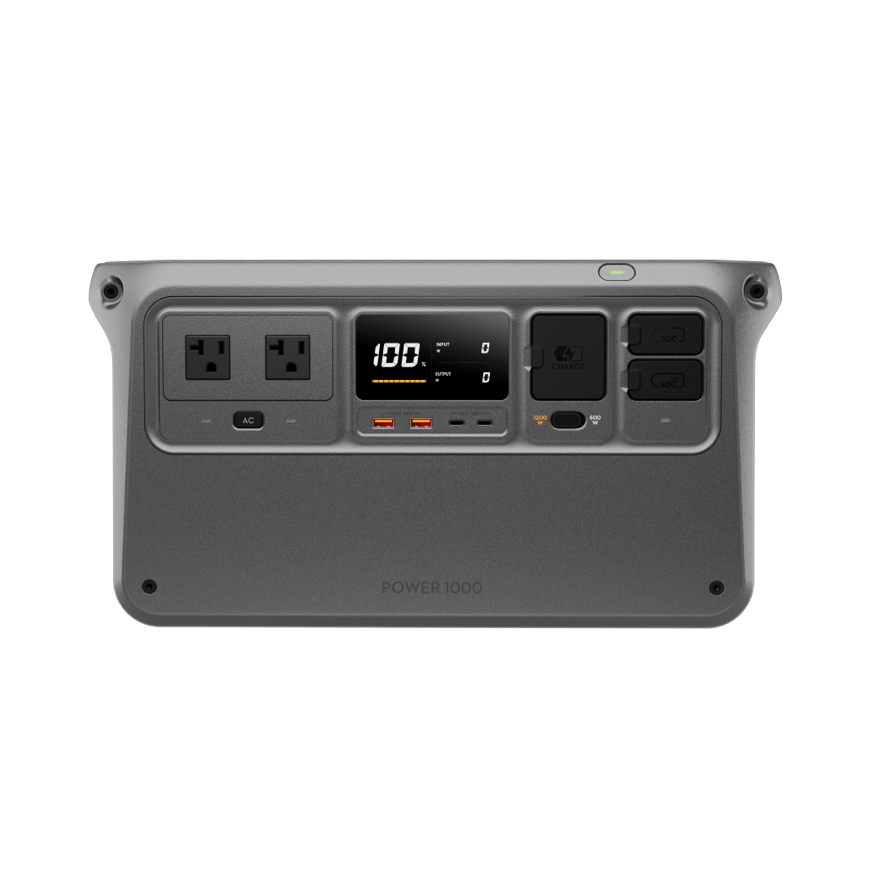 ReviewsDJI Power 1000 Review: The Drone Pilot's 1kWh StationThe DJI Power 1000 packs 1024Wh of LiFePO4 storage with 2200W of continuous output — the strongest 1kWh inverter in its class…
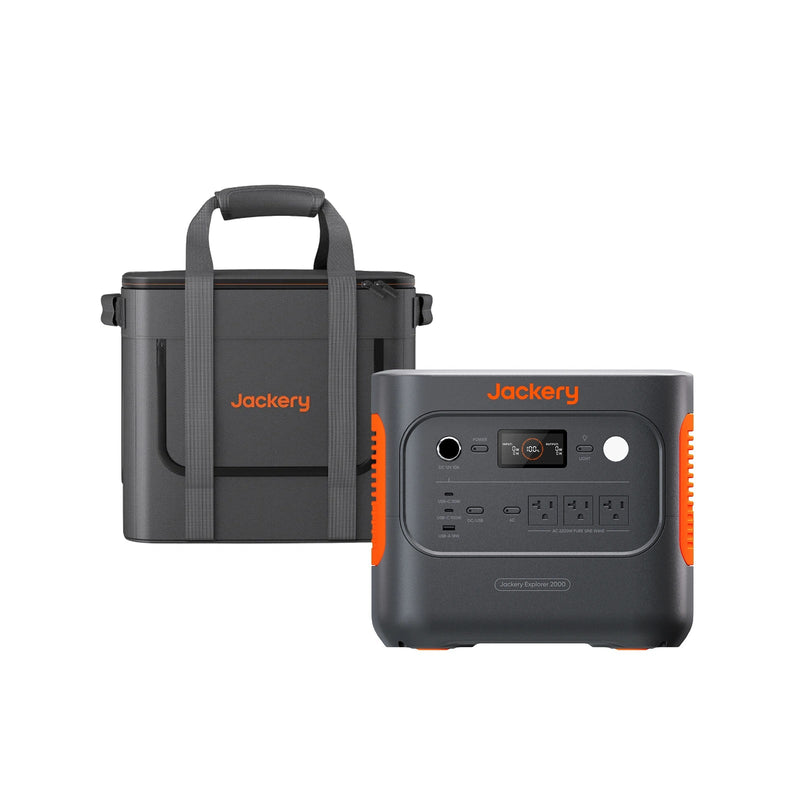 ReviewsJackery Explorer 2000 v2 Review: Light & FastThe Jackery Explorer 2000 v2 is the lightest 2kWh power station in its class at 39.5 lbs, with a 52-minute emergency recharge,…