Jackery HomePower 3000 Review: 3kWh Home Backup
7 min read
On this page
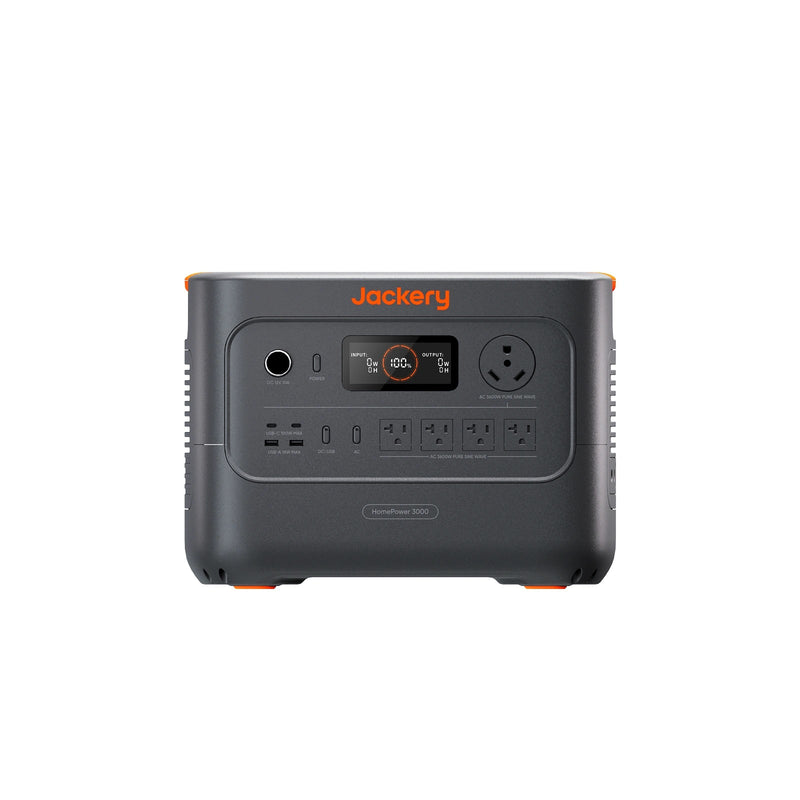
The Jackery HomePower 3000 packs 3072Wh of LiFePO4 storage and 3600W of output into a 59.5-lb box one adult can still move. Based on published specs, expert reviews, and owner feedback, here's what it runs, where it falls short, and who…
The short version
The Jackery HomePower 3000 is the 3kWh sweet spot for people who want serious home backup without committing to a 110-lb flagship: 3072Wh of LiFePO4 storage, 3600W of continuous output, and a body one adult can still lift at 59.5 lbs. It recharges in as little as 1.7 hours, switches over in ≤20ms as a UPS, and pairs with a manual transfer switch to back up to six home circuits. The compromises are real — no expansion batteries, solar input capped at 1000W, no 240V — but at around $1,349 on sale, it's one of the best dollar-per-watt-hour values in home backup right now.
This is a research-based review: every spec below comes from Jackery's official documentation, and the strengths and weaknesses reflect patterns across published expert reviews and verified owner feedback. We did not bench-test this unit.

Jackery HomePower 3000 key specs (verified)
| Spec | HomePower 3000 |
|---|---|
| Capacity | 3072Wh (60Ah/51.2V LiFePO4) |
| AC output | 3600W continuous, 7200W surge |
| AC outlets | 4× 120V/20A (2400W shared) + 1× 120V/30A TT-30 (3600W) |
| Battery chemistry / cycle life | LiFePO4 — 4000 cycles to 70%+ capacity |
| AC recharge | 2.2 hrs (1800W); 1.7 hrs AC+DC hybrid (2500W) |
| Solar input | 1000W max (dual DC 8mm inputs) |
| Car / gas charging | Car charging supported; gas generator 2.2 hrs |
| UPS | ≤20ms switchover, bypass mode |
| USB ports | 2× USB-A (18W), 2× USB-C (100W each) |
| Other DC | 1× car port (12V/10A) |
| Expandable | No — standalone system |
| Connectivity | Jackery app (Home Power Management) |
| Standby | ZeroDrain tech: ~95% charge retained after 12 months |
| Weight / dimensions | 59.52 lbs (27 kg) / 16.4 × 12.8 × 12 in |
| Warranty | 3-year + 2 extra years free (jackery.com purchase) |
Specs sourced from Jackery's official product pages and buying guides (crawled October 2026).
Standout features
1. 3kWh you can actually move
Jackery calls it the world's smallest and lightest 3kWh LFP power station, and the numbers back the claim: 3072Wh at 59.5 lbs with two side handles, versus 113+ lbs for 4kWh flagships. One adult can carry it from the garage to the kitchen — which matters enormously in a real outage, when the fridge that needs power is never where the battery is.
2. 3600W that covers real appliances
The headline number runs a microwave (800W), a full-size fridge, a window AC, power tools, and most kitchen appliances. The 7200W surge handles motor startups. One important detail from expert reviewers: the four standard 120V outlets share 2400W — the full 3600W is only available from the 30A TT-30 RV-style outlet.
3. Fast recharge, five ways
Wall charging takes 2.2 hours; the AC+DC hybrid mode (wall + solar/car simultaneously) drops that to 1.7 hours — among the fastest in the 3kWh class. Add gas-generator charging and car charging, and refilling during a multi-day outage is practical rather than aspirational.
4. Genuine UPS + home circuit backup
The ≤20ms UPS switchover keeps desktops, routers, and fridges running through the instant the grid drops (Jackery notes it's not 0ms server-grade, so skip data-center duty). Paired with Jackery's manual transfer switch, it can feed up to six essential 120V home circuits — a real wired-in backup setup without a $10,000 installed battery.
5. ZeroDrain standby
Jackery's ZeroDrain technology holds ~95% charge after 12 months in storage. For a device whose whole job is waiting for an emergency, that's a meaningful feature — no quarterly top-up ritual required.
Battery & charging, in detail
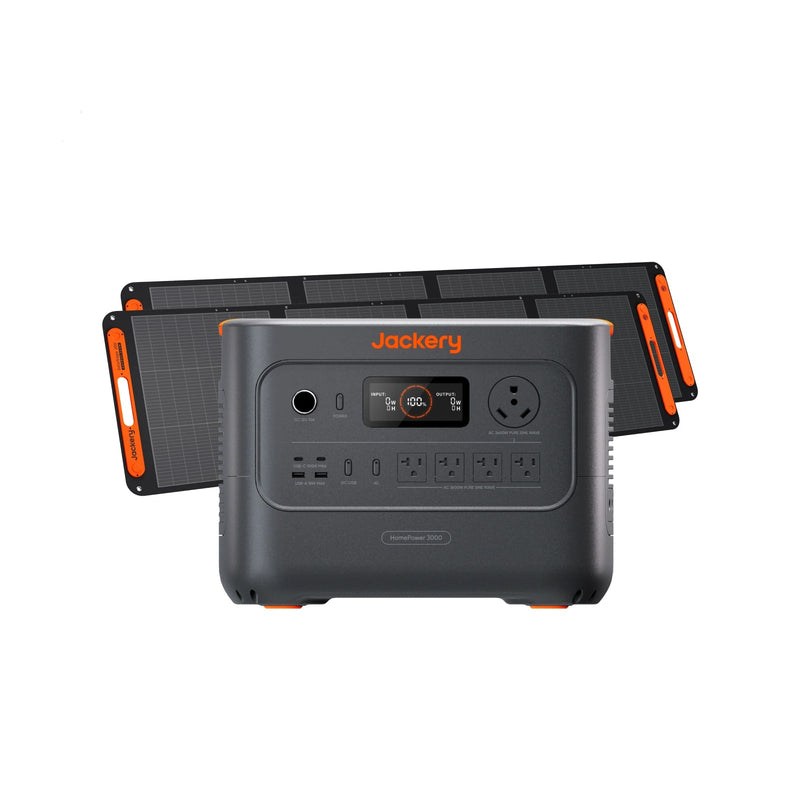
Charging flexibility is broad: AC wall (1800W), AC+DC hybrid (2500W combined), solar (1000W max across two DC inputs), car, and gas generator. Solar refills take about 5.5 hours with a full 1000W array in good sun — fine for daily cycling, though the 1000W cap is the clear bottleneck versus rivals that accept 2000W+. The 4000-cycle LFP rating (to 70%+ capacity) translates to well over a decade of occasional outage use, and the 5-year warranty (3+2 via jackery.com) matches the best in class.
Real-world use cases (with honest capacity math)
Using Jackery's published guidance and watt-hour math (3072Wh, ~85% usable):
Home backup during an outage
A full-size fridge (~120W) runs an estimated 30–40 hours — Jackery positions the unit as "1–2 days of essentials" (fridge, Wi-Fi, fans, lights). A Wi-Fi router and modem (~10W) runs roughly 5 days. For most short-to-medium outages, that's the whole job done.
CPAP overnight
A 40W CPAP (no heated humidifier) runs about a week of nights on a full charge — roughly 65 hours. The UPS mode makes it a credible bedside backup that also covers the exact moment power fails.
High-draw appliances
An 800W microwave runs ~3.2 hours; a 1500W space heater about 1.5 hours; a window AC unit (~800W) roughly 3–4.5 hours. The lesson from the math: the HomePower 3000 handles big loads fine, but capacity — not output — is the limit on long runs.
RV and outdoor use
The TT-30 outlet delivers the full 3600W to an RV (Jackery notes a grounding adapter is needed for direct RV charging). At 59.5 lbs it's manageable for car camping, and solar input keeps it topped off off-grid.
What it won't do
No 240V output, so electric dryers, well pumps, and central AC are out. No expansion batteries — 3072Wh is the ceiling. And for outages stretching past 2 days, you'll want solar panels or a generator to refill it daily.
What could be better
These are the consistent complaints across expert reviews and owner feedback:
- No expansion. Unlike EcoFlow and some Jackery siblings, you can't add battery packs later. Buy the capacity you'll need for years, because 3072Wh is forever.
- Solar capped at 1000W. A full solar refill takes ~5.5 hours in ideal sun — adequate, but rivals in this class accept 2000W+ and refill twice as fast from the sun.
- The 2400W outlet-group limit. The four regular 120V outlets share 2400W; only the 30A TT-30 outlet delivers the full 3600W. Plan your plug layout accordingly.
- No 240V. If your backup plan includes a well pump, electric dryer, or central AC, this isn't the unit — step up to a 240V-capable flagship.
- Cycle rating to 70%, not 80%. Jackery rates 4000 cycles to 70%+ remaining capacity, where most rivals quote to 80%. Still a decade-plus of service, but the fine print differs.
- Not for critical medical/life-support use. Jackery explicitly advises against medical devices and life-support equipment — standard for the industry, but worth repeating.
Who should buy it
- Homeowners wanting 1–2 days of outage coverage for fridge, internet, lights, and small appliances — the core use case, and it nails it.
- Anyone who needs to move it — renters, people with the fridge far from storage, or anyone who can't deadlift 113 lbs.
- CPAP users wanting a week of battery backup with UPS switchover.
- Budget-conscious backup buyers — at ~$1,349 on sale, the dollar-per-kWh value is excellent.
Who should skip it
- If you need 240V appliances, look at the EcoFlow Delta Pro 3 instead.
- If you want to expand capacity later, Jackery's own 2000 Plus/5000 Plus lines support battery packs — this one doesn't.
- If your outages regularly run past 2 days without sun, you need either more capacity or a generator to refill it.
FAQ
How long does the Jackery HomePower 3000 take to charge?
2.2 hours from a wall outlet, or 1.7 hours in AC+DC hybrid mode. Solar takes about 5.5 hours with a full 1000W array in good sun. Car and gas-generator charging are also supported.
Can the HomePower 3000 power a refrigerator?
Yes — easily. Its 3600W output starts any household fridge, and Jackery positions it for 1–2 days of essentials. Expect roughly 30–40 hours for a standard fridge.
Is the Jackery HomePower 3000 expandable?
No. It's a standalone system with no expansion battery option. If you need growable capacity, consider Jackery's 2000 Plus or 5000 Plus series instead.
Can it work as a UPS?
Yes — it supports UPS mode with ≤20ms switchover and bypass charging. Jackery notes it's not 0ms server-grade, so it's fine for computers and home gear but not data-center duty.
What is the Jackery HomePower 3000's warranty?
3 years plus 2 extra years free when purchased from jackery.com — 5 years total, matching the best in the industry.
Verdict
The HomePower 3000 is the right answer for most households' backup needs: 3072Wh and 3600W in a genuinely movable 59.5-lb package, fast 1.7–2.2 hour recharging, real UPS functionality, and transfer-switch support for up to six home circuits. The no-expansion and 1000W solar cap are real limits, and 240V households should look elsewhere — but at around $1,349 on sale (list $1,499), it delivers more usable backup per dollar than almost anything in its class. If 3kWh covers your outage plan, this is an easy recommendation. Jackery's 4.78-out-of-5 owner rating across 443 reviews on jackery.com backs up the on-paper promise — a mature, well-liked product, not a first-generation gamble.
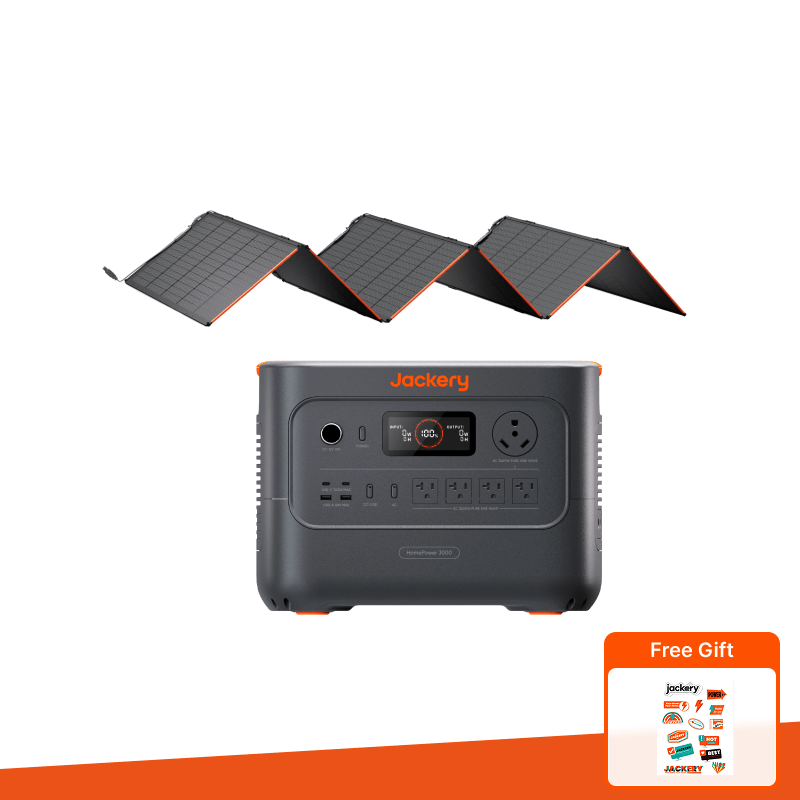
Pricing note: Jackery's pricing moves with frequent sales — $1,349 (list $1,499) was observed in October 2026, with the 2×200W solar bundle at $1,799. Check the current price before buying.
About our reviews
Specs come from published manufacturer data sheets, cross-checked against owner feedback. Figures go stale. Check the current data sheet before you buy. This is not electrical or purchasing advice.
Related guides
 ReviewsDJI Power 500 Review: The Drone Pilot's 512Wh StationThe DJI Power 500 packs 512Wh of LFP storage with 1000W of continuous output, a full recharge in 70 minutes, and DJI's SDC…
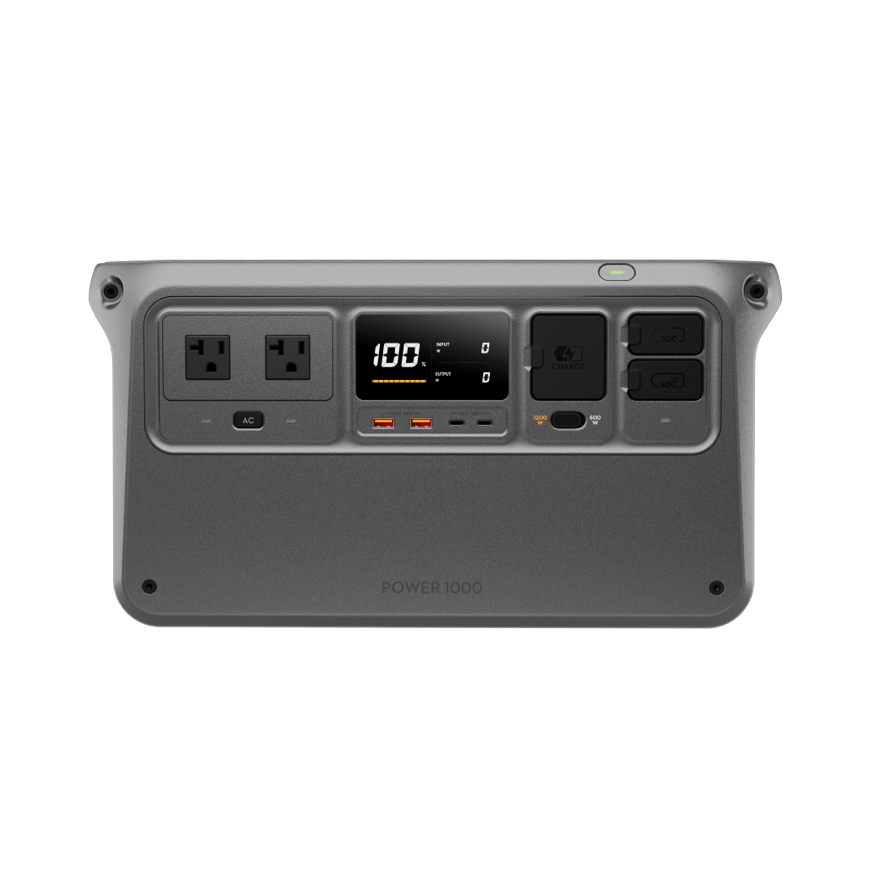 ReviewsDJI Power 1000 Review: The Drone Pilot's 1kWh StationThe DJI Power 1000 packs 1024Wh of LiFePO4 storage with 2200W of continuous output — the strongest 1kWh inverter in its class…
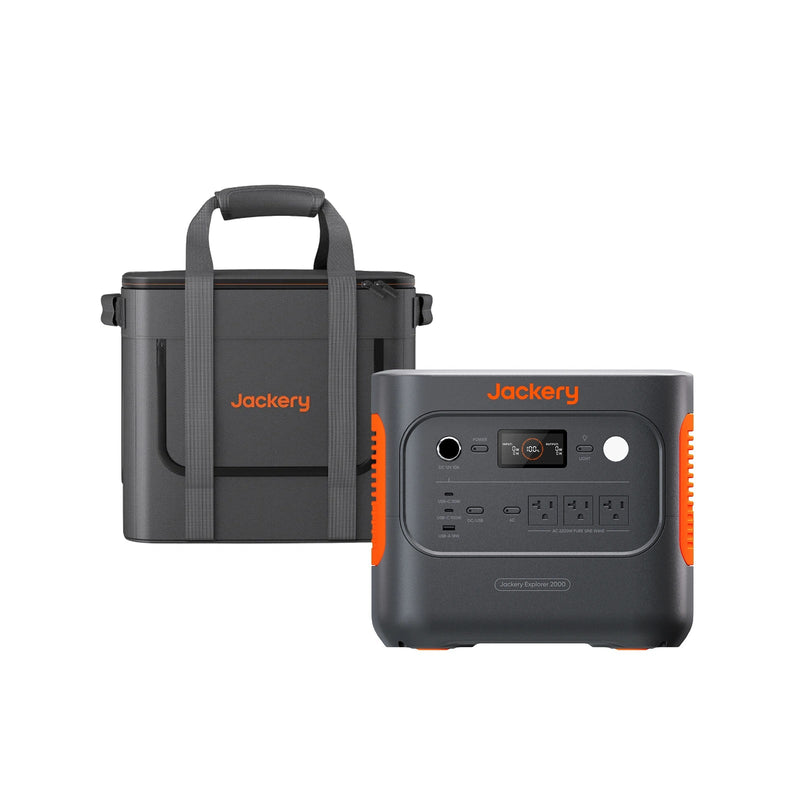 ReviewsJackery Explorer 2000 v2 Review: Light & FastThe Jackery Explorer 2000 v2 is the lightest 2kWh power station in its class at 39.5 lbs, with a 52-minute emergency recharge,…