Can a Portable Power Station Run a Sump Pump?
3 min read
On this page
Yes — if the inverter's surge rating beats your pump's startup surge. A 1/3 HP pump can spike to 2,900W at startup, so the math matters more than the marketing. Here's the running-vs-surge breakdown, worked runtime examples, and the…
The short answer
Yes — a portable power station can run a sump pump, but only if you size it to the pump's startup surge, not its running watts. Sump pumps use induction motors that briefly draw 2–4× their running power when they kick on. A typical 1/3 HP pump runs at ~800W but can spike to 1,300–2,900W at startup; a 1/2 HP pump runs at ~1,050W and can surge to 2,150–4,100W. Get the surge math wrong and the pump simply won't start — exactly when you need it most.
This is a research-based guide: pump wattage figures come from manufacturer and engineering sources cited below, and station specs come from official manufacturer documentation. We did not bench-test these combinations.
The math, first: running watts vs surge watts
Two numbers describe every sump pump:
- Running watts — the steady draw while pumping. This determines how long your battery lasts.
- Surge (starting) watts — the split-second spike when the motor starts. This determines whether the pump starts at all. Your station's surge rating must exceed this number.
| Pump size | Typical running watts | Typical startup surge |
|---|---|---|
| 1/4 HP | 400–600W | 800–1,800W |
| 1/3 HP | 500–800W | 1,000–2,900W |
| 1/2 HP | 800–1,050W | 2,150–4,100W |
| 3/4 HP | 1,000–1,500W | 3,000–4,500W |
Ranges compiled from EcoFlow's and BLUETTI's published sump-pump guides and engineering analyses. Your pump's nameplate (volts × amps) gives its running draw — check the manual or motor sticker for the exact figures.
Three rules that follow from the table:
- Surge decides the inverter size. A 1/2 HP pump needs an inverter with a surge rating above ~4,100W — which rules out every 1kWh-class station on surge alone, even though they can handle the 1,050W running load easily.
- Duty cycle decides the battery size. Sump pumps don't run continuously — they cycle. A pump running 10 minutes per hour at 800W uses ~133Wh per hour, not 800Wh.
- Use pure sine wave only. Induction motors need clean power; every station recommended below has a pure-sine inverter. And don't use "boost" modes (like X-Boost) on a pump — they lower voltage to hit higher wattage, which can overheat a motor.
Worked examples
Example 1: 1/3 HP pump in a moderate storm
Pump: 800W running, 2,900W worst-case surge. Duty: 10 min/hour → 800 × (10/60) ≈ 133Wh per hour.
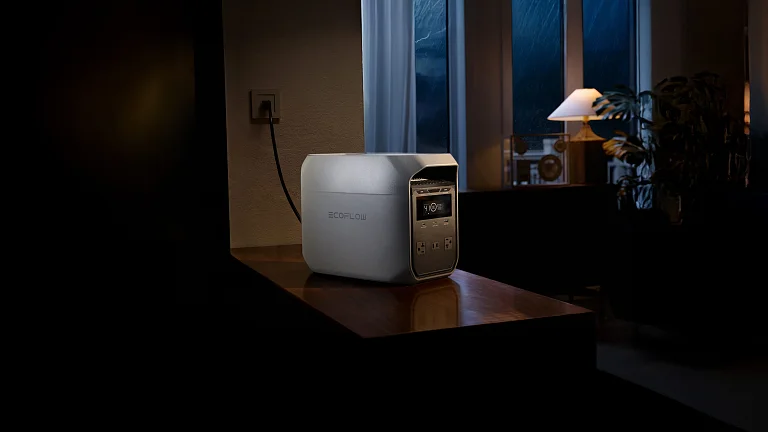
- EcoFlow Delta 3 (1024Wh, 3600W surge): surge headroom ✓ (3600 > 2900). Runtime: 1024 ÷ 133 ≈ 7.7 hours at this duty cycle.
- EcoFlow Delta 2 (1024Wh, 2700W surge): runtime similar, but 2700W surge is below the 2,900W worst case — it will start most 1/3 HP pumps, but a high-surge unit could trip it. The Delta 3 is the safer pick here.
Example 2: 1/2 HP pump in heavy rain
Pump: 1,050W running, up to 4,100W surge. Duty: 15 min/hour → 1,050 × 0.25 ≈ 263Wh per hour.
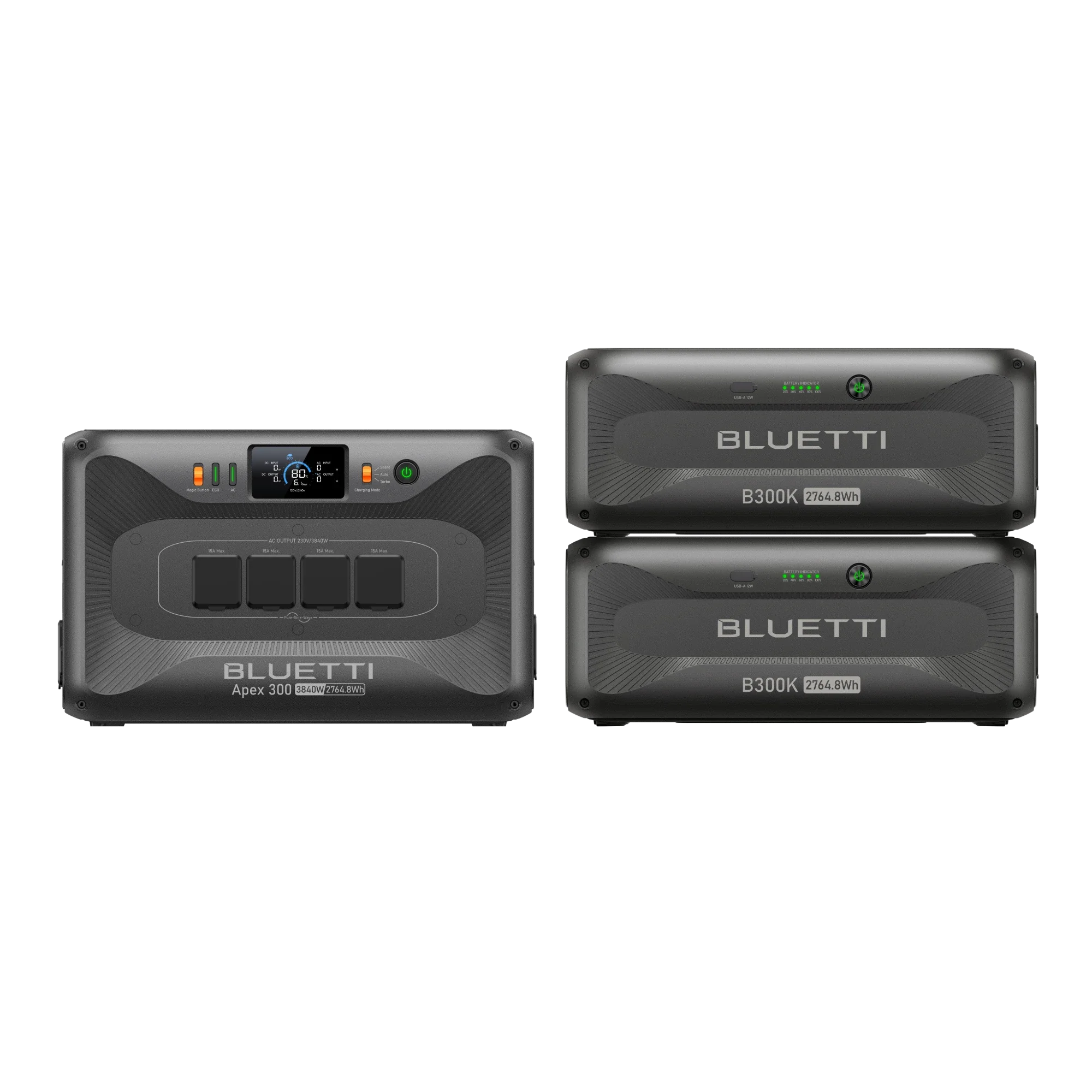
- Bluetti Apex 300 (2764.8Wh, 7680W surge): surge headroom ✓✓. Runtime: 2764.8 ÷ 263 ≈ 10.5 hours. Add a B300K expansion battery and you're past 24 hours.
- 1kWh-class units: ruled out on surge (even the Delta 3's 3600W is short of 4,100W).
Example 3: 1/3 HP pump running nearly continuously
Severe storm, pump runs 30 min/hour → 800 × 0.5 = 400Wh per hour. A 1024Wh Delta 3 lasts ~2.5 hours — which is why heavy-storm protection means either a bigger battery (Apex 300 + expansion), solar replenishment during the day, or a dedicated 12V DC battery-backup sump system as a second layer.
Recommendations by pump size
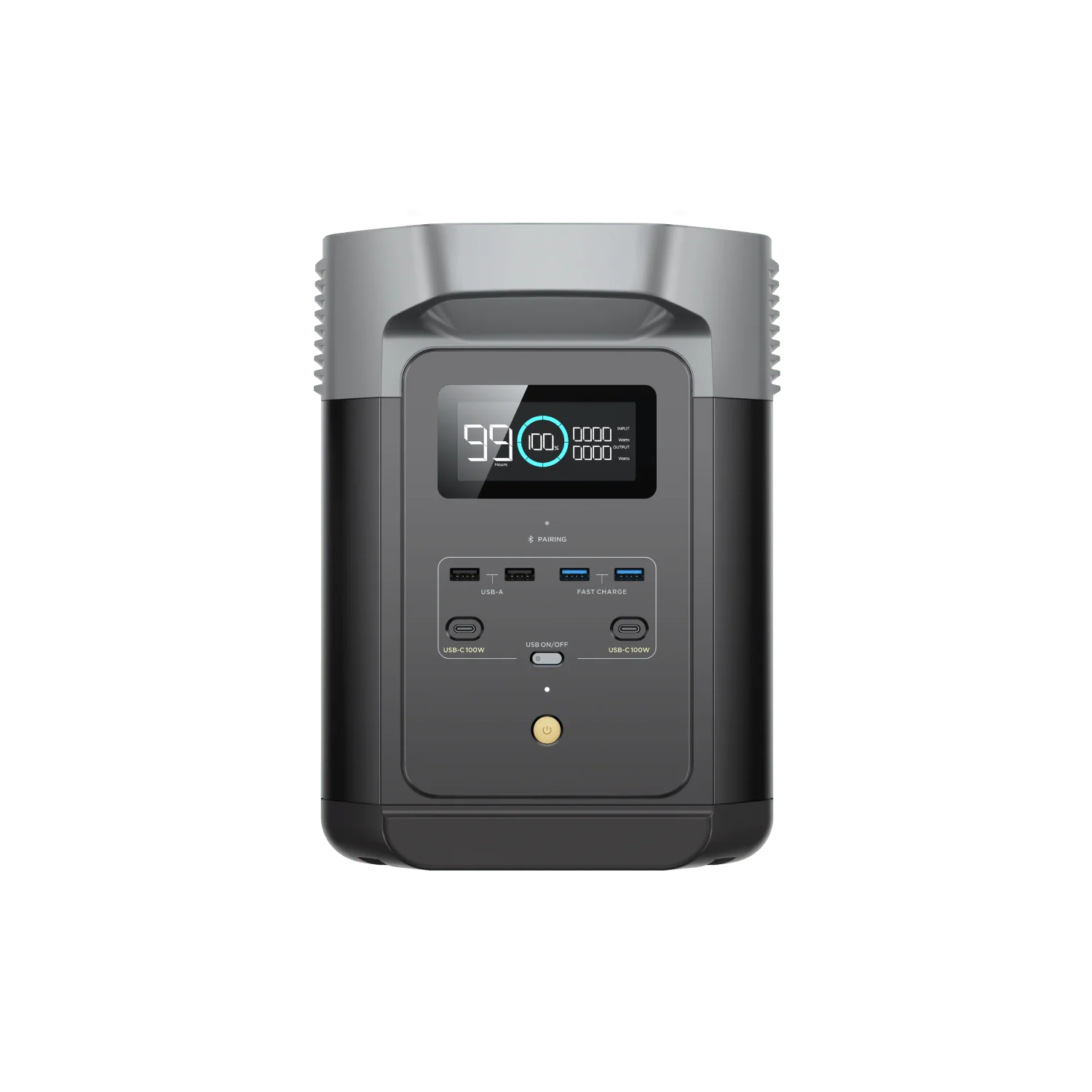
1/4 – 1/3 HP pumps: EcoFlow Delta 3
1024Wh · 1800W / 3600W surge · ~$599
The 3,600W surge clears the worst-case 2,900W startup of a 1/3 HP pump with margin to spare, 1024Wh covers a typical storm night at realistic duty cycles, and the 500W solar input lets panels stretch runtime indefinitely during daylight. Its <10ms UPS switchover also means it can sit inline guarding the pump circuit. The Delta 2 is a workable budget alternative if your specific pump's surge is on the low end — check the nameplate first.
1/2 HP pumps: Bluetti Apex 300
2764.8Wh · 3840W / 7680W surge · ~$1,599
The minimum honest answer for a 1/2 HP pump: 7,680W of surge swallows the 4,100W worst case, 3,840W continuous handles the running load with ease, and 2,764.8Wh delivers ~10 hours at heavy-rain duty cycles. Expansion batteries take it to multi-day territory. This is the tier where "portable power station" starts doing the job of a standby generator for the pump circuit.

3/4 HP and larger: Anker Solix F3800 (or Apex 300 expanded)
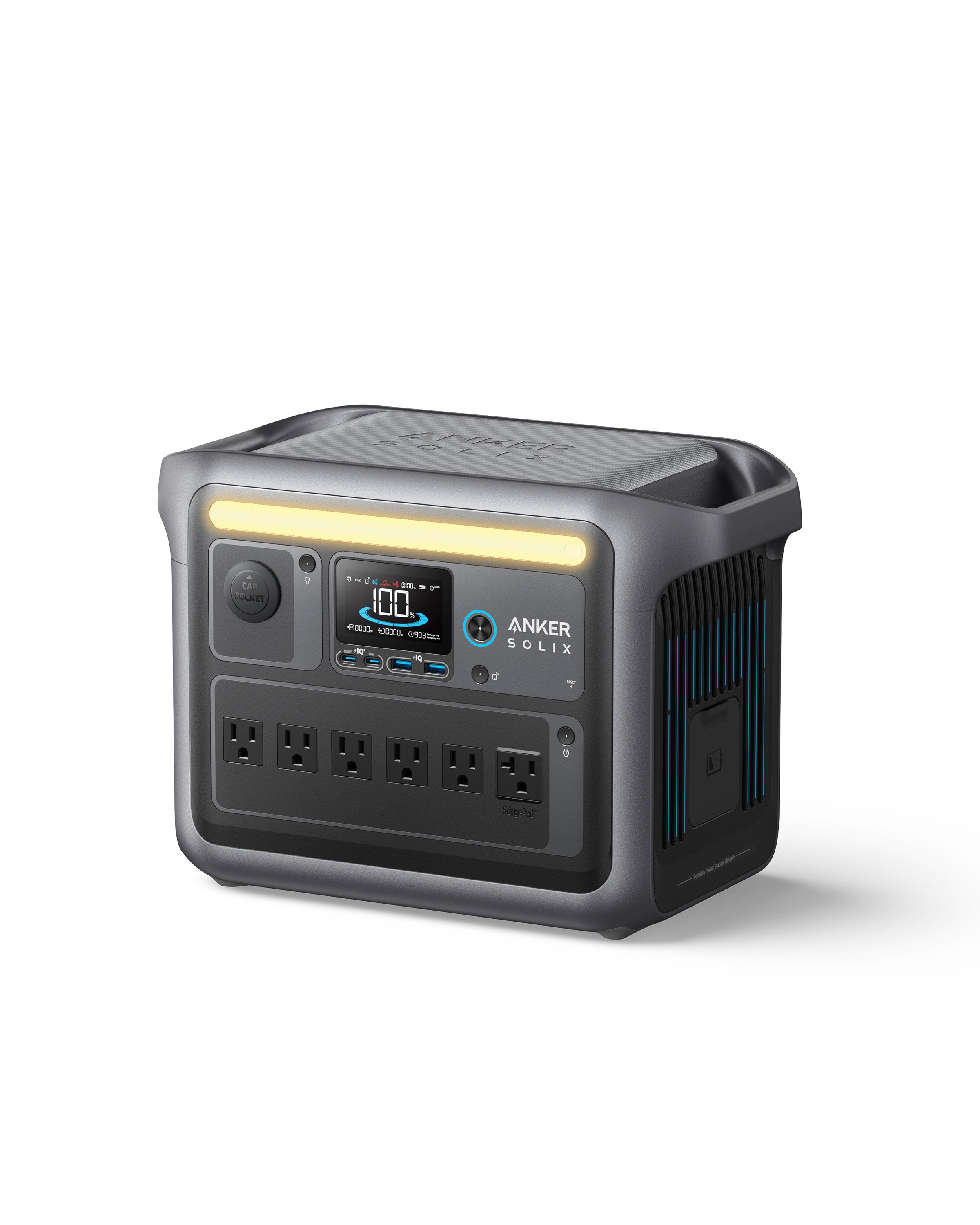
3840Wh · 6000W / 9000W surge · ~$1,980
Big pumps need big inverters. The F3800's 9,000W surge and 6,000W continuous output cover 3/4 HP pumps comfortably, with 3,840Wh (expandable to 26.88kWh) for long storms. An expanded Apex 300 (two+ B300K batteries) is the alternative if you prefer Bluetti's faster recharging and longer-lived cells.
Don't forget the second layer
A portable power station is an excellent primary backup, but basement-flood protection deserves redundancy: a dedicated 12V DC battery-backup sump system (the kind with its own marine battery and float switch) protects you if the station is depleted, unplugged, or powering something else when the storm hits. The two systems complement each other — the station handles long outages, the DC backup handles the "oops" cases.
FAQ
Can a 1000W power station run a sump pump?
It depends on the pump's surge, not the 1000W label. A 1/4 HP pump (surge up to 1,800W) generally yes; a typical 1/3 HP pump (surge up to 2,900W) only if the station's surge rating exceeds it — many 1kWh units are marginal here. A 1/2 HP pump (surge up to 4,100W) needs a larger unit.
How long will a power station run my sump pump?
Divide the station's watt-hours by your pump's hourly energy use: running watts × (minutes run per hour ÷ 60). Example: an 800W pump running 10 min/hour uses ~133Wh/hour, so a 1024Wh station lasts ~7.7 hours. In a severe storm with near-continuous pumping, cut that to 2–3 hours.
Does a sump pump need pure sine wave power?
Yes. Induction motors run hotter, noisier, and less efficiently on modified sine wave — and some won't start at all. Every station recommended in this guide has a pure-sine inverter.
Can I use X-Boost mode for my sump pump?
No — don't. Boost modes raise wattage by lowering voltage, which is fine for resistive heaters but can overheat and damage an induction motor. Size the inverter's real surge rating to the pump instead.
Should I get solar panels too?
For multi-day storm protection, yes. Even 400W of panels can offset a 1/3 HP pump's daytime energy use and refill the station between cloud bands — the difference between one night of protection and indefinite coverage.
The bottom line
Match the surge rating to your pump's startup spike first, then size the battery to your storm's duty cycle: Delta 3 class for 1/3 HP, Apex 300 class for 1/2 HP, F3800 class for 3/4 HP and up. Check your pump's nameplate, do the 10-minute math above, and add a 12V DC backup as your second layer. A flooded basement costs far more than the right-sized station.
About our reviews
Specs come from published manufacturer data sheets, cross-checked against owner feedback. Figures go stale. Check the current data sheet before you buy. This is not electrical or purchasing advice.
Related guides
 Sizing guidesHow Long Will a 1000Wh Power Station Run? (Chart)The simple runtime formula — (watt-hours × 0.85) ÷ watts — plus a full chart: how long a 1000Wh power station runs a…
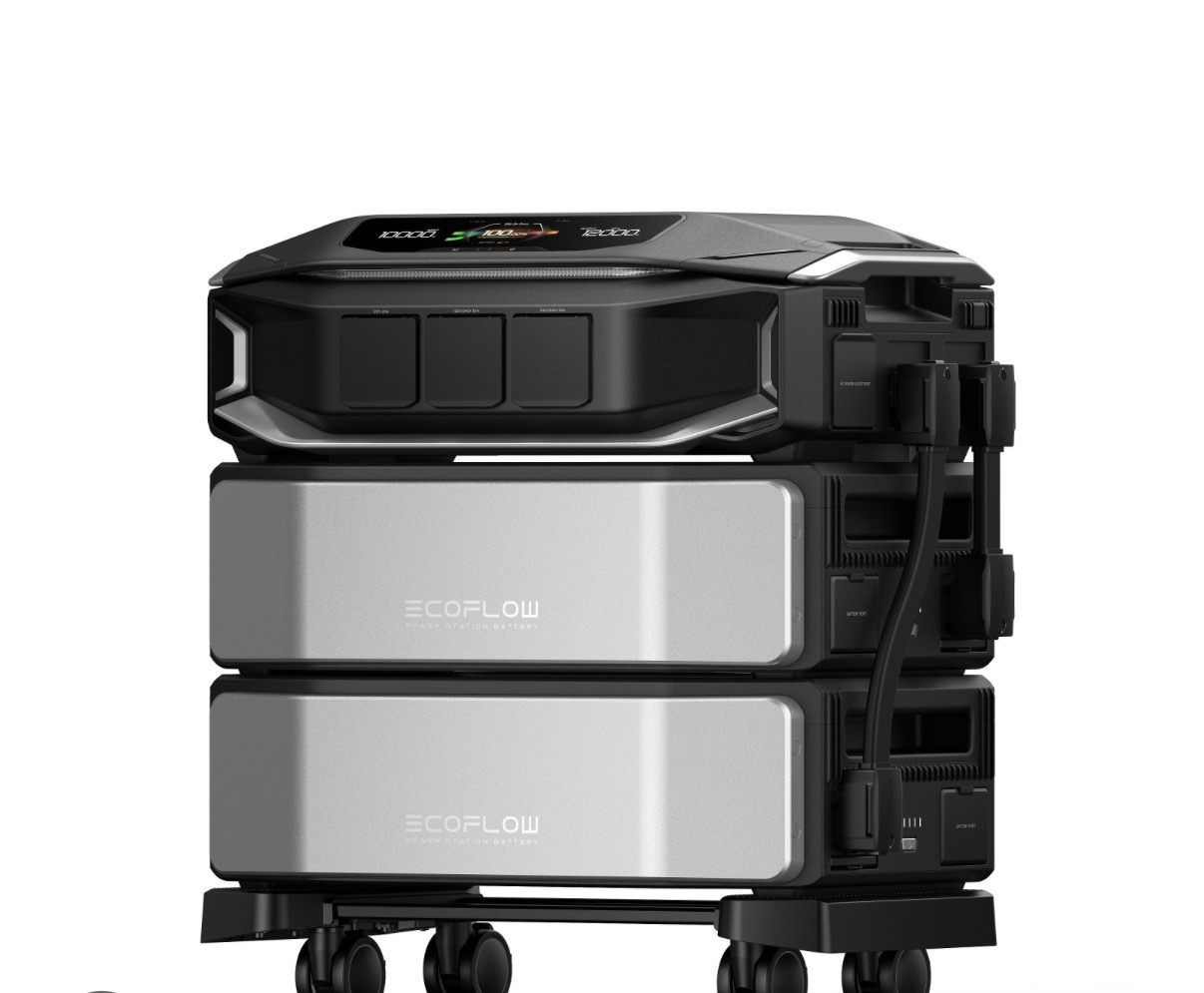 Sizing guidesHow Many Watts Do I Need for Home Backup? (2026)Sizing home backup power is two separate math problems: how much power at once (watts) and how much energy over time…
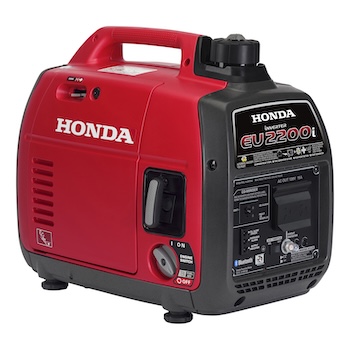 Sizing guidesPower Station vs Gas Generator for Home Backup (2026)Battery vs. gas for home backup: the honest comparison. We break down noise, fumes, fuel cost per kWh, runtime, maintenance, and…