How Many Watts Do I Need for Home Backup? (2026)
6 min read
On this page
Sizing home backup power is two separate math problems: how much power at once (watts) and how much energy over time (watt-hours). This worksheet walks you through both, with real appliance wattages, duty-cycle math, and worked examples…
The short version
Most homes need 800–2,000W of continuous power for essential backup (fridge, freezer, lights, internet, phones, and a few extras) and 2–10kWh of energy depending on outage length. The method: list your loads, multiply watts × hours for each, add 20% headroom, and check both numbers against the battery — watts against the inverter, watt-hours against the capacity. Work through the worksheet below once, and you'll know exactly which size class to buy instead of guessing.
This is a research-based guide built on standard electrical math and manufacturers' published specs. No bench testing was involved — just arithmetic you can verify with a $25 plug-in watt meter.

The two numbers everyone confuses: watts vs. watt-hours
- Watts (W) = power right now. Your fridge draws ~120W while the compressor runs. This number must fit inside the station's inverter rating (e.g., 1800W).
- Watt-hours (Wh) = energy over time. That fridge at 120W for 10 hours uses 1200Wh. This number must fit inside the station's battery capacity (e.g., 1024Wh).
A station can fail you two completely different ways: too small an inverter (it shuts off when the microwave starts) or too small a battery (it runs everything fine for three hours, then dies). Size both.
Two more terms that matter: surge watts (the brief spike when motors start — a fridge can surge 5–8× its running watts for a second) and duty cycle (a fridge compressor runs maybe 30–50% of the time, so its average draw is far lower than its nameplate watts).
Step 1: list your loads (the worksheet)
Walk through your house and write down everything you'd want powered in an outage. Typical running watts:
| Appliance | Typical running watts | Notes |
|---|---|---|
| Refrigerator (full-size) | 100–200W | Surges 800–1200W at compressor start; ~35% duty cycle |
| Chest freezer | 80–150W | Similar surge; ~40% duty cycle |
| Wi-Fi router + modem | 10–20W | Runs 24/7 — small but constant |
| LED lights (per room) | 10–40W | Trivial individually |
| Phone charging | 10–20W | Negligible for sizing |
| Laptop | 40–90W | Use the charger's rating as a ceiling |
| TV (55") | 80–150W | — |
| CPAP (no humidifier) | 20–60W | See our CPAP guide |
| Microwave | 900–1200W | Short bursts — big inverter demand, small energy |
| Coffee maker | 800–1200W | ~10 min per pot ≈ 150–200Wh |
| Sump pump (1/3 HP) | 800–1300W running | Surges 2000W+; critical in storms |
| Well pump | 1000–2000W | Large surge — check LRA rating |
| Space heater | 750–1500W | Battery killer: 1500W × 1h = 1500Wh |
| Window AC (8k BTU) | 700–1000W | Surge at compressor start |
| Central AC (3-ton) | 3000–5000W | Needs a whole-home system, not a portable |
Wattages are typical ranges from DOE/EIA appliance data and manufacturer specs — your models will vary. A plug-in watt meter ($20–30) gives you exact numbers for your own appliances and is the single best $25 a backup planner can spend.
Step 2: do the math (worked example)
Take the Johnsons' essentials during a 12-hour overnight outage:
| Load | Watts | Hours | Duty cycle | Wh |
|---|---|---|---|---|
| Fridge | 150W | 12 | 35% | 630 |
| Freezer | 120W | 12 | 40% | 576 |
| Router + modem | 15W | 12 | 100% | 180 |
| LED lights | 30W | 5 | 100% | 150 |
| Phones (2) | 20W | 3 | 100% | 60 |
| CPAP | 40W | 8 | 100% | 320 |
| Total | — | — | — | 1916Wh |
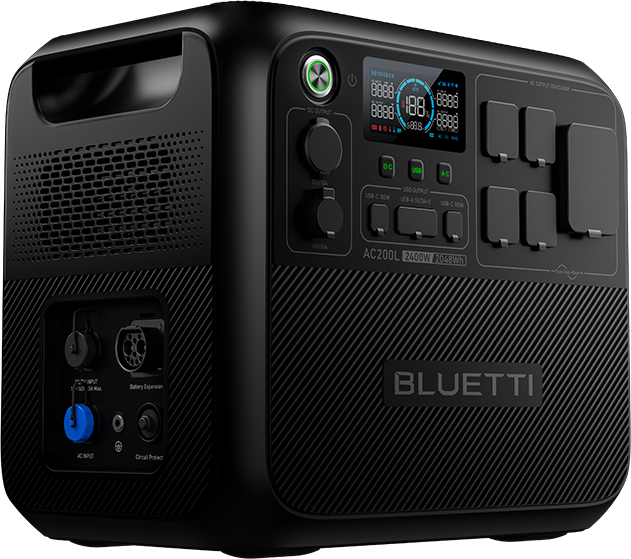
Peak simultaneous watts: the fridge and freezer compressors rarely start together, but plan for it: 150 + 120 + 15 + 30 + 40 = 355W running, with a worst-case surge around 1500W if both compressors kick on at once. Verdict: a 2kWh-class station with a 2000W+ inverter (Bluetti AC200L, or a Delta 2 with an extra battery) covers this night with margin. A 1kWh station would need the freezer unplugged or a midday solar top-up.
Now add 20% headroom for inverter inefficiency and estimation error: 1916 × 1.2 ≈ 2300Wh. That's the honest target.
Step 3: match the math to a size tier
- ~300Wh tier (phones, lights, CPAP one night): Jackery Explorer 300 Plus, Bluetti EB3A, EcoFlow River 3 Plus. Best for: short outages, apartments, keeping essentials alive for an evening.
- ~1kWh tier (fridge + essentials for 8–16 hours): EcoFlow Delta 2, Anker Solix C1000, Jackery Explorer 1000 v2. Best for: the classic "storm knocked out power until morning" scenario.
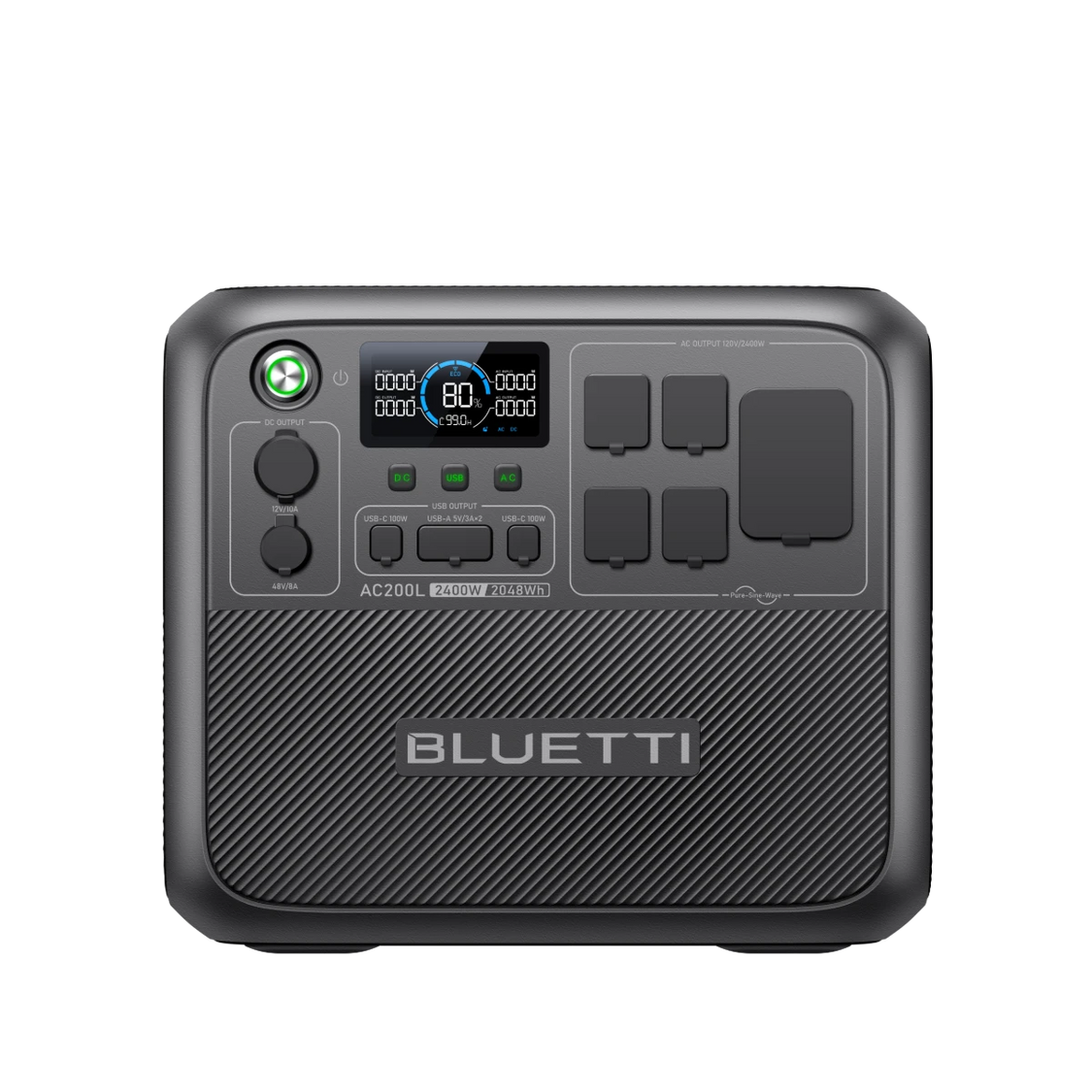
- ~2kWh tier (fridge + freezer + comfort for 12–24 hours): Bluetti AC200L, EcoFlow Delta 2 Max, Delta Pro 3. Best for: day-long outages with real appliances.
- 3–6kWh tier (multi-day essentials): expanded Delta 2 / Delta Pro 3, Jackery 2000 Plus. Best for: hurricane/wildfire shutoffs measured in days.
- 10kWh+ whole-home (installed systems): Tesla Powerwall 3, EcoFlow Delta Pro Ultra, Bluetti EP900, Anker Solix X1. Best for: running the house, not just the fridge. See our whole-home guide.
The mistakes that waste money
- Buying watts when you need watt-hours. A 3000W inverter on a 500Wh battery runs your microwave brilliantly — for ten minutes. Match the battery to the outage length first.
- Forgetting duty cycle. A fridge labeled 150W does NOT use 150 × 24 = 3600Wh per day. At 35% duty cycle it's ~1260Wh. Nameplate math oversizes everything by 2–3×.
- Forgetting surge. The flip side: a 150W fridge needs ~1000W of surge headroom at compressor start. A 300W inverter will trip even though the "math" says it fits.
- Sizing for the space heater. Electric resistance heat is the fastest way to drain any battery: 1500W × 8 hours = 12kWh — a whole Powerwall for one room. For outage heat, think blankets, a gas fireplace, or a small propane heater (used safely and ventilated) — not the battery.
- No recharge plan. A battery without solar, a generator, or the grid is a one-shot device. For outages over 24 hours, budget recharge (solar panels, alternator charger, or a small generator) alongside capacity.
Quick answers by outage length
- 2–4 hours (brownouts, brief storms): ~300–500Wh covers fridge + router + lights. Any quality 300Wh station works.
- 8–12 hours (overnight outage): ~1–2kWh. The 1kWh tier handles essentials; 2kWh adds comfort margin.
- 24–48 hours (major storm): ~2–4kWh plus a recharge plan (400W+ solar or a generator top-up). Without recharge, even 4kWh is one day of normal life.
- 3+ days (hurricane, ice storm, PSPS shutoff): whole-home battery (10kWh+) with solar, or a portable station paired with a generator for daily refills.
FAQ
How many watts does the average house need for backup?
Essential backup (fridge, freezer, lights, internet, phones, laptop) typically peaks at 800–2,000W simultaneous draw. Whole-home backup including AC, dryer, and oven can peak at 8–12kW — that's installed-system territory, not portable-station territory.
Is 2000W enough for home backup?
For essentials, yes — 2000W of inverter covers a fridge, freezer, and most household loads except central AC, electric dryers, and well pumps. See our 2000Wh runtime guide for exactly what that size runs.
How do I measure my appliances' actual wattage?
A plug-in watt meter ($20–30) measures real draw over time — far more accurate than nameplate ratings. For hardwired loads (well pump, furnace), check the equipment label or have an electrician measure with a clamp meter.
Should I size for the worst outage I've ever had?
Size for the 90th percentile, not the record. Covering a once-a-decade 5-day ice storm with battery alone means buying 3× the capacity you'll use 99% of the time. A mid-size battery plus a recharge plan (solar or small generator) is the economical answer for extreme outliers.
Does a bigger inverter waste battery?
Slightly — larger inverters have higher idle/standby draw (typically 10–30W). But the difference is small compared to right-sizing the battery. Don't buy a 3600W unit for phone charging, but don't fear a 2400W unit for fridge duty either.
Verdict
Do the worksheet once: list loads, multiply watts × hours × duty cycle, add 20% headroom, and check watts against the inverter and watt-hours against the battery. Most households land on a 1–2kWh portable station for overnight outages or a 10kWh+ installed system for true whole-home backup. The expensive mistake isn't buying too little — it's buying blind. Now you're not.

About our reviews
Specs come from published manufacturer data sheets, cross-checked against owner feedback. Figures go stale. Check the current data sheet before you buy. This is not electrical or purchasing advice.
Related guides
 Sizing guidesHow Long Will a 1000Wh Power Station Run? (Chart)The simple runtime formula — (watt-hours × 0.85) ÷ watts — plus a full chart: how long a 1000Wh power station runs a…
 Sizing guidesPower Station vs Gas Generator for Home Backup (2026)Battery vs. gas for home backup: the honest comparison. We break down noise, fumes, fuel cost per kWh, runtime, maintenance, and…
 Sizing guidesWhat Can a 2000Wh Power Station Run? (Real Runtime Examples)A 2000Wh power station is the sweet spot for serious home backup — but "2000Wh" doesn't mean 2000 usable watt-hours. Here's the…