What Can a 2000Wh Power Station Run? (Real Runtime Examples)
5 min read
On this page
A 2000Wh power station is the sweet spot for serious home backup — but "2000Wh" doesn't mean 2000 usable watt-hours. Here's the honest math (expect ~1,700Wh after losses), 15 real runtime examples from CPAPs to microwaves, and what it…
The short version
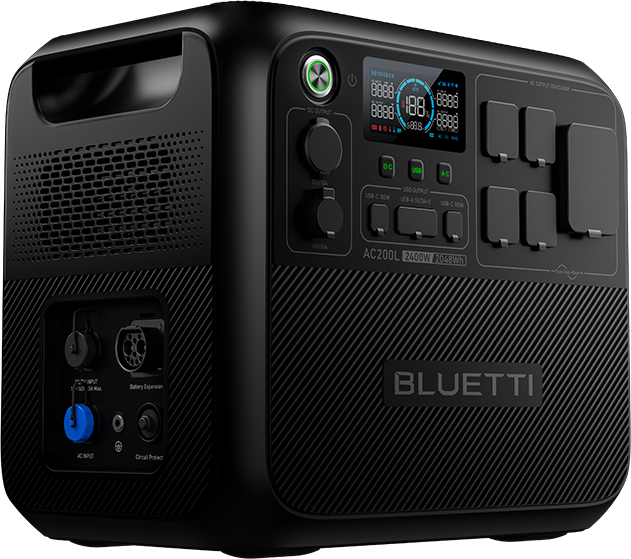
A 2000Wh-class power station (Bluetti AC200L, EcoFlow Delta 2 Max, Jackery 2000 Plus) delivers roughly 1,700 usable watt-hours after inverter and conversion losses. That's enough to run a full-size fridge for 24–36 hours, a CPAP for 4–5 nights, a TV for 15+ hours, or a microwave for a week of normal reheating — but not a space heater for more than an hour or central AC at all. The 2kWh class is the sweet spot where a portable station stops being a gadget and starts being a genuine one-day home backup system.
This is a research-based guide: runtimes are calculated from manufacturers' published specs and standard electrical math, not bench tests. Every figure below shows its working so you can check it.

First: the honest math (why 2000Wh ≠ 2000Wh)
Three things eat into the nameplate number:
- Inverter efficiency (~85–90%). Converting DC to AC loses 10–15%. 2000Wh × 0.87 ≈ 1740Wh usable on AC.
- You shouldn't drain to zero. Keep 5–10% in reserve for battery health and the next surprise: ~1650Wh practical.
- Idle draw. A 2kWh-class inverter idles at roughly 10–25W just being on. Over 24 hours that's 240–600Wh — significant if you're running tiny loads for days.
Rule of thumb: plan on ~1,700 usable watt-hours from a "2000Wh" station. Then: runtime (hours) = 1700 ÷ device watts, adjusted for duty cycle (fridges cycle on and off).
15 real runtime examples
All calculated at 1700 usable Wh:
| Device | Typical draw | Runtime | Notes |
|---|---|---|---|
| Full-size refrigerator | ~52W avg (150W, 35% duty) | ~30 hours | The core outage use case — a full day plus |
| Chest freezer | ~48W avg | ~35 hours | Keep the lid shut; less cycling = longer |
| Fridge + freezer together | ~100W avg | ~17 hours | Compressors rarely run simultaneously |
| CPAP (no humidifier) | 40W × 8h = 320Wh/night | ~5 nights | Our CPAP guide has the full math |
| Wi-Fi router + modem | 15W | ~110 hours | Nearly 5 days — trivial load |
| LED lights (whole house) | 40W | ~42 hours | — |
| 55" LED TV | 100W | ~17 hours | Movie marathons through any outage |
| Laptop (working) | 60W | ~28 hours | 3+ full workdays |
| Microwave (reheating) | 1000W × 10 min/day | ~10 days | Big watts, tiny energy — ideal battery load |
| Coffee maker | 1000W × 10 min | ~10 pots | ~167Wh per pot |
| 12V compressor fridge | 45W avg | ~37 hours | Van-life staple |
| Starlink dish | 50–75W | ~24 hours | Stay connected off-grid for a day |
| Circular saw | 1400W intermittent | ~1.2 hours of cutting | A full day of real job-site work in bursts |
| Space heater (low) | 750W | ~2.2 hours | Battery killer — see below |
| Space heater (high) | 1500W | ~1.1 hours | Do not plan outage heat on battery |
Figures assume the device's rated draw; your models will vary ±20%. Duty-cycle devices (fridges) are the least predictable — a hot garage shortens every number above.
What a 2000Wh station can do in one day (a realistic outage day)
Here's a full 24-hour outage on a single charge — fridge, connectivity, lights, and devices:
- Fridge: 52W average × 24h = 1,250Wh
- Router + modem: 12W × 24h = 290Wh
- Phones + LED evening lights: ~100Wh
- Total: ~1,640Wh — fits inside the ~1,700Wh budget with a small reserve.
Add a freezer and you're over budget — that's the honest line. One big cooling appliance plus connectivity and lights is a comfortable day; two cooling appliances needs either a bigger battery or a midday solar/generator top-up. This is exactly why the sizing worksheet starts with your load list.
What it can't do
- Central AC (3–5kW): exceeds both the inverter (2400–3000W in this class) and the battery. Not happening.
- Electric water heater / dryer / oven (3–5kW each): same story — these are whole-home-system loads.
- Space heating for hours: 1500W drains the battery in ~1 hour. Resistance heat and batteries don't mix.
- Well pump + everything else: a 1–2kW well pump can run briefly, but its startup surge plus a fridge compressor starting simultaneously can trip even a 3000W inverter. Stagger big motor starts.
- Multi-day outages alone: 2kWh is a one-day battery for a normal household. Day two needs solar (600–1200W of panels refills it in 2–4 good hours) or a generator top-up.
Which 2000Wh station? The class at a glance
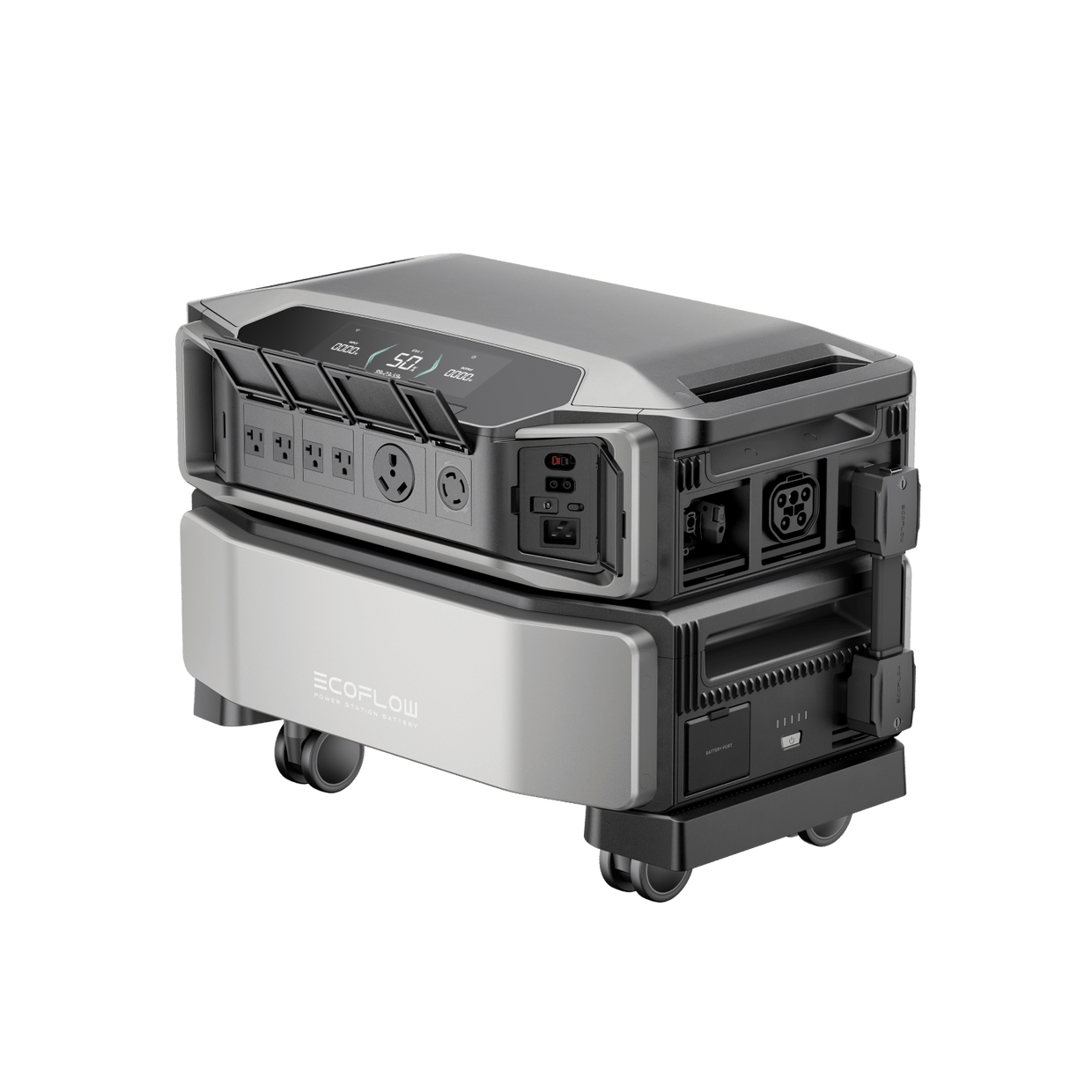
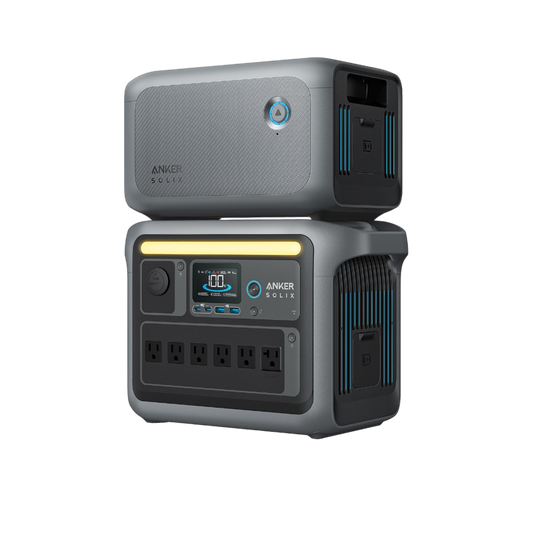
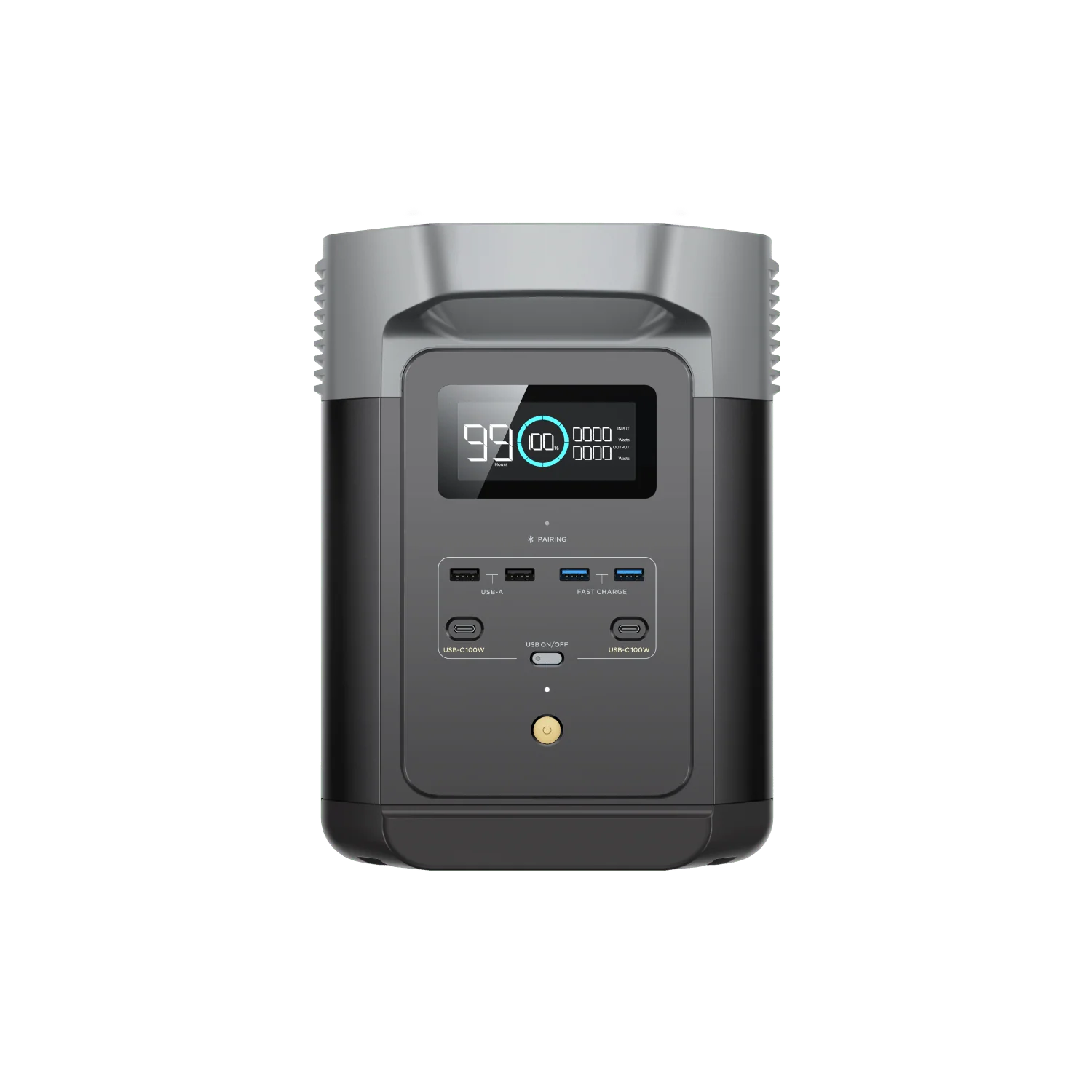
| Model | Capacity | Output | Weight | Standout trait |
|---|---|---|---|---|
| Bluetti AC200L | 2048Wh | 2400W | 62.4 lbs | 30A RV port; expandable to 8192Wh |
| EcoFlow DELTA 2 Max | 2048Wh | 2400W | ~51 lbs | Fastest recharge in class; expandable |
| Jackery 2000 Plus | 2042Wh | 3000W | ~61 lbs | Highest output; expandable to 12kWh |
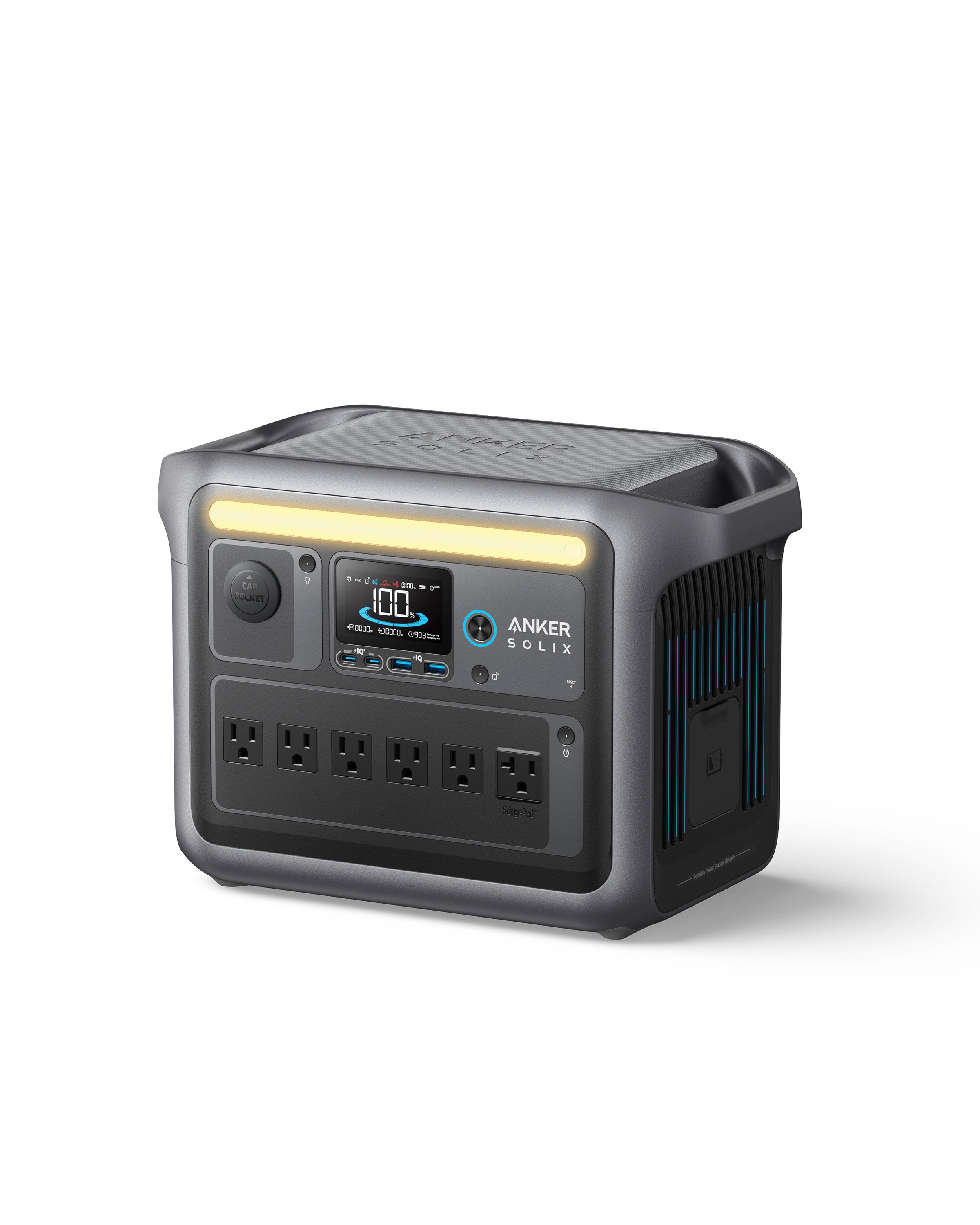
| Anker Solix C1000 + battery | 2112Wh | 1800W | ~50 lbs total | 58-min recharge; most compact |
Spec figures from manufacturers' published specs. If 2kWh isn't enough for your loads, the next step is a 3–6kWh expandable system (Delta Pro 3, expanded AC200L) or an installed whole-home battery — see our whole-home guide.
Stretching it: how to make 2kWh last two days
- Add 400W of solar: a good sun day yields ~1,200–1,600Wh — nearly a full refill. This is the single biggest upgrade.
- Run the fridge colder before the outage, then raise its thermostat a few degrees and keep doors shut. Every avoided compressor cycle is banked energy.
- Kill the idle loads: turn the inverter/AC output off overnight when only the fridge needs power — better yet, run the fridge and skip everything else from midnight to morning.
- Use DC where possible: 12V fridge on the car port, phones on USB — every conversion you skip saves ~10%.
- Top up while driving: a DC-DC alternator charger adds hundreds of Wh on a grocery run.
FAQ
How long will a 2000Wh power station run a refrigerator?
Roughly 24–36 hours for a full-size fridge (150W nameplate, ~35% duty cycle ≈ 52W average → 1700 ÷ 52 ≈ 32 hours). Hot ambient temperatures and frequent door-opening shorten this.
Can a 2000Wh power station run a house?
It can run the essentials of a house for about a day — fridge, lights, internet, phones, laptop. It cannot run central AC, electric heat, dryers, or ovens, and it won't cover a whole house for multiple days without recharging.
Is 2000Wh enough for a CPAP?
Abundantly — about 4–5 nights at 40W without the humidifier. It's overkill for CPAP alone, which is fine if the CPAP shares the unit with outage backup duties.
How long does it take to recharge a 2000Wh station?
From a wall outlet: roughly 1–1.5 hours on the fastest models (Bluetti AC200L's 2400W input, EcoFlow's X-Stream). From solar: 2–4 hours with 600–1200W of panels in good sun. From a car 12V plug: 15+ hours (too slow — use a DC-DC charger).
What's the difference between 2000W and 2000Wh?
2000W is power (how big a load it can run at once — the inverter), 2000Wh is energy (how long it can run — the battery). A "2000W/2000Wh" station can run a 2000W load for about 50 minutes, or a 100W load for about 17 hours.
Verdict
The 2kWh class is the point where portable power gets serious: one full day of real household essentials — fridge, connectivity, lights, work — from a box you can still (barely) carry. Size it with the honest 1,700Wh rule, respect what it can't do (heat, central AC, multi-day autonomy), and pair it with solar if your outages last longer than a day. For most American homes preparing for the likely outage rather than the extreme one, 2kWh is exactly right.
About our reviews
Specs come from published manufacturer data sheets, cross-checked against owner feedback. Figures go stale. Check the current data sheet before you buy. This is not electrical or purchasing advice.
Related guides
 Sizing guidesHow Long Will a 1000Wh Power Station Run? (Chart)The simple runtime formula — (watt-hours × 0.85) ÷ watts — plus a full chart: how long a 1000Wh power station runs a…
 Sizing guidesHow Many Watts Do I Need for Home Backup? (2026)Sizing home backup power is two separate math problems: how much power at once (watts) and how much energy over time…
 Sizing guidesPower Station vs Gas Generator for Home Backup (2026)Battery vs. gas for home backup: the honest comparison. We break down noise, fumes, fuel cost per kWh, runtime, maintenance, and…