Power Station vs Gas Generator for Home Backup (2026)
8 min read
On this page
Battery vs. gas for home backup: the honest comparison. We break down noise, fumes, fuel cost per kWh, runtime, maintenance, and upfront cost — with real numbers from the Honda EU2200i and 1–2kWh LiFePO4 stations — so you can pick…
The short version
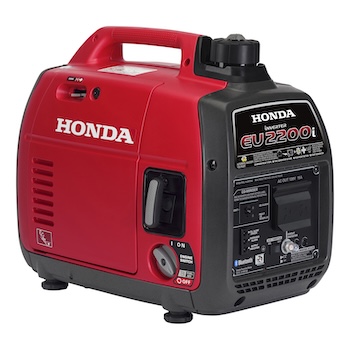
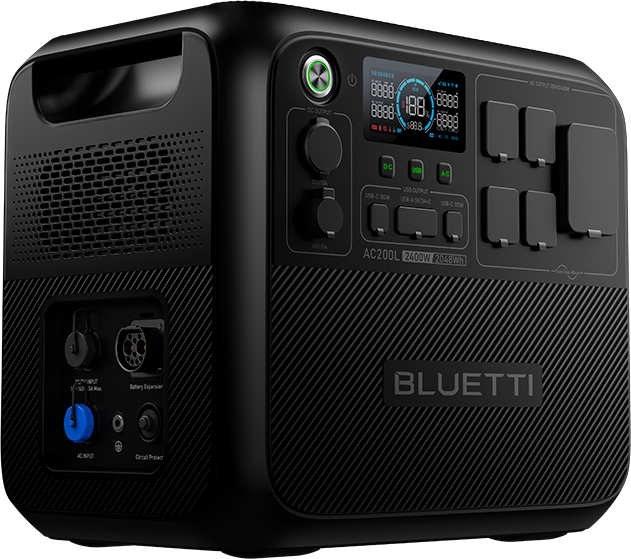
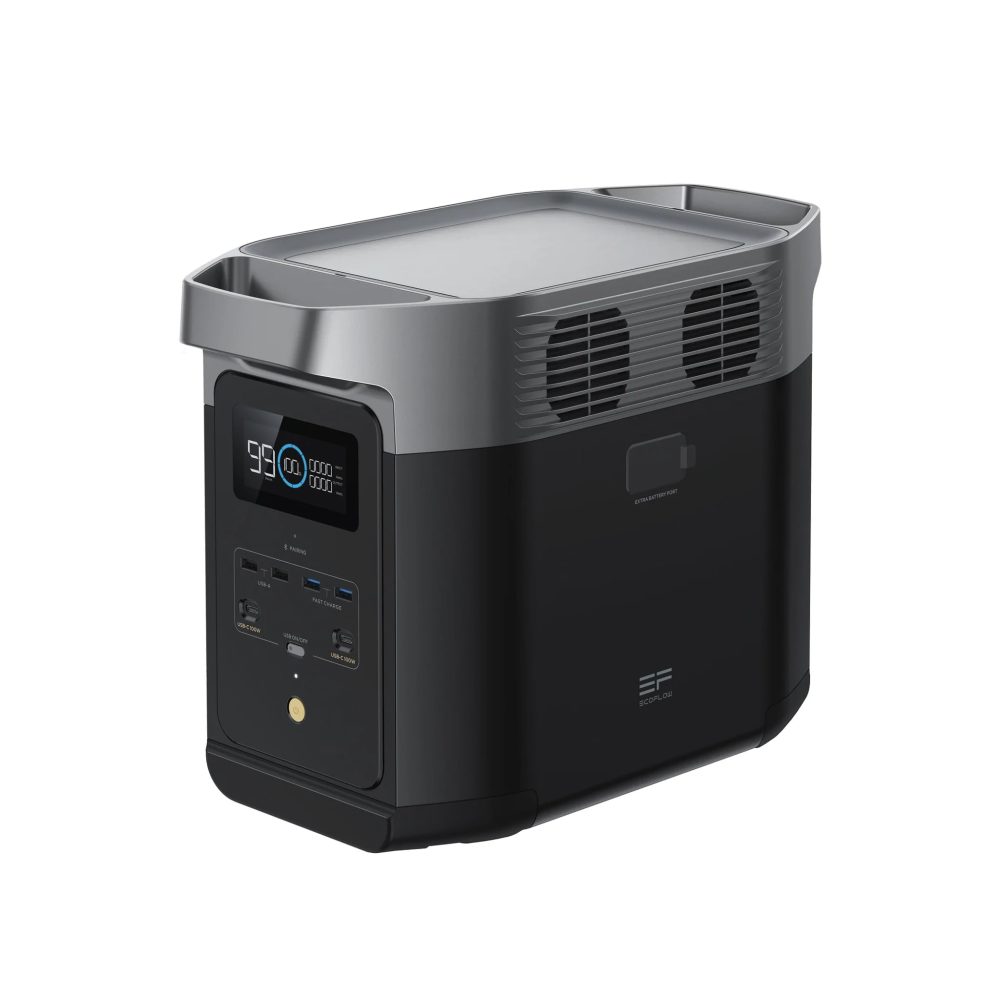
Neither is "better" — they solve different problems. A gas generator (like the Honda EU2200i, $1,199 MSRP) wins on energy: a gallon of gas holds days of runtime, it runs for as long as you have fuel, and it costs less per watt-hour of capacity. A portable power station (like the EcoFlow Delta 2 or Bluetti AC200L) wins on convenience: silent, fume-free, safe indoors, zero maintenance, and instant-on. For short outages (under 24 hours), the battery is the better experience. For multi-day outages, the generator is the more capable machine. Many well-prepared homes end up with both — and there's a good reason for that.
This is a research-based comparison built on manufacturers' published specs and straightforward arithmetic. We did not test either machine ourselves.

How we compare them: the six factors that matter
1. Noise — the battery wins by a mile
This is the single biggest experiential difference. The Honda EU2200i is one of the quietest generators ever made — Honda rates it at 48 dB(A) at quarter load and 57 dB(A) at rated load. That's "quiet conversation" to "normal conversation" territory, and it's genuinely impressive for an engine. But a power station at low loads is effectively silent — under 30 dB, quieter than a whisper — and even under heavy load it's a fan hum, not combustion. At 2 AM during an outage, with the generator droning 20 feet from your bedroom window (where it must be — see below), the difference is the difference between sleeping and not.
Winner: power station, by a large margin.
2. Fumes and safety — the battery wins, and it's not close
Gas generators produce carbon monoxide — odorless, invisible, and lethal. Honda's CO-MINDER system auto-shuts the engine down when CO builds up, which is a genuine safety advance, but the rule remains absolute: never run a generator indoors, in a garage (even with the door open), or near windows and vents. The CPSC attributes dozens of CO deaths to portable generators in the US every year, the vast majority from indoor or garage use. A LiFePO4 power station produces zero emissions and is safe to run in a bedroom, a van, or a tent. For households with kids, elderly family members, or anyone who might not follow the 20-foot rule perfectly at 3 AM, this factor alone decides it.
Winner: power station, decisively.
3. Runtime and refueling — the generator wins
Here's where physics favors gas. The EU2200i runs 8.1 hours at quarter load (450W) on 0.95 gallons — about 3.6kWh per tank — and 3.2 hours at its full 1800W rating. With two 5-gallon fuel cans in the garage, that's roughly 38kWh of energy on tap: the equivalent of nineteen EcoFlow Delta 2s. A battery station, by contrast, holds what it holds: when a 2kWh station is empty, you're waiting hours for solar or the grid to return. For outages measured in days, the generator's ability to "refuel in 60 seconds" is unmatched.
The honest caveat: gasoline goes stale in 3–6 months without stabilizer, and most homeowners discover their generator won't start precisely when they need it. Stored fuel is a maintenance commitment, not a buy-and-forget asset.
Winner: gas generator, for multi-day outages.
4. Cost per kWh — closer than you'd think
Let's do the math with the EU2200i's published figures: 0.95 gallons → ~3.65kWh at quarter load = ~3.8kWh per gallon. At $3.50/gallon, that's roughly $0.90/kWh in fuel alone — five times typical grid electricity.
Now the battery: a 1kWh LiFePO4 station bought on sale (~$400–500) with a 3000-cycle life delivers ~3,000kWh over its lifetime. Amortized hardware cost: ~$0.15/kWh, plus ~$0.17/kWh of grid electricity to charge it = ~$0.30/kWh all-in — a third of the generator's fuel cost, and $0.00/kWh marginal cost when charged from your own solar.
But upfront cost flips the story: the EU2200i costs $1,199 and delivers effectively unlimited kWh over its life; matching its energy capacity with batteries (say, 10kWh of storage) costs $5,000–$10,000+. The battery is cheaper per kWh used; the generator is cheaper per kWh of capacity you might need.
Winner: it depends — battery for cost per kWh consumed; generator for cheap capacity insurance.
5. Maintenance and readiness — the battery wins
A power station needs essentially nothing: keep it charged to 50–80% in storage, top it off every few months, update firmware occasionally. A generator needs oil changes, air filters, spark plugs, stabilized fuel rotated on schedule, and a test run every month or two — skip the maintenance and it won't start in the storm. Owner feedback is blunt on this point: the most common generator failure mode is neglect, and the most common power-station failure mode is buying too small a battery.
Winner: power station.
6. Power quality and surge — a draw, with caveats
Both deliver clean power for electronics: the EU2200i is an inverter generator (stable sine wave, safe for computers), and all quality power stations are pure sine wave too. On surge, the generator's 2200W max/1800W rated is honest engine power that doesn't sag; a 2kWh station's 2400W inverter matches it, but only until the battery drains. For starting big motors (well pumps, large ACs), neither is ideal — that's whole-home battery or large-generator territory.
Winner: tie — both handle typical household loads cleanly.
Head-to-head table
| Factor | Honda EU2200i (gas) | 2kWh LiFePO4 station (battery) |
|---|---|---|
| Upfront cost | $1,199 MSRP | ~$1,000–1,800 (2kWh class) |
| Max / rated output | 2200W / 1800W | 2400–3000W (model dependent) |
| Energy per "fill" | ~3.6kWh per 0.95-gal tank; unlimited with fuel cans | ~1.7kWh usable, then recharge |
| Noise | 48–57 dB(A) | <30 dB typical |
| Emissions | CO + exhaust — outdoors only | Zero — indoor safe |
| Fuel/energy cost | ~$0.90/kWh (fuel) | ~$0.30/kWh (amortized) / $0 solar |
| Maintenance | Oil, filters, plugs, fuel rotation | Near zero |
| Weight | 47.4 lbs | 51–62 lbs (2kWh class) |
| Warranty | 3 years | 5 years (typical) |
Generator figures from Honda's official EU2200i specs; battery figures from typical 2kWh-class LiFePO4 specs and the cost math above.
When each one wins
Buy the power station if: your outages are usually under 24 hours; you live in an apartment, condo, or HOA where generators are banned or impractical; anyone in the household has medical equipment (CPAP) that needs silent bedside power; you want backup that's always ready with zero maintenance; or you have solar to recharge it for free.
Buy the generator if: your outages last days (hurricanes, ice storms, wildfire shutoffs); you need to run high-draw loads for hours (well pump, sump pump during a storm, power tools); you want the maximum energy insurance per dollar; or you heat with electricity and need serious watt-hours.
Buy both if: you're serious about resilience. This is the setup experienced preppers actually run: the battery handles the quiet overnight loads (fridge, CPAP, phones) silently and indoors, while the generator runs a few hours per day — outdoors, during daylight — to bulk-recharge the battery and power heavy loads. You get silence when you sleep and unlimited energy when you're awake. A 2kWh station plus an EU2200i is under $3,000 combined and covers more scenarios than a $10,000 whole-home battery without solar.
What about "solar generators"?
"Solar generator" is marketing-speak for a power station bundled with solar panels — there's no generator inside. The honest version of the term is useful, though: a 2kWh station plus 400W of panels is a fuel-free generator that "refuels" every sunny day. For outages of 2–5 days with decent sun, that combo beats a gas generator on every factor except raw wattage. For a week of gray skies, the gas generator still wins. Match the tool to your climate and your outage history.
FAQ
Can I run a portable power station and a gas generator together?
Yes — and it's the best of both worlds. Run the generator during the day (outdoors) to power heavy loads and recharge the station, then shut it down at night and run silent loads (fridge, CPAP, phones) off the battery. Never connect a generator's output to your home wiring without a proper transfer switch installed by an electrician.
Is it safe to use a gas generator in a garage with the door open?
No. This is one of the most common causes of generator CO deaths. CO builds up faster than ventilation clears it, and it seeps into living spaces. Generators go outside, at least 20 feet from the house, with the exhaust pointed away.
How much does it cost to run a gas generator for 24 hours?
At quarter load (~450W), the EU2200i burns 0.95 gallons per 8.1 hours — about 2.8 gallons per day, or roughly $10/day in fuel at $3.50/gallon. At full 1800W load, it's about 7 gallons/day (~$25/day). A battery station doing the same 450W-average work costs ~$3/day in amortized hardware plus grid charging.
Will a power station run my sump pump during a storm?
A 1/3 HP sump pump draws 800–1300W running with a 2000W+ startup surge — a 2kWh-class station (2400W+ inverter) can handle it, but check the surge rating carefully. During a storm outage, the sump pump is exactly the load that justifies either a big station or a generator.
Which lasts longer: a generator or a power station?
A quality inverter generator (Honda, Yamaha) can last 2,000–3,000+ operating hours with maintenance — decades of occasional outage use. A LiFePO4 station lasts 3,000–4,000 full cycles (10+ years of daily use). Both outlive their warranties many times over if maintained; the generator demands more of your attention to get there.
Verdict
Stop asking which is better and ask which outage you're preparing for. Short, frequent outages: the power station wins on every factor you'll actually feel — silence, safety, readiness. Long, rare outages: the generator wins on the only factor that matters when the battery is empty — more energy. If you can only buy one, buy for your most likely outage; if you're building real resilience, the battery-plus-generator combo under $3,000 beats either one alone.
About our reviews
Specs come from published manufacturer data sheets, cross-checked against owner feedback. Figures go stale. Check the current data sheet before you buy. This is not electrical or purchasing advice.
Related guides
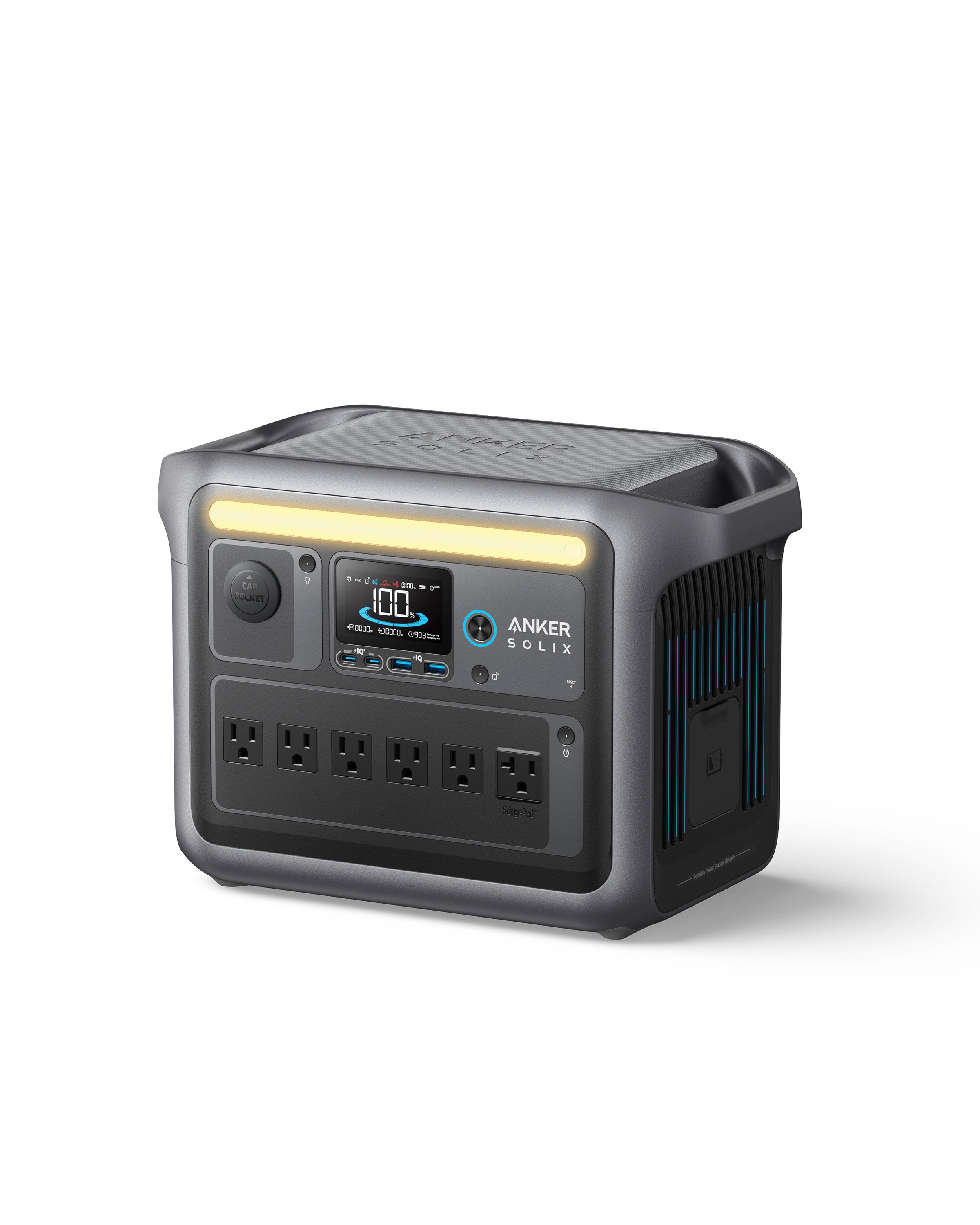 Sizing guidesHow Long Will a 1000Wh Power Station Run? (Chart)The simple runtime formula — (watt-hours × 0.85) ÷ watts — plus a full chart: how long a 1000Wh power station runs a…
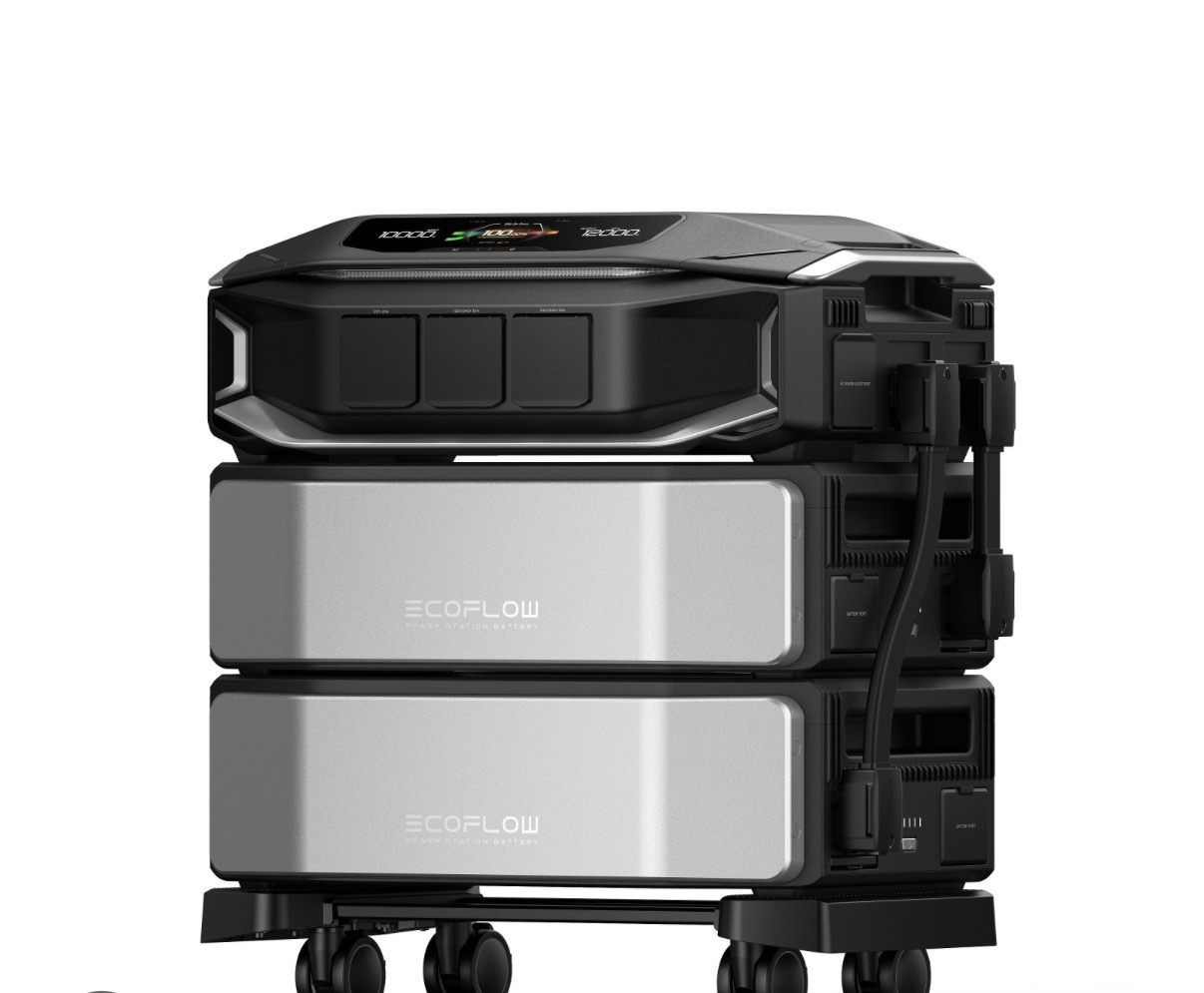 Sizing guidesHow Many Watts Do I Need for Home Backup? (2026)Sizing home backup power is two separate math problems: how much power at once (watts) and how much energy over time…
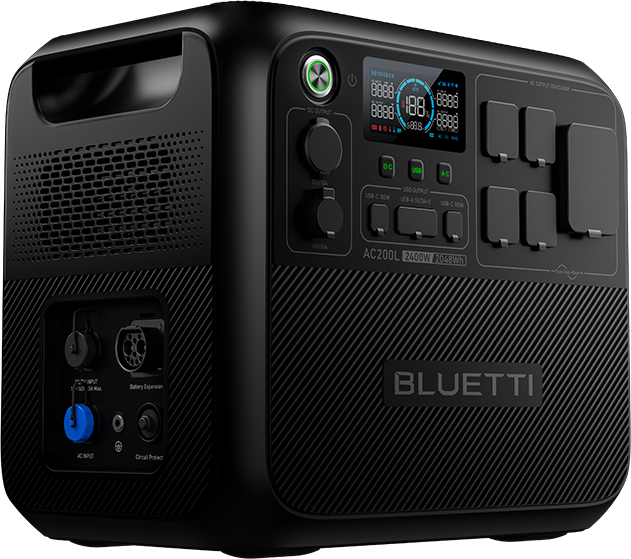 Sizing guidesWhat Can a 2000Wh Power Station Run? (Real Runtime Examples)A 2000Wh power station is the sweet spot for serious home backup — but "2000Wh" doesn't mean 2000 usable watt-hours. Here's the…