How Long Will a 1000Wh Power Station Run? (Chart)
5 min read
On this page
The simple runtime formula — (watt-hours × 0.85) ÷ watts — plus a full chart: how long a 1000Wh power station runs a fridge, CPAP, laptop, lights, and more. Includes 500Wh/2000Wh/3000Wh comparisons and sizing advice.
The 10-second answer
A 1000Wh portable power station delivers about 850 watt-hours of usable AC power. Divide 850 by your device's watts to get runtime in hours. A 60W laptop charger? ~14 hours. A 120W fridge? ~7 hours of continuous run time (longer in practice — see duty cycles below). This guide gives you the formula, the full chart, and the real-world caveats the marketing pages skip.
Method note: all figures here are estimates from watt-hour math using an 85% efficiency assumption, cross-checked against manufacturer-published runtimes. Actual results vary with temperature, battery age, and your specific device.

The math first: watt-hours, watts, and the 85% rule
Three concepts run the whole show:
- Watt-hours (Wh) = the size of the tank. A 1000Wh station stores 1000 watt-hours of energy.
- Watts (W) = how fast your device drinks. A 60W laptop drains the tank at 60 watt-hours per hour.
- The 85% rule: converting battery DC to wall-style AC loses ~10–15% to inverter inefficiency, plus the station itself sips power to stay on. Plan on ~850 usable Wh from a "1000Wh" unit.
The formula: runtime (hours) = (battery Wh × 0.85) ÷ device watts.
Example: a 1000Wh station running a 60W laptop → (1000 × 0.85) ÷ 60 = ~14.2 hours.
Duty cycles: why fridges beat the math
A fridge rated 120W doesn't draw 120W constantly — its compressor cycles on and off, averaging maybe 40–60W over a day. That's why a 1000Wh station runs a "120W" fridge for 7 hours of continuous draw but often 12–16+ hours in real kitchen conditions. The chart below shows continuous-draw math; cycling appliances last longer.
The 1000Wh runtime chart
| Device (typical draw) | Est. runtime on 1000Wh | Notes |
|---|---|---|
| Smartphone charging (10W) | ~85 hrs / 50+ full charges | Best-case efficiency via USB |
| LED camp lights (10W) | ~85 hrs | Essentially unlimited for a trip |
| Wi-Fi router (10W) | ~85 hrs (~3.5 days) | Stays up through long outages |
| CPAP, no heated humidifier (40W) | ~21 hrs (~2–3 nights) | Turn off the humidifier heater |
| Laptop (60W) | ~14 hrs | Roughly 2 full workdays |
| 12V car fridge (60W avg) | ~14 hrs continuous; ~24–28 hrs cycling | The classic camping load |
| Box fan (75W) | ~11 hrs | All night plus some |
| Full-size fridge (120W) | ~7 hrs continuous; ~12–16 hrs cycling | Covers most outages |
| TV, 43" LED (100W) | ~8.5 hrs | Movie marathon approved |
| Microwave (800W) | ~1 hr | ~10–12 reheats, realistically |
| Drip coffee maker (800W) | ~1 hr / ~10–12 cups | Brew, then switch off |
| Hair dryer (1300W) | ~39 min | Fine for normal use |
| Electric kettle (1500W) | ~34 min | ~8–10 full boils |
| Space heater (1500W) | ~34 min | Heating eats batteries — size up |
Estimates via (1000 × 0.85) ÷ watts. Check your device's actual wattage — it's printed on the label or power brick.
Scaling up: 500Wh vs 1000Wh vs 2000Wh vs 3000Wh
Same math, bigger tanks (all at ~85% usable):
| Device | 500Wh | 1000Wh | 2000Wh | 3000Wh |
|---|---|---|---|---|
| 12V car fridge (60W) | ~7 hrs | ~14 hrs | ~28 hrs | ~42 hrs |
| Full-size fridge (120W) | ~3.5 hrs | ~7 hrs | ~14 hrs | ~21 hrs |
| CPAP (40W) | ~10.6 hrs (1 night) | ~21 hrs (2–3 nights) | ~42 hrs (5+ nights) | ~64 hrs (a week+) |
| Laptop (60W) | ~7 hrs | ~14 hrs | ~28 hrs | ~42 hrs |
| Wi-Fi router (10W) | ~42 hrs | ~85 hrs | ~170 hrs | ~255 hrs |
| Space heater (1500W) | ~17 min | ~34 min | ~68 min | ~102 min |
The pattern: small electronics scale linearly and generously; heating and cooling are the loads that punish small batteries. If your plan includes a heater, an air conditioner, or a well pump, skip straight to 2–3kWh.
Worked examples
Weekend camping (2 people)
12V fridge (60W × 24h × 2 days = 2880Wh at 100% duty — but cycling at ~50% = ~1440Wh) + phones (30Wh) + lights (40Wh) + laptop top-up (60Wh) ≈ ~1570Wh needed. A 1000Wh station falls short for two full days; a 2000Wh station covers it with margin. Add a 200W solar panel (~600Wh/day) and the 1000Wh unit makes it.
24-hour home outage
Fridge cycling (~60W avg × 24h = 1440Wh) + router (240Wh) + phones (30Wh) + a few LED lights (60Wh) ≈ ~1770Wh. A 1000Wh station covers roughly half a day of full essentials — enough for most short outages, tight for a full day. This is exactly why 2kWh is the most popular home-backup size.
CPAP backup for a week
40W × 8h × 7 nights = 2240Wh. A 1000Wh station covers ~2.6 nights; a 2000Wh unit covers ~5+ nights. (Heated humidifiers can triple the draw — check your machine.)
What the chart doesn't show: output limits
Capacity is only half the story. A 1000Wh station with an 1800W inverter (like the Anker Solix C1000 or EcoFlow Delta 2) can start a 1500W kettle — but a 500Wh station with a 300W inverter cannot, no matter how long the math says it would last. Always check both numbers: watt-hours (how long) and watts (how much at once).
Product recommendations by size tier
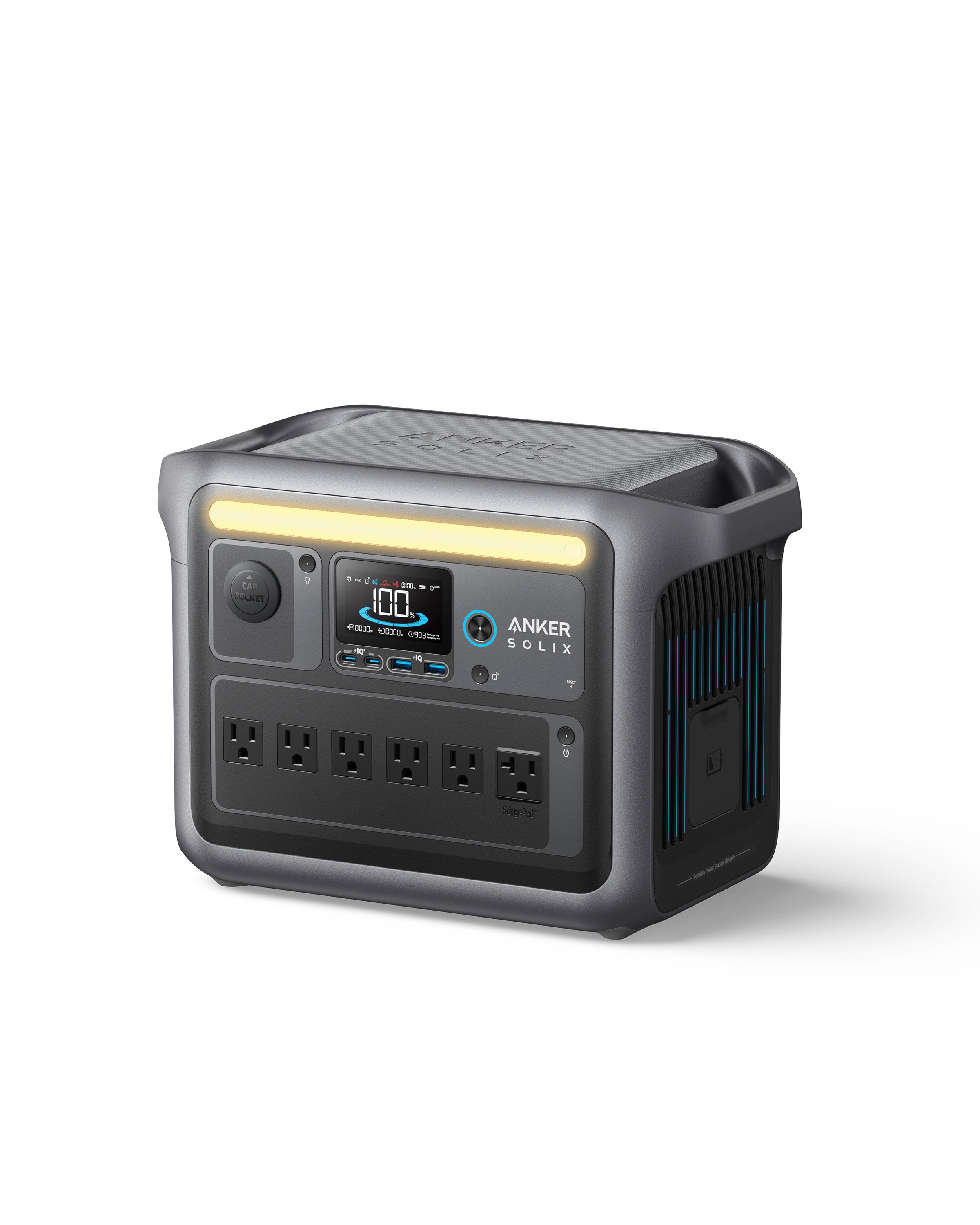
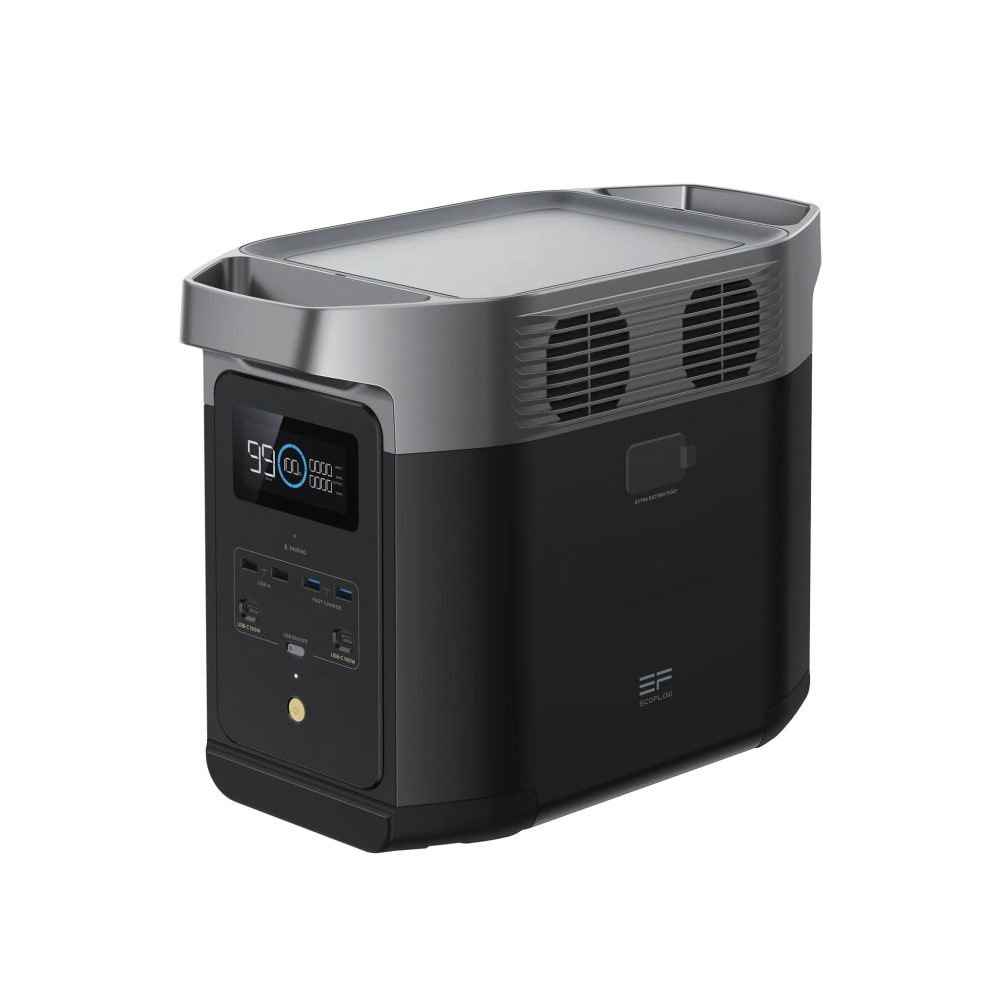
- ~1000Wh: Anker Solix C1000 (1056Wh, 1800W, 58-min recharge, ~$470 on sale) or EcoFlow Delta 2 (1024Wh, 1800W, often ~$350–$450 on sale). The two best values in the class.
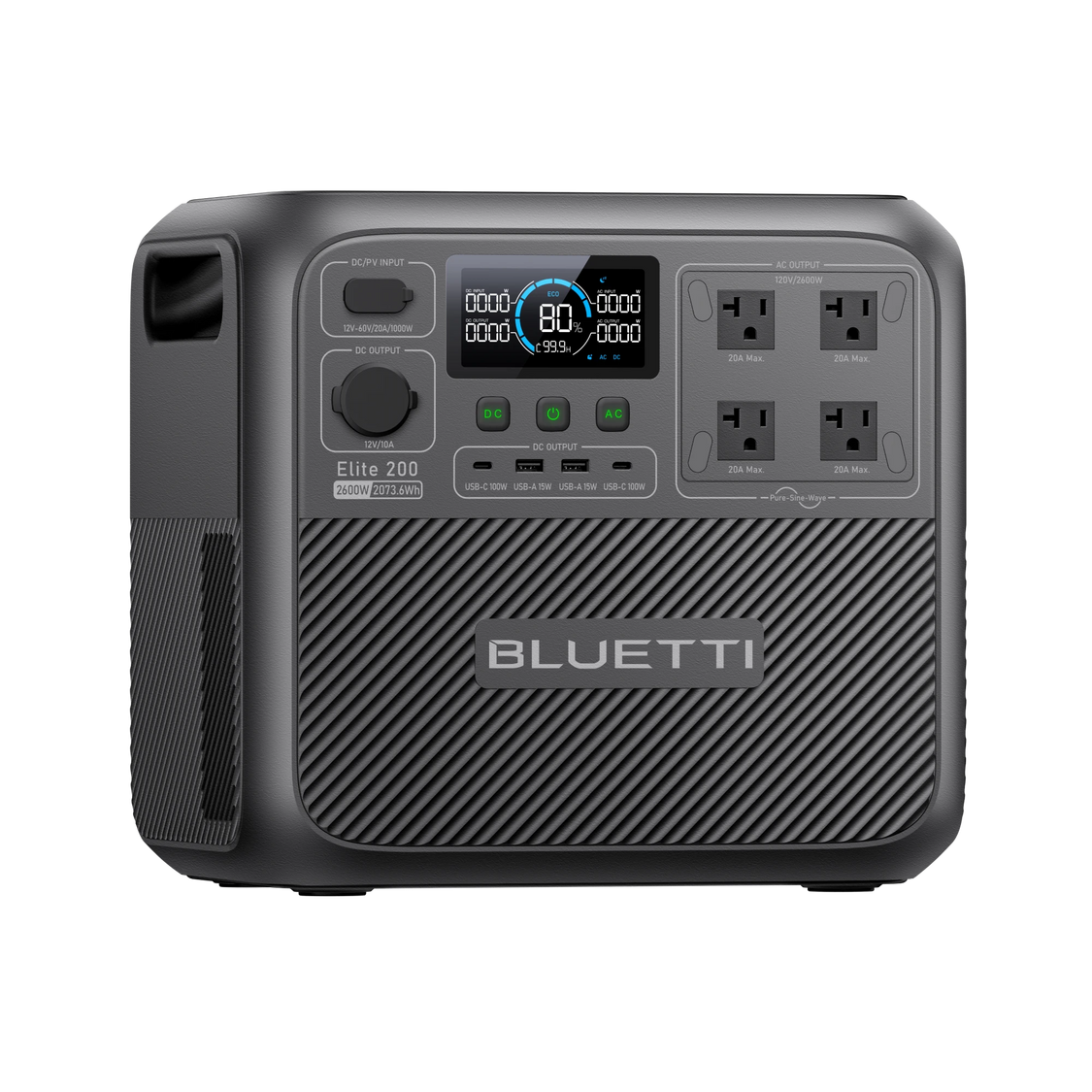
- ~2000Wh: Jackery Explorer 2000 v2 (2042Wh, 2200W, 39.5 lbs, ~$899) for portability, or Bluetti Elite 200 V2 (2073Wh, 2600W, ~$899) for maximum output and a 6000-cycle battery.
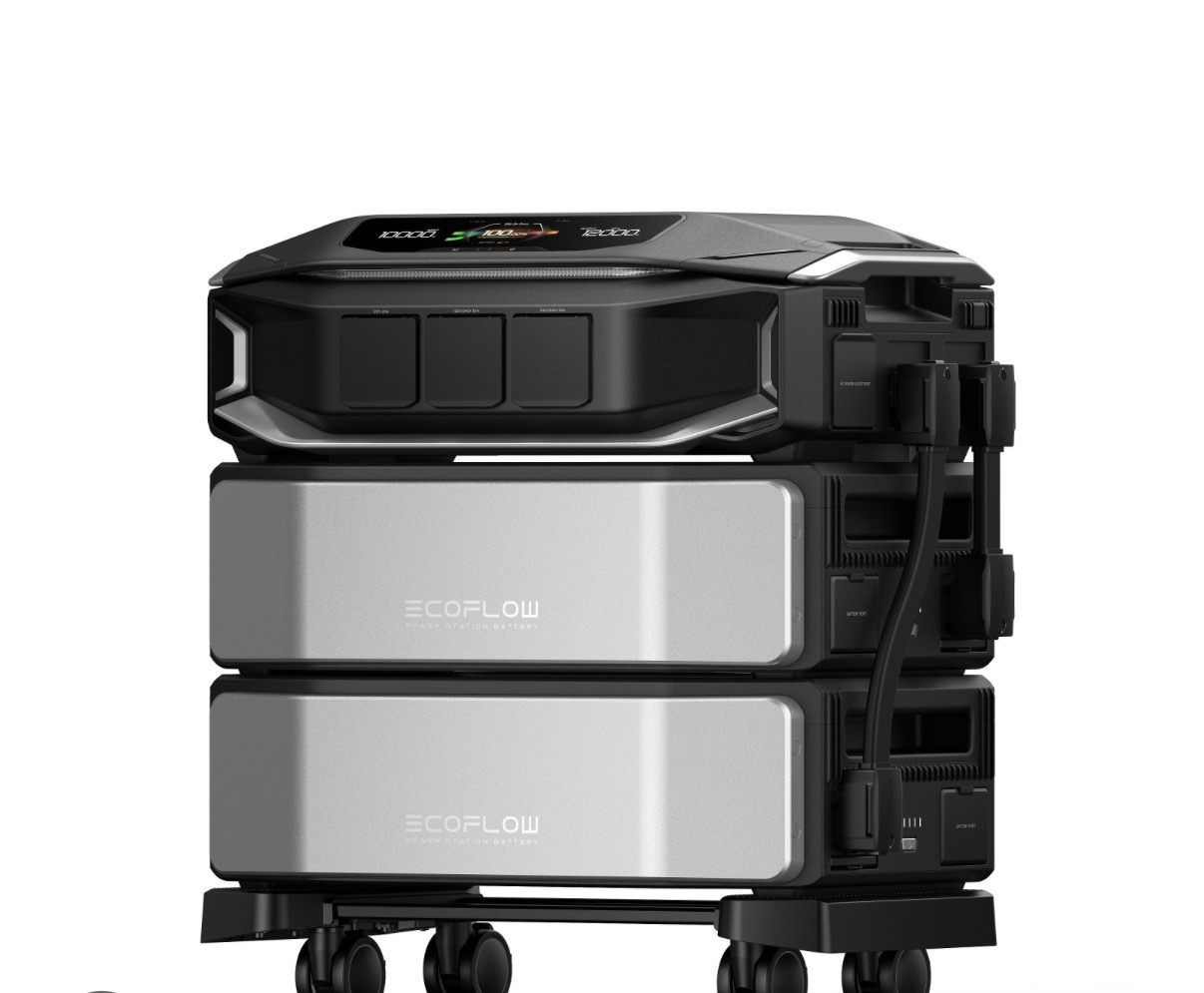
- ~3000Wh+: Jackery HomePower 3000 (3072Wh, 3600W, ~$1,349) for 1–2 day home backup, or EcoFlow Delta Pro 3 (4096Wh, 4000W, 240V, ~$2,799) for whole-home and 240V loads.
FAQ
How long will a 1000Wh power station run a refrigerator?
About 7 hours of continuous 120W draw, but real fridges cycle on and off — expect 12–16+ hours in practice. A 12V camping fridge (60W) runs ~14 hours continuous, ~24–28 hours with normal cycling.
How long will a 1000Wh power station run a CPAP?
Roughly 21 hours at 40W — about 2–3 nights. Turn off the heated humidifier; it can triple power draw.
Can a 1000Wh power station run a space heater?
Technically yes for ~34 minutes at 1500W — practically, no. Heating is the worst use of battery capacity. Size up to 2–3kWh or use a diesel/propane heater instead.
How long does a 1000Wh power station take to recharge?
From a wall outlet: roughly 1–1.5 hours for fast-charging models (Anker Solix C1000: 58 min; EcoFlow Delta 2: ~80 min). From solar: ~2–3 hours with 400–600W of panels in good sun.
Is 1000Wh enough for home backup?
For short outages (fridge, router, phones, lights for half a day): yes. For 24+ hours of whole-essentials coverage: step up to 2000Wh, the most popular home-backup size.
The bottom line
Memorize the formula — (Wh × 0.85) ÷ watts = hours — and you'll never guess at sizing again. A 1000Wh station is the sweet spot for weekends, short outages, and CPAP backup; it runs small electronics for days and big appliances for minutes. When the math says you need more, the 2kWh class (Jackery Explorer 2000 v2, Bluetti Elite 200 V2) is where most buyers land.
About our reviews
Specs come from published manufacturer data sheets, cross-checked against owner feedback. Figures go stale. Check the current data sheet before you buy. This is not electrical or purchasing advice.
Related guides
 Sizing guidesHow Many Watts Do I Need for Home Backup? (2026)Sizing home backup power is two separate math problems: how much power at once (watts) and how much energy over time…
 Sizing guidesPower Station vs Gas Generator for Home Backup (2026)Battery vs. gas for home backup: the honest comparison. We break down noise, fumes, fuel cost per kWh, runtime, maintenance, and…
 Sizing guidesWhat Can a 2000Wh Power Station Run? (Real Runtime Examples)A 2000Wh power station is the sweet spot for serious home backup — but "2000Wh" doesn't mean 2000 usable watt-hours. Here's the…