What Is Plug-In Solar? How Balcony Solar Works in the US
11 min read
On this page
- The short version
- How plug-in solar actually works
- Plug-in solar vs rooftop solar vs a portable power station
- How much can it actually save? (The honest math)
- Is plug-in solar legal in the US?
- The certification trap: UL 1741 is not UL 3700
- A real US example: EcoFlow STREAM
- Who plug-in solar fits — and who should skip it
- Frequently asked questions
- Verdict
Plug-in solar (balcony solar) is a small panel-and-microinverter kit that feeds power into your home through a standard wall outlet — no roof, no contractor, and in a growing number of states no utility approval. Here is how it works,…
The short version
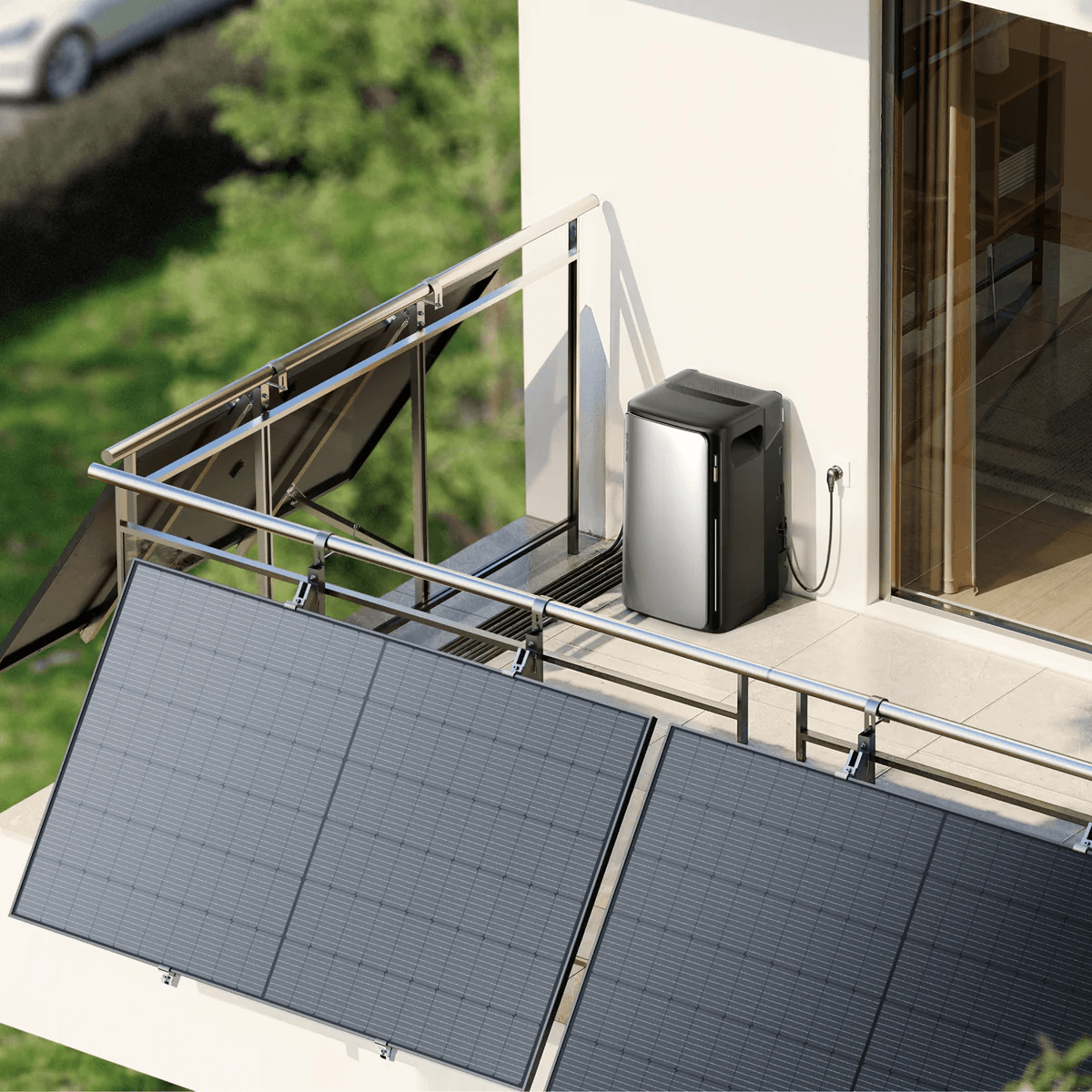
Plug-in solar — also called balcony solar or plug-and-play solar — is a small solar system that connects to your home through a standard 120V wall outlet instead of your electrical panel. One or two panels feed a microinverter, the microinverter turns the DC power into ordinary household AC, and that power flows into the circuit the outlet sits on, offsetting electricity you would otherwise buy from the grid. There is no roof work, no panel wiring, and no contractor: a typical kit can be unboxed and generating the same day it arrives, and when you move, it moves with you. That is why it matters: roughly a third of US households rent, and renters have historically had no solar option at all.
This is a research-based guide. Every legal, certification, price and specification claim below is drawn from official sources — state law text, UL Solutions, the US Energy Information Administration (EIA) and manufacturer pages — checked in October 2026. Laws in this category are changing month by month, so re-check your state's current position before you buy.
How plug-in solar actually works
The chain has four parts:
- Solar panels — usually one or two rigid or flexible panels, typically 200W–450W each, mounted on a balcony railing with clamps, on a freestanding patio frame, or on a fence or wall bracket. No drilling into a roof is involved.
- A microinverter — a small box behind the panels that converts DC to grid-synchronized AC. This is the safety-critical part: a proper plug-in microinverter only exports power while it can see a live grid signal.
- A standard outlet — the inverter's cord plugs into an ordinary NEMA 5-15 / 5-20 receptacle, ideally on a dedicated circuit. Power flows into that circuit and is consumed by whatever your home is running at that moment.
- Optional battery storage — newer systems such as EcoFlow's STREAM Ultra (below) add a battery that stores midday surplus for the evening instead of letting it flow out to the grid unused.
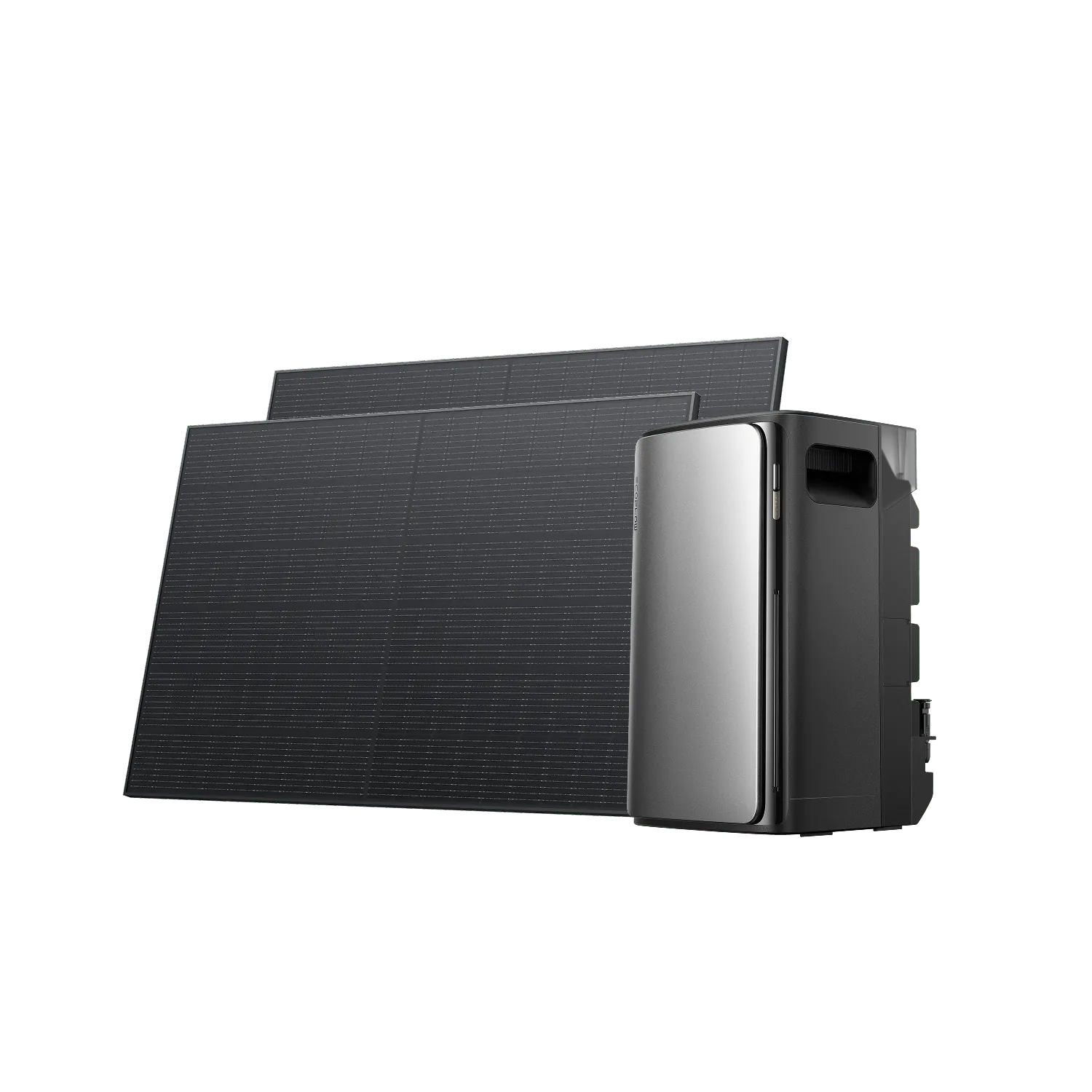
Two safety behaviors define a legitimate kit. Anti-islanding: the instant the grid goes down, the inverter must stop exporting, so it can never energize your home's wiring — or a utility line — during an outage. Plug safety: if you pull the plug while the sun is shining, the exposed prongs must go dead almost immediately. Cheap no-name kits that skip these behaviors are exactly what regulators and UL are worried about, which is why certification (below) is not a formality in this category.
What plug-in solar does not do: it does not power your home in a blackout (grid-tied output shuts off by design, unless the system has a battery and separate backup outlets), and it does not replace a rooftop array. It shaves the daytime base load — fridge, router, standby loads, home-office gear — off your bill. For outage protection you still want a battery that works off-grid, which is the job of the stations in our guide to the best solar generators for power outages.
Plug-in solar vs rooftop solar vs a portable power station
| Plug-in solar | Rooftop solar | Portable power station + panels | |
|---|---|---|---|
| How it connects | Standard wall outlet | Hardwired to your panel, permitted and inspected | Nothing — fully standalone |
| Typical size | 400W–1,200W | 5,000W–12,000W | 200W–1,000W of panels charging a battery |
| Typical yearly output | About 600–900 kWh for an 800W kit (EcoFlow estimate) | About 8,000–12,000 kWh | Whatever you store and use — no grid offset |
| Works in a blackout? | No (grid-tied output stops), unless it has a battery with backup outlets | Only with battery + hybrid inverter | Yes — that is its main job |
| Lowers your bill? | Yes, by offsetting daytime use | Yes, the most of the three | No — it stores power, it does not feed your circuits |
| Renter-friendly? | Yes — no permanent modification, take it when you move | No | Yes |
| Up-front cost | Roughly $500–$1,500 for panel kits; more with a battery | Tens of thousands installed | Roughly $300–$2,000 depending on size |
The honest summary: plug-in solar and power stations solve different problems. Plug-in solar is a bill-offset device for sunny hours. A power station is a backup device for dark hours. Plenty of households end up with both — panels offsetting the daytime load, a station for outages — and our home backup power station guide covers the backup half of that pairing.
How much can it actually save? (The honest math)
Use conservative numbers. EcoFlow estimates an 800W two-panel system produces roughly 600–900 kWh per year in most US climates — more in Arizona, Texas or Florida sun, less in the cloudy Pacific Northwest. The EIA's October 2026 Short-Term Energy Outlook puts the 2026 US average residential electricity price at about 18.2 cents per kWh.
800 kWh × $0.182 ≈ $146 per year — call it roughly $110–$165 a year across the 600–900 kWh range, at the national average rate. In a high-rate state at 30¢/kWh or more (California, Hawaii, much of New England), the same kit saves roughly $180–$270 a year. These are estimates, and they carry one big condition:
You only save on power you actually consume while the sun shines. Without a battery, any surplus you generate at noon flows out to the grid — and in most plug-in solar states you are explicitly not in the net metering program, so that exported power earns you nothing. A household that is empty all day will capture far less value than a home-office household with a fridge, a router and computers running through the afternoon. Sizing the kit to your daytime base load — or choosing a battery system that stores the surplus — matters more than buying the biggest kit. If you are comparing panel counts for a battery setup instead, our explainer on how many solar panels you need to recharge a power station walks through the same math from the storage side.
Is plug-in solar legal in the US?
State by state — and this is the part of the market that changed in 2025–2026. There is no single federal rule that blesses a solar kit plugged into a wall outlet. What changed is that states began creating a legal category for it:
- Utah went first. House Bill 340 (Solar Power Amendments), signed in March 2025 and effective May 7, 2025, created the "portable solar generation device" category: maximum 1,200W output, connected through a standard 120V outlet, meeting the National Electrical Code and certified by UL or an equivalent nationally recognized testing laboratory, with a feature that stops it energizing the building during an outage. A qualifying device is exempt from utility interconnection agreements, approval and fees — and is not part of net metering.
- More states followed. Per EcoFlow's US guide (June 2026), Maine, Virginia, Colorado, Maryland and Connecticut have passed similar laws since Utah, with bills advancing in states including California and New York. EcoFlow's US store currently lists plug-in installation of its STREAM system as permitted in Utah, Maryland, Connecticut and Colorado. Colorado is the size outlier, allowing systems up to 1,920W.
- No plug-in law does not automatically mean banned — it usually means the older, heavier interconnection rules technically apply, which is why mainstream US sales are concentrated in states that have passed enabling laws. Check your state, your utility, your lease and your HOA rules before ordering; Utah's law, for example, is silent on landlords and HOAs, so renters there still need written permission.
We track the state picture in depth in our plug-in solar law tracker, and the certification question — the one that decides which kits you should actually buy — deserves its own warning:
The certification trap: UL 1741 is not UL 3700
Two different UL marks show up in this market, and sellers blur them on purpose:
- UL 1741 certifies the inverter — the component — for safe grid interaction (with IEEE 1547). It has existed for years and is what most legitimate microinverters, including EcoFlow's STREAM line, carry today.
- UL 3700 is the new standard written for the whole plug-in system — panels, inverter, cabling, cord and plug tested as one product, including prongs going dead within about a second of unplugging, overload protection and reverse-current prevention. UL Standards & Engagement published UL 3700 in December 2025, and UL Solutions opened its certification program on January 8, 2026. Because the program is months old, complete kits certified to UL 3700 are still scarce in 2026 — be skeptical of any listing that claims otherwise, and check the exact product in UL's Product iQ database.
Our rule, stated plainly: never connect a kit to your home's wiring if it has no UL (or equivalent NRTL) listing at all. The marketplaces are full of uncertified plug-in kits shipped from overseas. Whatever they save you up front is not worth an uncertified device backfeeding your home's circuits. Also note the mirror-image trap: EcoFlow's well-known PowerStream microinverter is a European product line and is not the US offering — the US product is the STREAM series below. Anker's Solarbank line is likewise EU-only at the time of writing. If a listing does not state US certification and a US plug, assume it is not a US product.
A real US example: EcoFlow STREAM
The clearest illustration of where the US category stands is EcoFlow's STREAM series — the first plug-and-play home solar system from a major power-station brand sold for the US market, launched in Utah and sold through EcoFlow's US store:
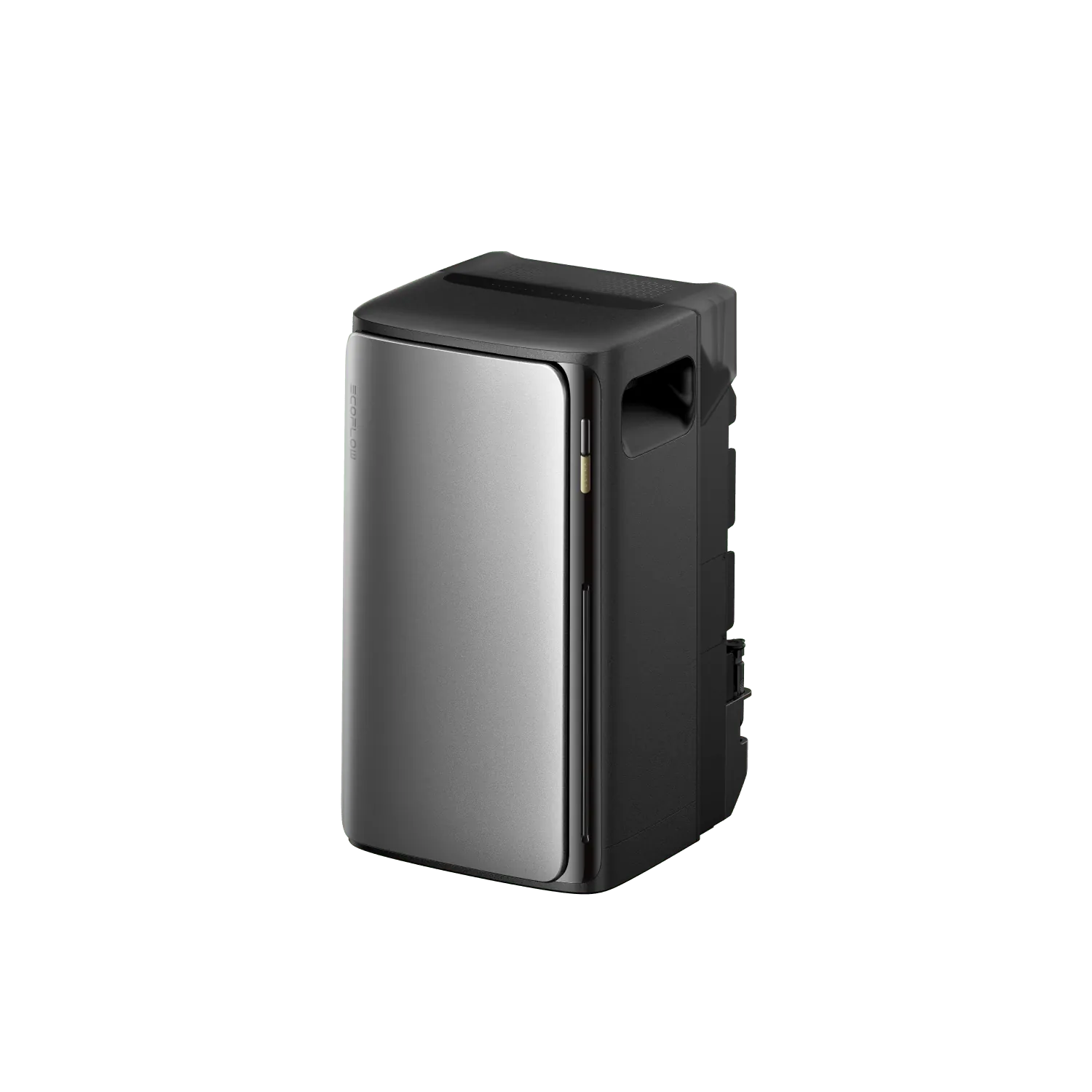
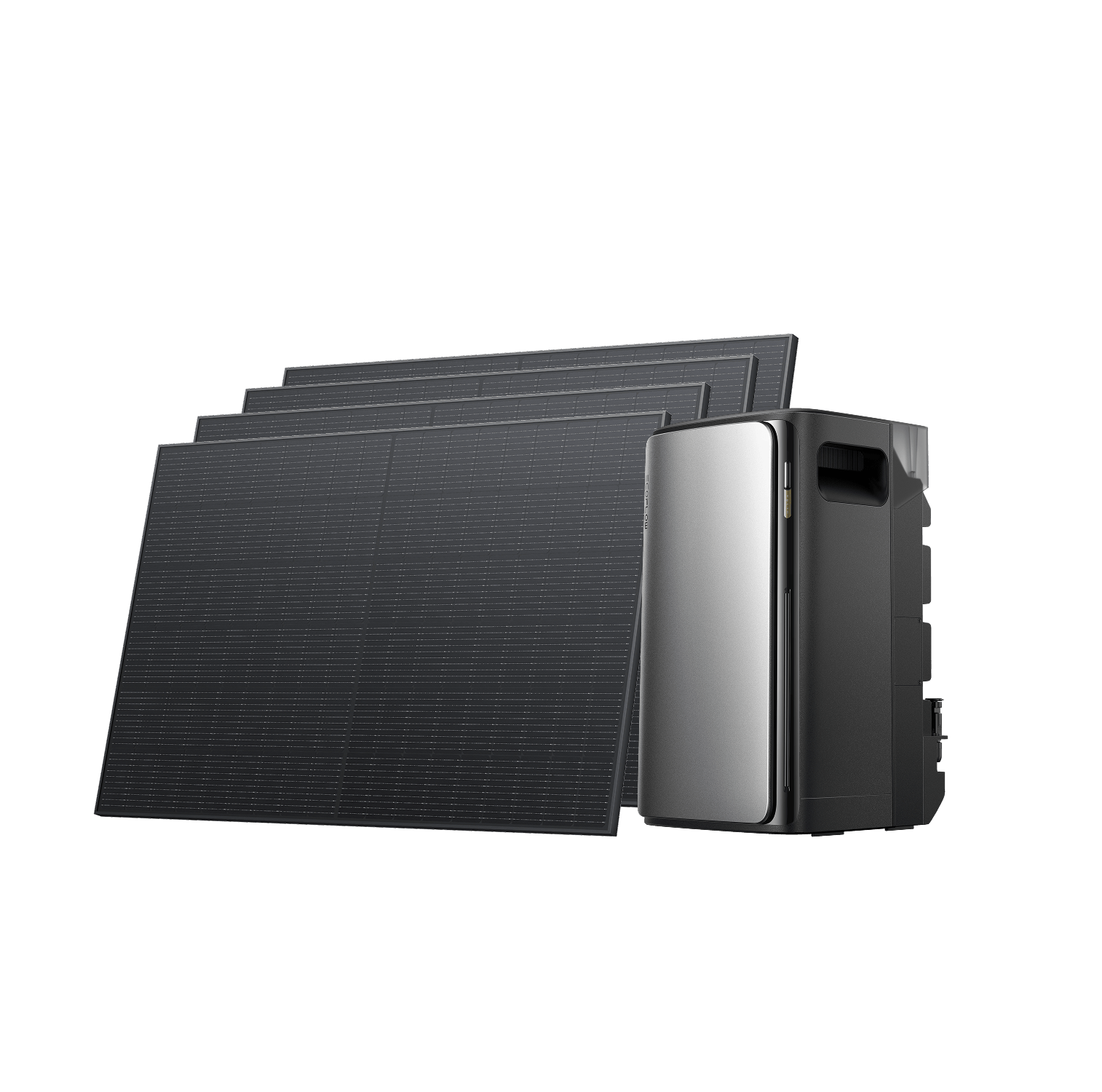
| EcoFlow STREAM Ultra (US) | Verified spec |
|---|---|
| Battery | 1.92kWh LiFePO4, 6,000 cycles, expandable to 11.52kWh with up to 6 units |
| Solar input | Up to 2,000W (4 MPPT inputs) |
| Grid-tied output | Up to 800W from a single unit; up to 1,200W paired with the STREAM Microinverter |
| Certification | UL 1741 and IEEE 1547 certified (component/system grid-interaction level — see the UL 3700 note above) |
| Connection | Standard NEMA 5-15 / 5-20 wall outlet; anti-islanding protection; optional Shelly smart meter prevents backfeed waste |
| Weather rating / warranty | NEMA 4 water resistant; 10-year warranty |
| US price | STREAM Ultra around $1,399 as of October 2026; STREAM Microinverter around $369 as of October 2026 (EcoFlow US store) |
| US availability | Plug-in installation listed by EcoFlow as permitted in Utah, Maryland, Connecticut and Colorado |
Note what the STREAM design concedes: the battery version costs far more than a bare panel kit, because storing the midday surplus is what makes the savings real for people who are out during the day. If you already own an EcoFlow station such as the EcoFlow Delta 2 or the EcoFlow Delta 3, be aware that is a different architecture — those charge from panels into a battery for off-grid/output use and do not feed your home's circuits. Feeding circuits through an outlet is precisely the new, regulated thing.
Who plug-in solar fits — and who should skip it
It fits: renters and apartment or condo dwellers with a sunny south-, east- or west-facing balcony, patio or small yard; anyone whose daytime base load (fridge, networking, home office) runs while the sun is up; homeowners in an enabling state who want a first solar step without a five-figure rooftop project; people who may move within a few years and want to take their system with them.
Skip it (for now) if: your state has no enabling law and your utility will not approve a plug-in connection; your only outdoor space is shaded or north-facing; your lease or HOA prohibits railing-mounted equipment and will not grant written permission; or your real goal is blackout backup — a grid-tied kit shuts off in an outage by design, so look at a portable power station for camping and outages or a home-backup station instead.
Frequently asked questions
Is plug-in solar the same as balcony solar?
Yes — same category. "Balcony solar" is the European name (Germany's Balkonkraftwerk, with more than a million registered systems); "plug-in solar" and "plug-and-play solar" are the US terms. The defining feature in every case is connection through a standard outlet rather than hardwiring.
Do I need my utility's permission?
In states with enabling laws (Utah first, in 2025), a qualifying certified device is exempt from interconnection agreements, approval and fees. Elsewhere, older interconnection rules may apply — ask before you plug in. Either way, do not expect net metering credit for exported power; Utah's law explicitly excludes plug-in devices from net metering.
Will plug-in solar run my air conditioner or fridge?
It offsets their consumption while the sun shines — a 800W–1,200W kit can cover a fridge and a home office, and contribute toward an AC's draw — but it does not "run" appliances the way a generator does, and grid-tied output stops in an outage. Battery systems like STREAM Ultra can power plugged-in essentials during a short outage from stored energy.
How much does a plug-in solar kit cost?
Bare panel-and-microinverter kits generally run about $500–$1,500. Battery systems cost more — EcoFlow's STREAM Ultra is around $1,399 as of October 2026 before panels. At the EIA average rate of about 18.2¢/kWh, a well-matched 800W kit saving roughly $110–$165 a year pays back in roughly 4–9 years; faster in high-rate states, slower if most of your generation is exported unused. All figures are estimates — your sun, rate and daytime usage decide the real number.
Are the cheap plug-in kits on Amazon safe to use?
Only if the specific kit carries a genuine UL or equivalent NRTL listing you can verify — many do not. An uncertified kit connected to your home wiring is a fire and shock risk and may violate your state law and your lease. Never recommend or buy a non-listed kit for grid connection.
Can I take plug-in solar with me when I move?
Yes — that is one of its main advantages over rooftop solar. Unplug it, unclamp the panels, and the whole system moves to the next balcony or patio. Just re-check the law and landlord/HOA permission at the new address.
Verdict
Plug-in solar is real, it is newly legal in a growing list of states, and for renters it is the first solar that was ever actually available to them. It is also a small system with small savings — roughly $110–$165 a year for a typical 800W kit at average US electricity prices — and a market currently full of uncertified kits and EU products wearing US-looking listings. Buy it the careful way: confirm your state law and landlord/HOA permission, insist on a verifiable UL listing, size it to what your home actually uses during the day, and treat any savings figure (including ours) as an estimate. Do that, and a kit that plugs into a wall outlet is the simplest first step into solar that exists in the US today.
About our reviews
Specs come from published manufacturer data sheets, cross-checked against owner feedback. Runtime estimates use usable capacity (Wh × 0.85 ÷ watts). We do not lab-test units unless an article says so. Figures go stale. Check the current data sheet before you buy. This is not electrical or purchasing advice. How we research.
Related guides
 Buying guidesIs Plug-In Solar Legal in Your State? 2026 Law TrackerTen states have now passed plug-in (balcony) solar laws — six are in force today and four switch on in 2027. This tracker lists…
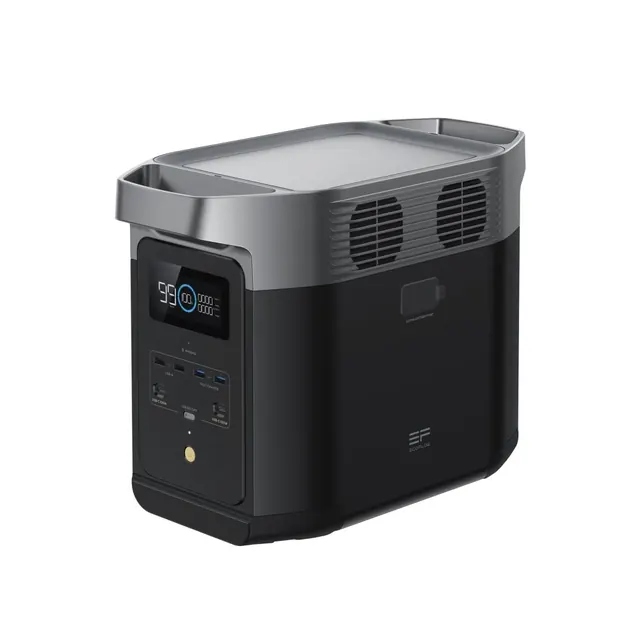 Buying guidesEcoFlow vs Jackery vs Bluetti: Which Brand to Buy in 2026?EcoFlow, Jackery, and Bluetti sell roughly 70% of all portable power stations — but they are not interchangeable. This…
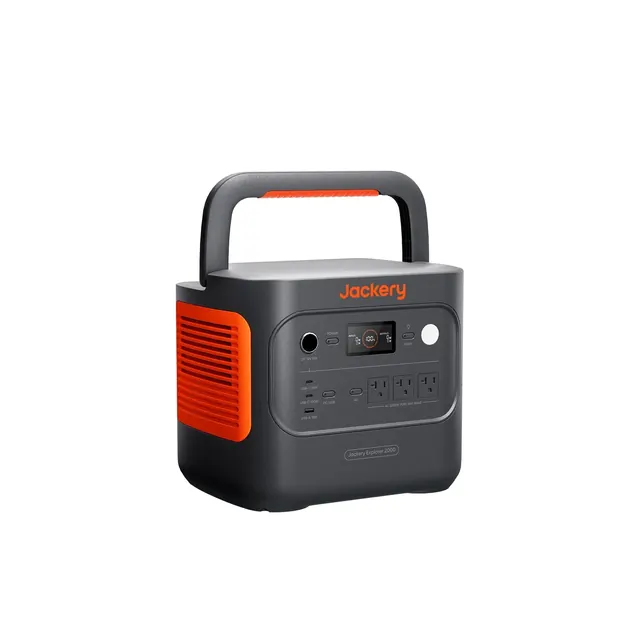 Buying guidesBest Portable Power Stations for Camping in 2026The best camping power stations of 2026, ranked by research: Jackery Explorer 2000 v2, Anker Solix C1000, Bluetti Elite 200 V2,…
Reader comments
No comments yet. Own this model or have a question about it? Share it below.