Anker Solix C800 Plus Review: 768Wh, 1200W
8 min read
On this page
- The short version
- Availability note (read this first)
- Anker Solix C800 Plus key specs (verified)
- The camping lights are the whole point
- Power and runtime: what 768Wh actually runs
- Charging: the 58-minute headline is real — with a condition
- Home backup and UPS behaviour
- Pros and cons
- Verdict: who should buy the C800 Plus
- FAQ
The Anker Solix C800 Plus pairs 768Wh of LiFePO4 with 1200W of output, a 58-minute full recharge, and something no rival offers: two detachable camping lights and a telescoping pole hidden in the top. Based on Anker's official specs and…
The short version
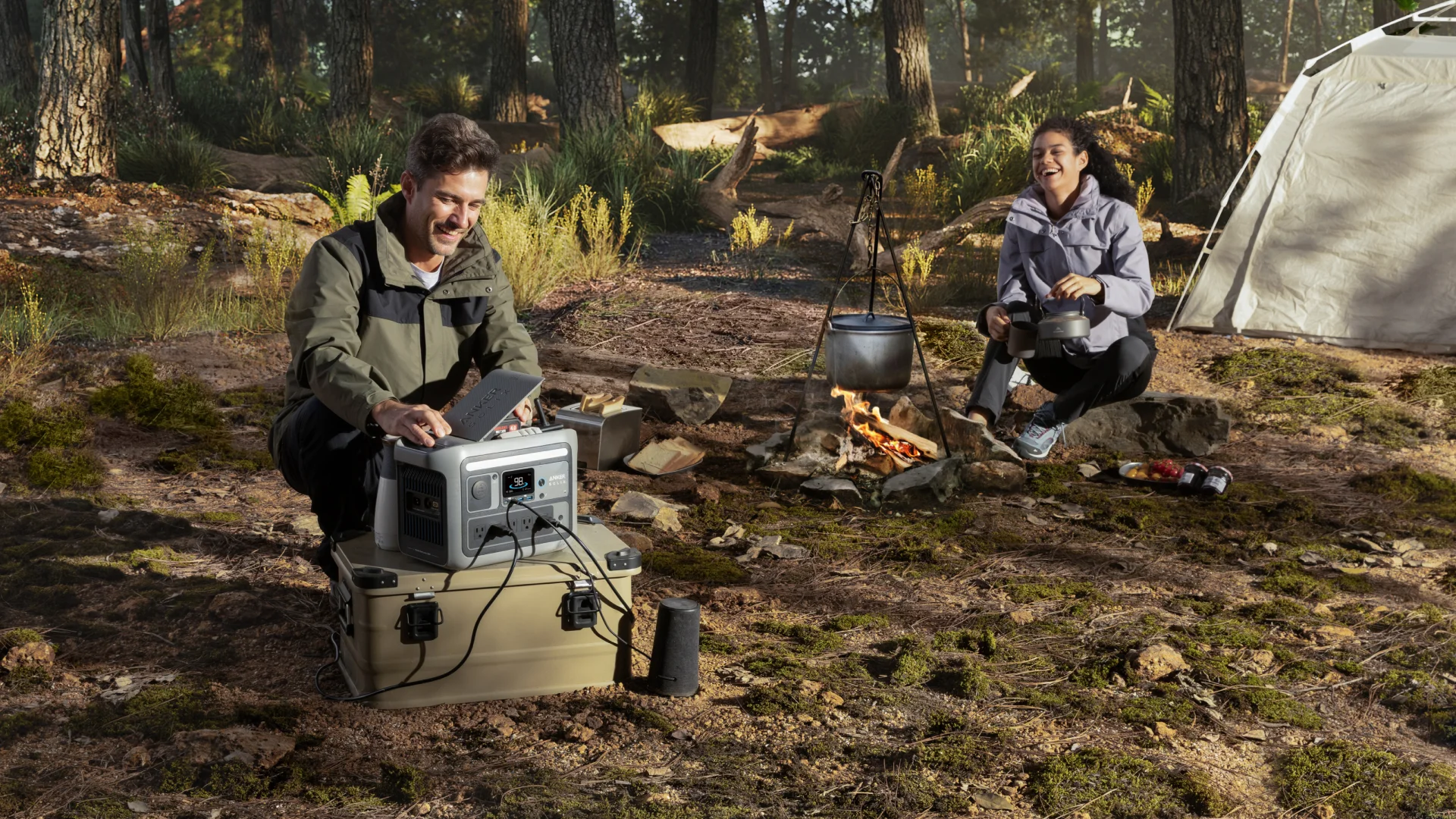
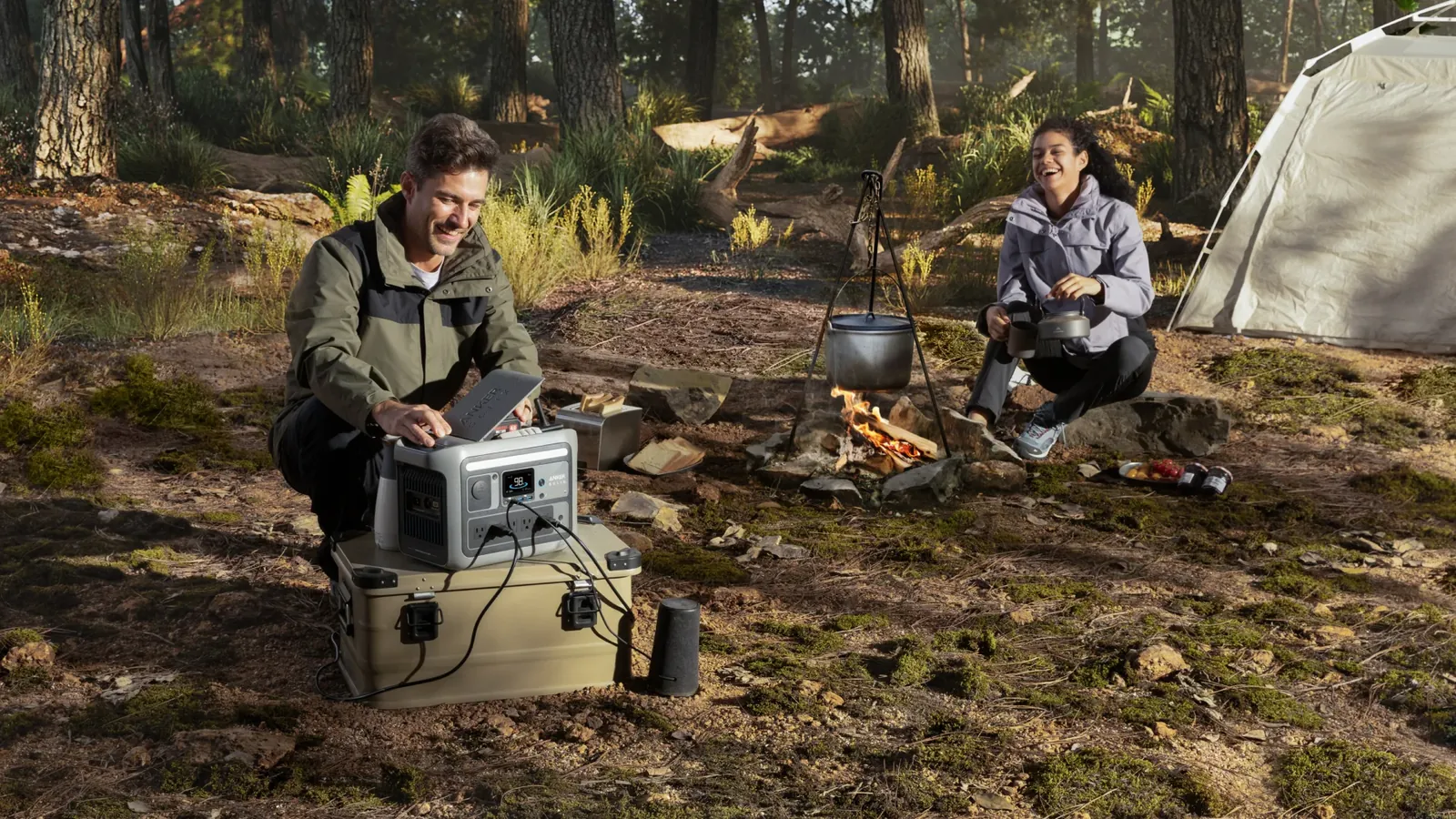
The Anker Solix C800 Plus is the camping-first version of Anker's 768Wh station: the same LiFePO4 battery, 1200W inverter and 58-minute HyperFlash recharge as the standard C800, plus a party trick nobody else in the class offers — two detachable, rechargeable camping lights and a 39.3-inch telescoping pole stored in a compartment on top of the unit. If you camp, tailgate or lose power at night, that lighting kit is genuinely useful rather than a gimmick. If you never leave the house with it, the plainer C800 (or a rival like the EcoFlow River 2 Pro) covers the same electrical ground for less. Launched at $649, the C800 Plus has since been discounted heavily — street prices around $349–$399 have been common — but note the availability caveat below before you shop.
This is a research-based review: every spec below comes from Anker's official documentation, and the strengths and weaknesses reflect patterns across published expert reviews and verified owner feedback. We did not bench-test this unit.
Availability note (read this first)
As of October 2026, Anker's own US store no longer lists the C800 Plus as a new standalone product — the current US lineup pushes buyers toward the C1000 Gen 2, and even the refurbished base C800 listing showed as sold out at $359.99 when we checked. Retailers still surface C800 Plus stock and refurbished units at steep discounts to the $649 launch price, so treat this review as a buying guide for remaining and refurbished stock: the hardware case below still holds, but check the exact seller, warranty terms and return policy before paying, and compare the price against a new Anker Solix C1000, which is frequently discounted into similar money.
Anker Solix C800 Plus key specs (verified)
| Spec | Solix C800 Plus |
|---|---|
| Capacity | 768Wh (LiFePO4) |
| AC output | 5 outlets (US), 1200W continuous, up to 1600W with SurgePad |
| Battery chemistry / cycle life | LiFePO4 — 3000 cycles to 80% capacity (InfiniPower) |
| AC recharge | 750W standard; 1100W UltraFast (HyperFlash) — 0–100% in ~58 min via the app |
| Solar input | 300W max (11–60V, 10A, XT-60) — 0–80% in ~2.3 hrs in strong sun |
| Car charging | 12V car input (cable included) |
| UPS | 20 ms switchover |
| USB ports | 2× USB-C (100W + 30W), 2× USB-A (12W each) |
| Other DC | 1× car port (12V/10A, 120W) |
| Total outputs | 10 (5 AC + 2 USB-C + 2 USB-A + 1 car port), plus 2 camping-light charging slots |
| Camping lights | 2 detachable lights, 2600mAh each, 3 modes (candle / flood / flashlight), up to ~8 hrs per charge, recharge in the top compartment |
| Light pole | 39.3 in (100 cm) retractable pole with detachable ball head and 1/4 in screws |
| Expandable | No |
| App | Anker app via Wi-Fi + Bluetooth (port control, UltraFast charging, monitoring) |
| Weight / dimensions | 24 lbs (10.9 kg) / 14.61 × 8.07 × 9.84 in |
| Temperatures | Discharge −4°F to 104°F; charge 32°F to 104°F |
| Warranty | 5-year warranty |
Specs sourced from Anker's official C800 Plus launch specifications and the official A1754 user-guide specification table.
The camping lights are the whole point
Most "Plus" trims in this industry mean a bigger battery. Here it means light. Lift the lid on top and you find two puck-style LED lights charging on contacts inside the compartment, plus the telescoping pole. Each light runs up to about 8 hours, offers candle, flood and flashlight modes, and is water-resistant; flood mode is rated to cover roughly 20 m². The pole screws into the top of the unit, extends to about a metre, and ends in a magnetic ball head the lights snap onto — that turns the station into a proper area light for a tent pitch, a picnic table or a dark house during an outage, instead of the usual phone-torch balancing act. The ball head also uses standard 1/4-inch threads, so it can hold a small camera, phone mount or mini projector.
Is it a gimmick? Partly — but it's a useful one, and published reviewers consistently singled it out as the feature that justifies this model over the standard C800. The lights charge automatically whenever they're stowed, so they're always ready, and they double as emergency torches you can grab when the power cuts at 2 a.m. For home-backup-only buyers, though, you're paying for hardware you'll rarely use; the standard C800 has identical electrical specs.
Power and runtime: what 768Wh actually runs
The 1200W inverter (1600W for resistive loads via SurgePad) is strong for a sub-1kWh station — it covers kettles and coffee makers at the low end of their range, power tools, a microwave on short bursts, and any laptop/phone/camera load you can name. Plan on roughly 650Wh of usable AC energy after inverter losses. That works out to approximately:
- Home Wi-Fi router (10W): ~60+ hours — days of connectivity in an outage
- CPAP without heated humidifier (~40W): ~16 hours — two nights; see our CPAP power station guide for sizing method
- Laptop (65W): ~10 hours of work
- Portable fridge (50W average): ~12–13 hours
- Full-size refrigerator (100–150W average): ~4–6 hours — a bridge, not a day of cover
- Electric kettle (1200W): ~30 minutes of boil time across several uses
For the general method behind these numbers, our 1000Wh runtime chart scales directly — multiply by 0.77 for this unit. Against its closest same-capacity rival, the EcoFlow River 2 Pro, the C800 Plus offers 400W more inverter output and the lights, but gives up the River's lighter 17.2 lb carry weight.
Charging: the 58-minute headline is real — with a condition
HyperFlash is the C800 Plus's second headline: enable UltraFast charging in the Anker app and the 1100W AC input refills the battery in about 58 minutes — among the fastest full recharges in the class, and a genuine advantage for campers topping up at a café or drivers between stops. The catch is in the fine print shared by every fast-charging station: the standard AC input is 750W, and UltraFast is app-activated, so a buyer who never installs the app gets a still-respectable ~1.2-hour recharge. Solar input caps at 300W (11–60V via XT-60) — enough for a realistic 0–80% in about 2.3 hours under strong sun with a 200–300W panel, and a natural fit for the panels in our best camping power stations guide, where this class of station earns its keep.

Home backup and UPS behaviour
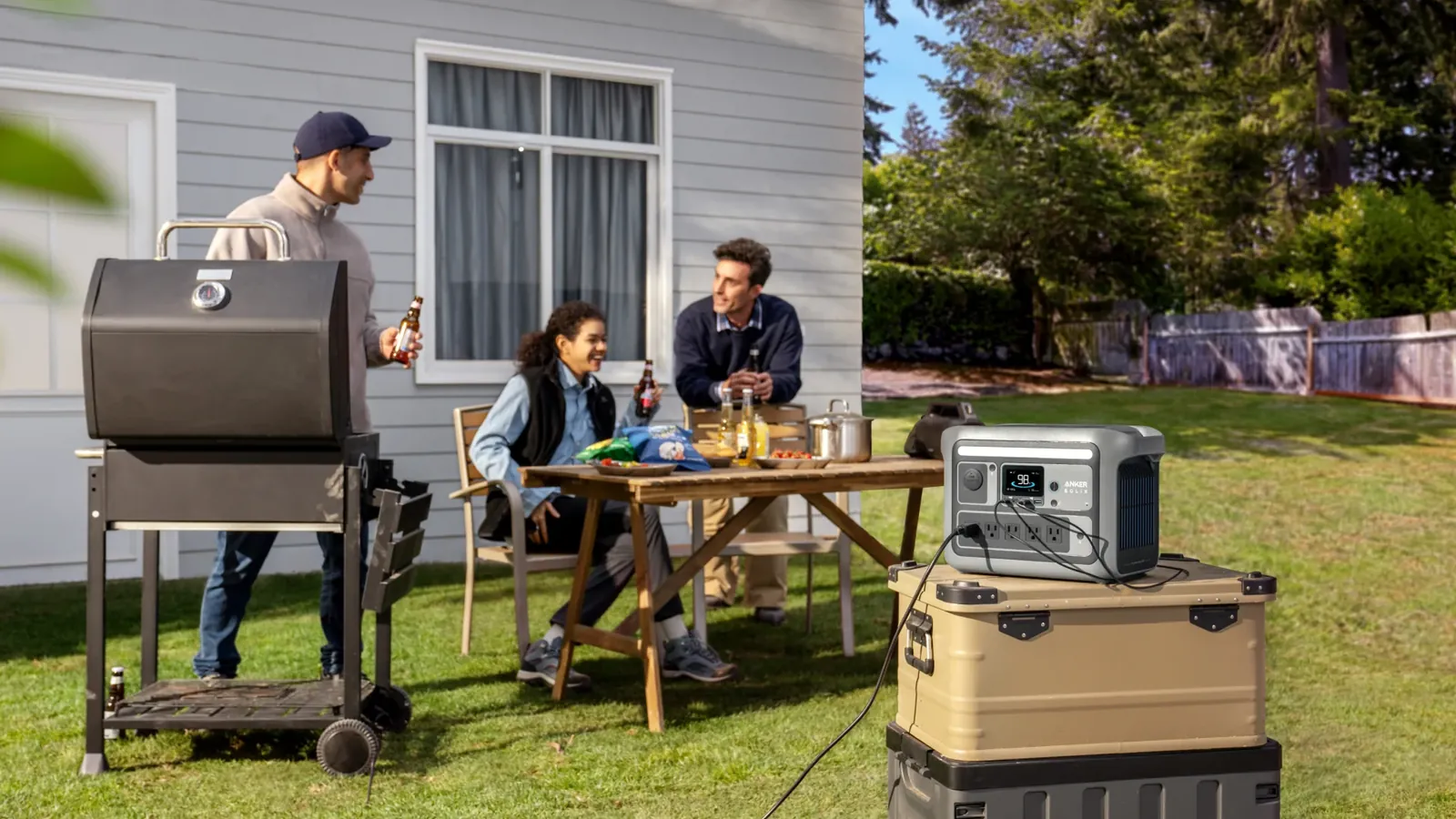
At home, the C800 Plus is an essentials station, not a whole-home answer: routers, lights, laptops, a TV and phone charging for an evening, or a CPAP overnight. The 20 ms UPS switchover keeps network gear and most computers alive through a cut, though — as Anker's own class-wide caveat goes — 20 ms is an EPS-grade switch, not the sub-10 ms of a true online UPS, so test anything mission-critical. The front light bar plus the two detachable lights make it a notably good blackout station: set the pole up in the main room and you have real area lighting without burning the battery on lamps. Buyers who need a fridge running all day or medical gear covered for multiple days should step up a class — the Anker Solix C2000 Gen 2 doubles both capacity and output.
Pros and cons
Pros
- Detachable camping lights + telescoping pole: a real differentiator, not trim
- 1200W output (1600W SurgePad) is strong for 768Wh
- 58-minute UltraFast AC recharge; 300W solar input
- LiFePO4 rated 3000 cycles to 80% — a decade of regular use
- 10 outputs including 100W USB-C; Wi-Fi + Bluetooth app control
- 20 ms UPS switchover for routers and computers
- 5-year warranty; heavy street discounts vs the $649 list
Cons
- No longer sold new on Anker's US store — remaining/refurbished stock needs seller checks
- Not expandable: 768Wh is all you will ever have
- 24 lbs is heavy next to the 17 lb River 2 Pro at the same capacity
- UltraFast charging requires the app; standard input is 750W
- Solar capped at 300W — no fast solar recovery for all-day off-grid use
- Camping-light premium is wasted on home-only buyers (buy the C800 instead)
Verdict: who should buy the C800 Plus
Buy the C800 Plus if you camp, tailgate or road-trip and can find it at the discounted street prices: at $349–$399 the lights, pole, 1200W inverter and 58-minute recharge make it one of the best-equipped sub-1kWh stations ever sold, and the LiFePO4 battery will outlast the discount-bin lithium-ion rivals by years. Skip it if you need expansion headroom, the lightest possible carry at this capacity, or a station you can still buy new with full retail support — in that case the C1000 class (or the River 2 Pro for pure portability) is the safer spend. As remaining stock thins out, the C800 Plus is becoming a "buy it when you see it cheap" station rather than a default recommendation — but on merit, it earned that status.
Research-based review — specs verified against Anker's official documentation at publish time (October 2026). Prices and availability change; the availability note above reflects Anker's US store and major retailer listings checked on the publish date.
FAQ
What is the difference between the Anker Solix C800 and C800 Plus?
The electrical core is identical — 768Wh LiFePO4, 1200W output (1600W SurgePad), 58-minute UltraFast recharge, 300W solar. The Plus adds the top-compartment kit: two detachable rechargeable camping lights (2600mAh each, three modes) and a 39.3-inch telescoping pole with a magnetic ball head. If you never camp or need area lighting in outages, the standard C800 is the same station for less.
How long does the C800 Plus take to recharge?
About 58 minutes from a wall outlet with UltraFast (HyperFlash) charging enabled in the Anker app at up to 1100W. On the standard 750W AC input, expect roughly 1.2 hours. With 300W of solar in strong sun, 0–80% takes about 2.3 hours.
Can the C800 Plus run a refrigerator?
Yes, briefly. A typical full-size fridge averaging 100–150W runs about 4–6 hours on the usable ~650Wh — enough to bridge a short outage and protect food, but not a full day. A small portable or mini fridge at ~50W average runs roughly 12–13 hours. For overnight-plus fridge cover, step up to a 1–2kWh station.
Can you expand the C800 Plus with an extra battery?
No. The C800 Plus has no expansion port; 768Wh is fixed. Buyers who want expansion in the Anker line should look at the original Solix C1000 with its BP1000 expansion battery, or the larger Solix models.
Does the C800 Plus work as a UPS?
It offers a 20 ms switchover when grid power fails, which keeps routers, modems and most computers running without a reboot. That is EPS-grade rather than true sub-10 ms UPS, so test sensitive or mission-critical equipment before relying on it.
Are the camping lights worth it?
For campers and outage use, yes — published reviewers consistently rated the two detachable lights and pole as the model's standout feature: up to ~8 hours per light, three modes, automatic recharging when stowed, and flood coverage around 20 m² on the pole. For a station that will live in a garage as pure backup, the standard C800 delivers the same power without the lighting premium.
About our reviews
Specs come from published manufacturer data sheets, cross-checked against owner feedback. Runtime estimates use usable capacity (Wh × 0.85 ÷ watts). We do not lab-test units unless an article says so. Figures go stale. Check the current data sheet before you buy. This is not electrical or purchasing advice. How we research.
Related guides
 ReviewsBluetti AC300 + B300 Review: 3072Wh Modular PowerThe Bluetti AC300 + B300 is a fully modular home backup system: the AC300 inverter module has no battery of its own, the B300…
 ReviewsBluetti AC200MAX Review: 2048Wh, 2200W ExpandableThe Bluetti AC200MAX pairs a 2048Wh LiFePO4 battery and a 2200W inverter with something most 2kWh stations still lack: real…
 ReviewsBluetti EB3A Review: 268Wh, 600W, Fast ChargeThe Bluetti EB3A packs a 268Wh LiFePO4 battery, a 600W inverter, 430W dual charging (80% in about 30–40 minutes) and a 15W…
Reader comments
No comments yet. Own this model or have a question about it? Share it below.