EcoFlow Delta 2 Max Review: 2048Wh, 2400W Power
7 min read
On this page
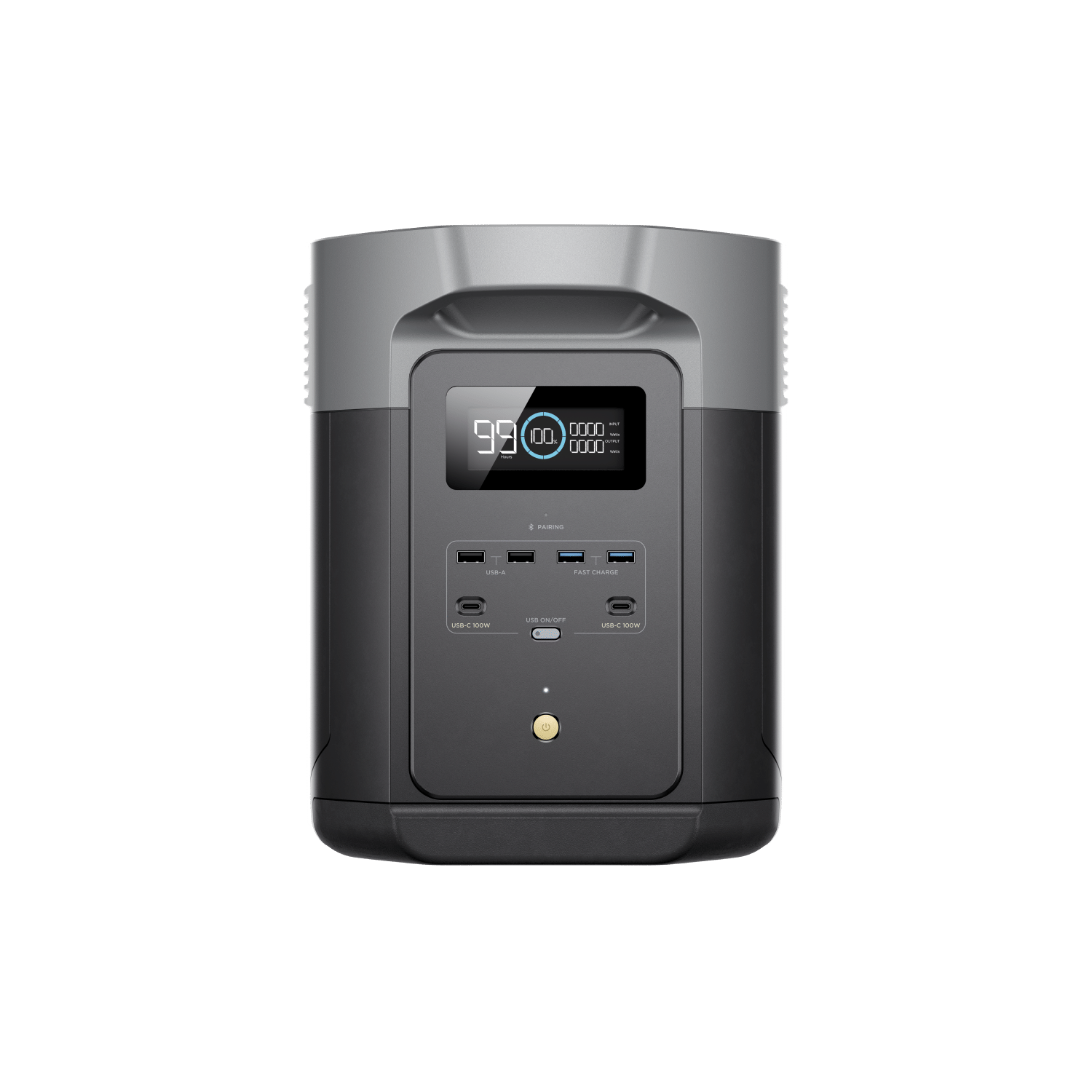
The EcoFlow Delta 2 Max pairs 2048Wh of LFP capacity with 2400W output, expansion to 6144Wh and dual 1000W solar input — around $1,049 on EcoFlow's US store as of October 2026. Research-based review with verified specs, runtime math, and…
The proven 2kWh workhorse
The EcoFlow Delta 2 Max is the bigger sibling of the best-selling Delta 2: 2048Wh of LiFePO4 capacity, 2400W of continuous AC output (4800W surge), and expansion headroom all the way to 6144Wh with two extra batteries. It is no longer EcoFlow's newest 2kWh model — that role belongs to the Delta 3 Max — but the Delta 2 Max remains widely sold in the US, listed at around $1,049 for the standalone unit on EcoFlow's US store as of October 2026. This review is research-based: every figure below comes from EcoFlow's official US specifications. We did not bench-test the unit.
Where it sits in the lineup: the standard EcoFlow Delta 2 is the 1024Wh model; the Delta 2 Max doubles that capacity and raises output from 1800W to 2400W, while the newer EcoFlow Delta 3 Max is the current-generation alternative to cross-shop.
Specs at a glance
| Spec | EcoFlow Delta 2 Max (US) |
|---|---|
| Capacity | 2048Wh LiFePO4 |
| Expandable | Yes — up to 6144Wh with two DELTA 2 Max Smart Extra Batteries (also supports DELTA Max Smart Extra Battery) |
| AC output | 2400W total across 6 outlets (4800W surge), pure sine wave |
| X-Boost | Up to 3400W |
| AC recharge | 1800W X-Stream, 100–120V, 15A |
| Solar input | 1000W max — dual ports, 500W each (11–60V, 15A) |
| Car charging | 12V/24V, 8A |
| Battery chemistry / cycle life | LFP (LiFePO4), 3000 cycles to 80%+ capacity |
| EPS switchover | Under 30ms (EcoFlow rates it as EPS, not a true 10ms-class UPS) |
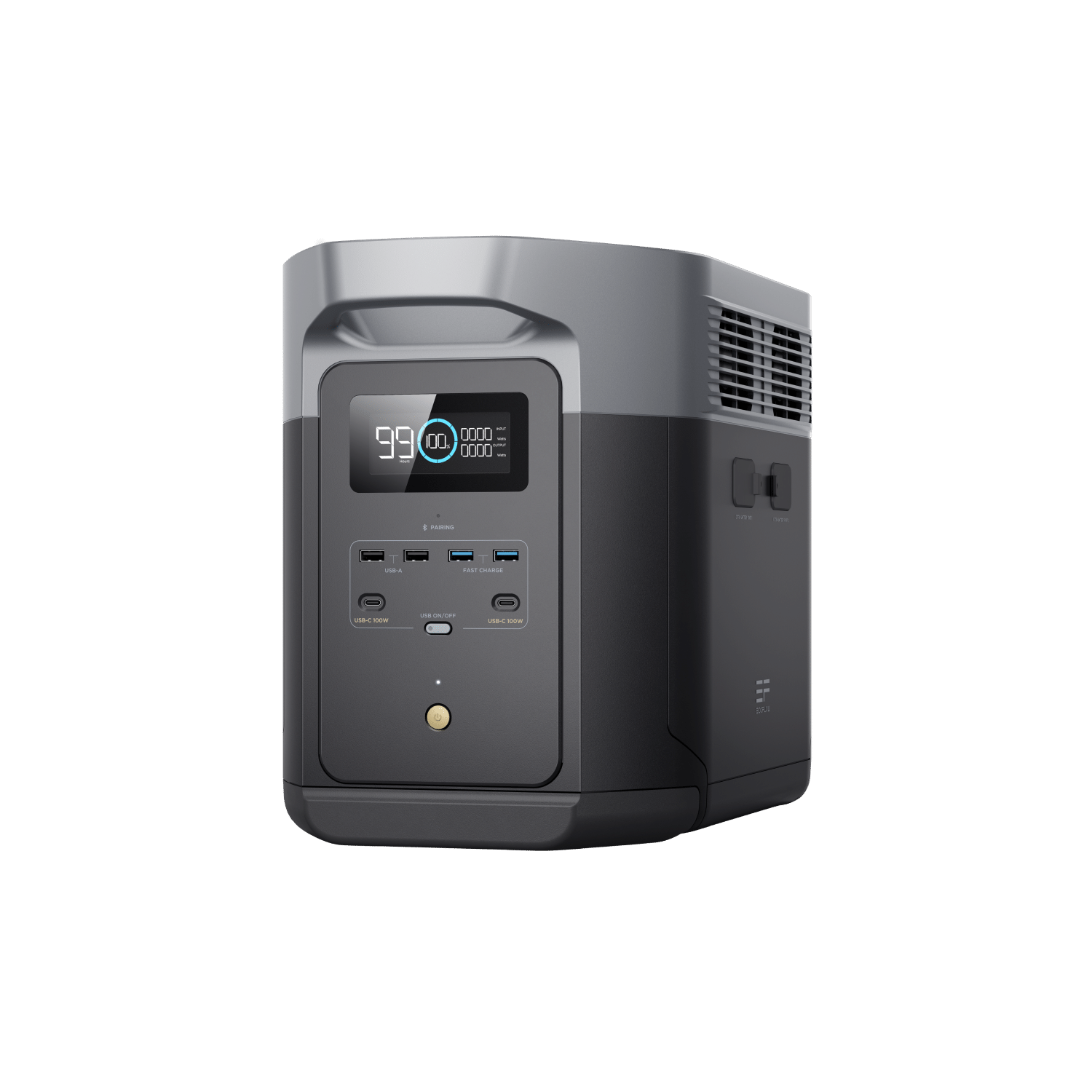
| USB ports | 2× USB-C 100W, 2× USB-A 12W, 2× USB-A Fast Charge 18W |
| DC outputs | 1× car outlet 126W, 2× DC5521 38W each — 15 outlets in total |
| Connectivity | Wi-Fi + Bluetooth, EcoFlow app |
| Weight / dimensions | 50 lbs (23 kg), 19.6 × 9.5 × 12 in (497 × 242 × 305 mm) |
| Warranty | 5 years |
| Typical price (Oct 2026) | ~$1,049 standalone on EcoFlow's US store |
What's good
1. Expansion to 6144Wh is the headline
Most 2kWh stations are a dead end. The Delta 2 Max accepts up to two smart extra batteries, tripling capacity to 6144Wh — enough to move from "keep the fridge alive overnight" to genuine multi-day essentials backup. Buy the base unit now, add batteries during a sale later. That upgrade path is a big reason the model still earns a place in our best portable power stations for home backup roundup.
2. 2400W output, 3400W with X-Boost
2400W continuous covers the vast majority of household appliances — fridge, microwave, power tools, space-heater alternatives on lower settings — and X-Boost stretches resistive loads to 3400W. The 4800W surge handles compressor and motor startup spikes without drama.
3. Dual solar inputs, 1000W total
Two independent 500W solar ports mean two panel arrays with different orientations can feed the unit at once — a real advantage for RV roofs and shaded yards, and still uncommon at this price. In good sun, 1000W of input refills the 2048Wh pack in roughly two to two-and-a-half hours.
4. Fast wall charging
The 1800W X-Stream AC input is at the top of what a standard US household circuit can deliver, so the pack refills quickly between outage windows — no proprietary charger or 240V circuit needed.
5. LFP longevity and a 5-year warranty
3000 cycles to 80%+ capacity translates to roughly a decade of regular use, and EcoFlow backs the unit for five years. For a buy-it-for-years backup purchase, that combination matters more than any single spec.
The catches (know these before checkout)
1. It weighs 50 lbs
At 23 kg, this is a two-hand lift you plan around, not a grab-and-go camping companion. It works well on a hand truck, in an RV bay, or parked next to the panel at home — which is also why it features in our best power stations for RV and van life guide, where weight matters less than capacity.
2. EPS, not a true UPS
EcoFlow rates the switchover at under 30ms. Routers, TVs, CPAPs and most electronics ride through that gap fine, but it is not the sub-10ms UPS class of EcoFlow's newer Delta 3 line — sensitive desktop PCs are better protected by a dedicated small UPS in front of it.
3. A generation old
The Delta 2 Max predates the Delta 3 family's faster switchover and newer app features. At full price that gap is worth weighing against the Delta 3 Max; at the discounted street prices the Delta 2 Max regularly sees, the value math flips back in its favor.
What will it actually run? (runtime math)
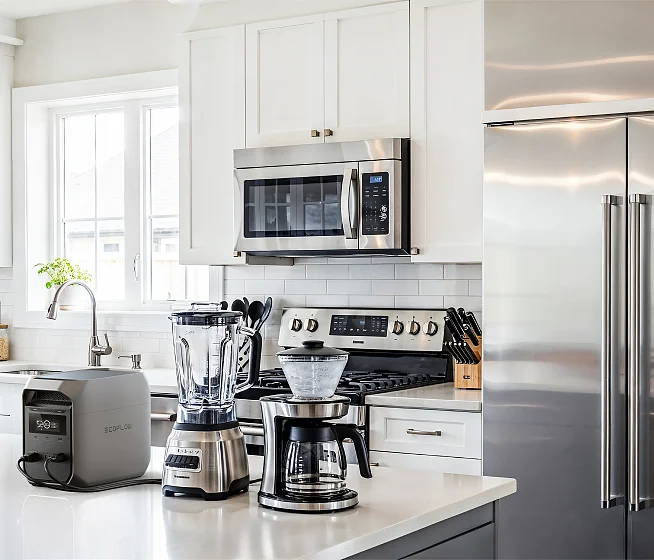
Allowing for roughly 85% inverter efficiency, the 2048Wh pack delivers about 1740Wh of usable AC energy. Realistic estimates based on published specs:
- Full-size fridge (120W average) — ~14 hours of continuous draw; with normal compressor cycling, plan on roughly a full day of food-safe cooling
- CPAP (40W) — ~40 hours, around five nights
- 50-inch TV (110W) — ~15 hours
- Microwave (1300W) — ~75 minutes of total cooking time
- Wi-Fi router + modem (15W) — 100+ hours of connectivity
- Laptop (60W) — ~28 hours of work
For more appliance-by-appliance examples, see what a 2000Wh power station can run, and for fridge-specific sizing, our refrigerator outage sizing guide.
Who should buy it
- Home backup buyers who want a growth path: start at 2kWh, expand to 6kWh without replacing the main unit.
- RV and van-life users: dual solar inputs plus 2400W output cover air fryers, kettles and power tools at camp.
- EcoFlow ecosystem owners: it also accepts the DELTA Max Smart Extra Battery, so existing batteries are not wasted.
- Deal hunters: as the older generation, it is frequently the cheapest route into a quality 2kWh LFP station from a major brand.
Skip it if: you need sub-10ms UPS switchover for a desktop PC, you will carry it daily (look at 1kWh models), or you want the newest generation and the price gap to the Delta 3 Max is small when you shop.
Pros and cons
- Pros: expandable 2048Wh to 6144Wh; 2400W output + 3400W X-Boost; dual 500W solar inputs (1000W total); fast 1800W AC charging; LFP 3000-cycle battery; 15 outlets; 5-year warranty
- Cons: heavy at 50 lbs; EPS switchover under 30ms is not true UPS class; previous-generation model; extra batteries add significant cost
FAQ
Can the Delta 2 Max run a full-size refrigerator?
Yes. A typical fridge drawing around 120W on average runs about 14 hours of continuous draw from the usable ~1740Wh, and normal compressor cycling usually stretches food-safe cooling to roughly a day. The 4800W surge handles compressor startup easily.
How much can the Delta 2 Max expand to?
Up to 6144Wh total, by adding two DELTA 2 Max Smart Extra Batteries (2048Wh each). It also supports the earlier DELTA Max Smart Extra Battery.
Is the Delta 2 Max a UPS?
It provides EPS (emergency power supply) backup with a switchover under 30ms. That keeps most home electronics running through an outage, but it is slower than the sub-10ms UPS mode on EcoFlow's Delta 3 models, so very sensitive equipment may still flicker.
How fast does the Delta 2 Max charge?
From the wall, its 1800W X-Stream input is among the fastest available on a standard US circuit. From solar, it accepts up to 1000W across two ports, refilling the pack in roughly two to two-and-a-half hours of good sun. AC and solar can also be combined through the EcoFlow app's dual-charging settings.
Delta 2 Max vs Delta 3 Max — which should I buy?
The Delta 3 Max is the newer generation with faster switchover and updated features. The Delta 2 Max counters with a mature expansion ecosystem (including DELTA Max battery compatibility) and frequent discounts. If the Delta 2 Max is meaningfully cheaper when you shop, it remains the better value; at price parity, take the newer model.
Can the Delta 2 Max power a whole house?
Not a whole house at once — 2400W is an essentials station, not a whole-home system. It comfortably covers a fridge, lights, internet, TV, phones and a CPAP through an outage, especially expanded to 4–6kWh, but heavy 240V loads like central AC, electric dryers and well pumps are beyond it.
Verdict
The EcoFlow Delta 2 Max is the expansion play in the 2kWh class: proven LFP hardware, 2400W of output, dual solar inputs and a path to 6144Wh that few rivals match. It is heavy and a generation old, and its EPS switchover is not UPS-class — but at around $1,049 on EcoFlow's US store, it remains one of the strongest value routes into serious home backup power in 2026, especially if you plan to grow capacity over time.
About our reviews
Specs come from published manufacturer data sheets, cross-checked against owner feedback. Figures go stale. Check the current data sheet before you buy. This is not electrical or purchasing advice.
Related guides
 ReviewsEcoFlow Delta 3 Review: 1024Wh Backup at $449The EcoFlow Delta 3 Classic is the 1kWh home-backup value play of 2026: 1024Wh, 1800W output, 45-minute recharge, 10ms UPS —…
 ReviewsDJI Power 500 Review: The Drone Pilot's 512Wh StationThe DJI Power 500 packs 512Wh of LFP storage with 1000W of continuous output, a full recharge in 70 minutes, and DJI's SDC…
 ReviewsDJI Power 1000 Review: The Drone Pilot's 1kWh StationThe DJI Power 1000 packs 1024Wh of LiFePO4 storage with 2200W of continuous output — the strongest 1kWh inverter in its class…