EcoFlow Delta 3 vs Jackery 1000 v2: Which Wins?
9 min read
On this page
- The short version
- Side-by-side specs (verified)
- Round 1: Output — the EcoFlow wins, and it is not close
- Round 2: Capacity and runtime — a small Jackery edge
- Round 3: Charging — EcoFlow on wall power, honestly split overall
- Round 4: Ports — same USB, one decisive difference
- Round 5: Portability and noise — the Jackery's home turf
- Round 6: Backup behavior and software — EcoFlow's UPS and Storm Guard
- Winner by use case
- FAQ
- Verdict
Two 1kWh LiFePO4 stations, two philosophies: the EcoFlow Delta 3 Classic brings 1800W output, a 10ms UPS and a 45-minute recharge, while the Jackery Explorer 1000 v2 counters with 1070Wh, a 23.8-lb body and the 12V port the EcoFlow lacks.…
The short version
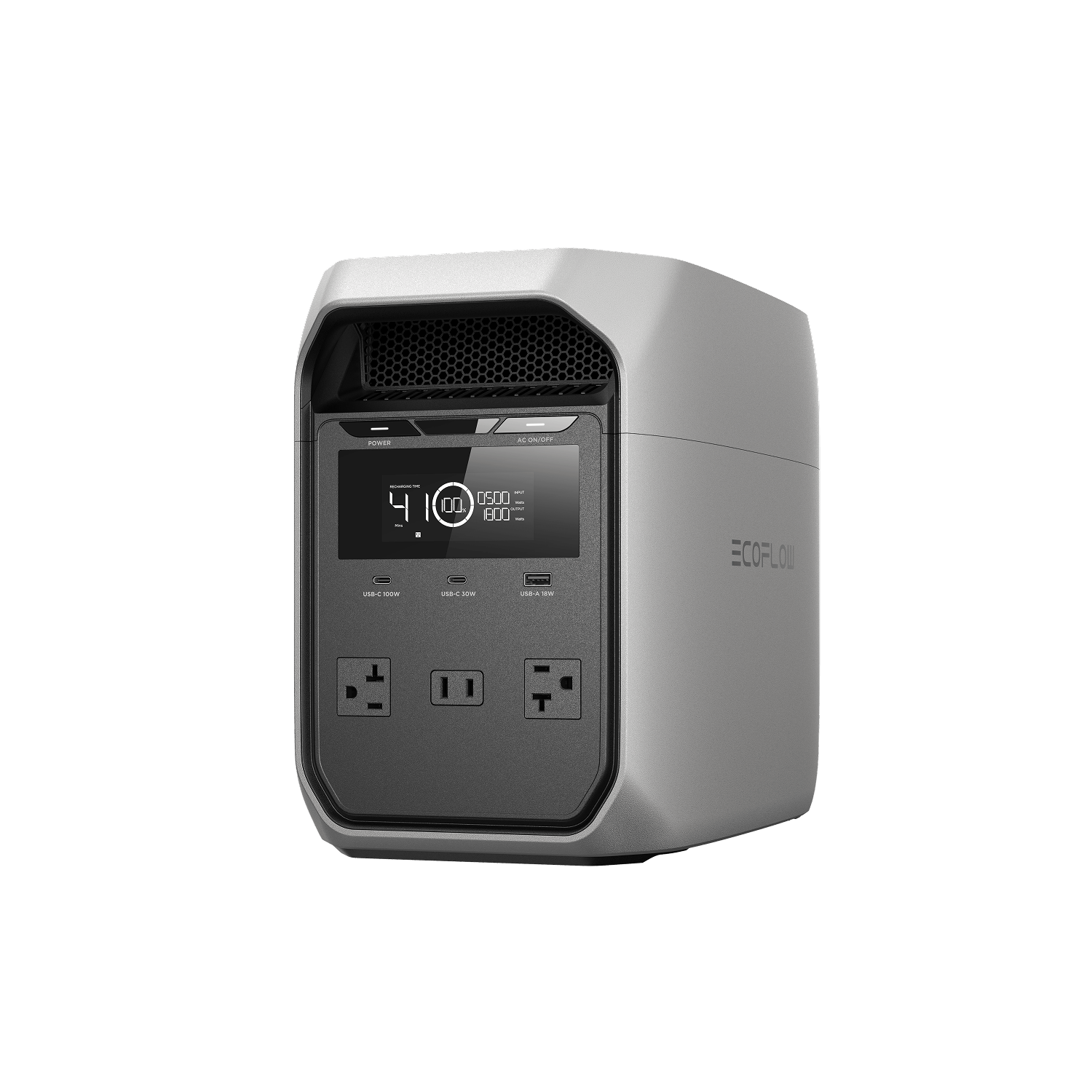
This is the 1kWh fight that actually matters in 2026. The EcoFlow Delta 3 — sold in the US today as the DELTA 3 Classic — is the power-and-speed pick: 1800W of AC output (300W more than the Jackery), X-Boost up to 2600W for resistive loads, a genuine 10ms UPS, and a 0–80% recharge in about 45 minutes — with both stations listing at around $499 on their official US stores as of October 2026. The Jackery Explorer 1000 v2 is the portability-and-simplicity pick: slightly more capacity (1070Wh vs 1024Wh), almost 3 lbs lighter at 23.8 lbs, a smaller footprint, whisper-quiet charging, and — critically for campers and RVers — a 12V car port the EcoFlow Classic does not have at all. Neither unit is expandable, both use LiFePO4 cells, and both carry a 5-year warranty. If the station will mostly sit at home waiting for an outage, buy the EcoFlow. If you will carry it every weekend, buy the Jackery.
This is a research-based comparison: every spec below comes from EcoFlow's and Jackery's official US documentation, re-verified in October 2026. We did not bench-test either unit. A naming note: EcoFlow's 1kWh line also includes the base Delta 3 and the Delta 3 Plus; this comparison uses the Classic because it is the Delta 3 actually sold in the US today — our full EcoFlow Delta 3 review explains the lineup.
Side-by-side specs (verified)
| Spec | EcoFlow Delta 3 Classic | Jackery Explorer 1000 v2 |
|---|---|---|
| Capacity | 1024Wh (51.2V 20Ah) | 1070Wh (30.4Ah / 35.2V) |
| Battery chemistry | LiFePO4 (LFP) | LiFePO4 (LFP) |
| Cycle life | Rated for ~10 years of use (no cycle count published for the Classic) | 4000 cycles to 70%+ capacity |
| AC output | 1800W total (3600W surge) | 1500W rated (3000W surge) |
| Boost mode | X-Boost up to 2600W (resistive loads) | None |
| AC outlets | 3 | 3 |
| USB ports | 1× USB-A 18W, 1× USB-C 100W, 1× USB-C 30W | 1× USB-A 18W, 1× USB-C 100W, 1× USB-C 30W |
| 12V DC output | None | 1× car port, 12V / 10A |
| Total outlets | 6 | 7 |
| AC recharge | 1400W — 0–80% in ~45 min, full in ~60 min | ~1.58 hrs standard; Emergency Charge 0–100% in ~1 hr (via app) |
| Solar input | 500W max | 400W max |
| Car charging | Via optional EcoFlow Alternator Charger (500W) | ~12 hrs via 12V car cable |
| UPS switchover | 10ms | ≤20ms (1500W bypass mode) |
| Noise | <30dB at 600W load | ≤22dB in Quiet Charging mode (Jackery rating) |
| Expandable | No | No |
| App / smart features | Wi-Fi + Bluetooth, EcoFlow app, Storm Guard auto-charging | Wi-Fi + Bluetooth, Jackery app, ChargeShield 2.0 protection |
| Weight | ~26.7 lbs (12.1 kg) | 23.8 lbs (10.8 kg) |
| Dimensions | 15.7 × 7.9 × 11.1 in (398 × 200 × 283 mm) | 12.87 × 8.82 × 9.72 in |
| Warranty | 5 years (3 + 2 on app registration) | 3 years + 2-year extension |
| Typical price (Oct 2026) | Around $499 (list $599) | Around $499 |
Prices are the official US store prices observed in October 2026 and move with promotions — treat them as "around" figures, not quotes. Full standalone reviews: Delta 3 Classic review and Explorer 1000 v2 review.
Round 1: Output — the EcoFlow wins, and it is not close
1800W against 1500W is the single biggest spec gap in this comparison. Both inverters start a full-size refrigerator, a microwave, or a coffee maker without drama. The gap shows up at the top end: a 1800W kettle, a large air fryer, or a hair dryer on high will run on the Delta 3 — helped further by X-Boost, which pushes resistive heating loads up to 2600W — and will trip the Jackery, which has no boost mode at all. If your outage plan includes any appliance rated above 1500W, this round decides the whole comparison. It is also the main step up from the previous generation pairing in our Delta 2 vs Explorer 1000 v2 comparison, where the same 300W output gap decided things the same way.
Round 2: Capacity and runtime — a small Jackery edge
The Jackery stores 1070Wh to the EcoFlow's 1024Wh. After typical inverter losses (~85% efficiency), that is roughly 909Wh of usable AC energy against roughly 870Wh — about 40 extra watt-hours, or one more hour of TV. In practice:
- Refrigerator (~120W average draw): ~7 hours of continuous draw on the EcoFlow, ~7.5 hours on the Jackery — compressor cycling typically stretches either unit to 12–16 hours of food-safe cooling.
- CPAP (~40W): ~20 hours on the EcoFlow; ~22 hours on the Jackery — two comfortable nights on either.
- Laptop (~60W): ~14 hours vs ~15 hours — a full workday plus change on both.
- Wi-Fi router (~10W): 80+ hours on either — days of internet through an outage.
Call it a tie with a Jackery tilt. For the full method behind these numbers, see how long a 1000Wh power station actually runs common loads. One honest caveat applies to both: neither station is expandable, so the capacity you buy is the capacity you keep. If you think you will outgrow 1kWh, EcoFlow's own Delta 3 Plus (expandable to 5kWh) is the upgrade path — the Classic deliberately gives that up for its price.
Round 3: Charging — EcoFlow on wall power, honestly split overall
On a wall outlet the Delta 3 Classic is in a different league: its 1400W X-Stream input refills 0–80% in about 45 minutes and finishes in roughly an hour, every time, with no special mode. The Jackery needs about 1.58 hours on its standard charge; its Emergency Charge mode (enabled in the app, not with a physical button) matches the EcoFlow at roughly one hour — but Jackery positions that mode for emergencies, not daily use. On solar, the EcoFlow's 500W input cap beats the Jackery's 400W, so a good-sun refill takes roughly 2–2.5 hours against most of a day for the Jackery. Where the Jackery fights back is charging away from the wall the simple way: it ships ready for a ~12-hour 12V car charge, while the Classic needs EcoFlow's optional Alternator Charger accessory for vehicle charging.
Round 4: Ports — same USB, one decisive difference
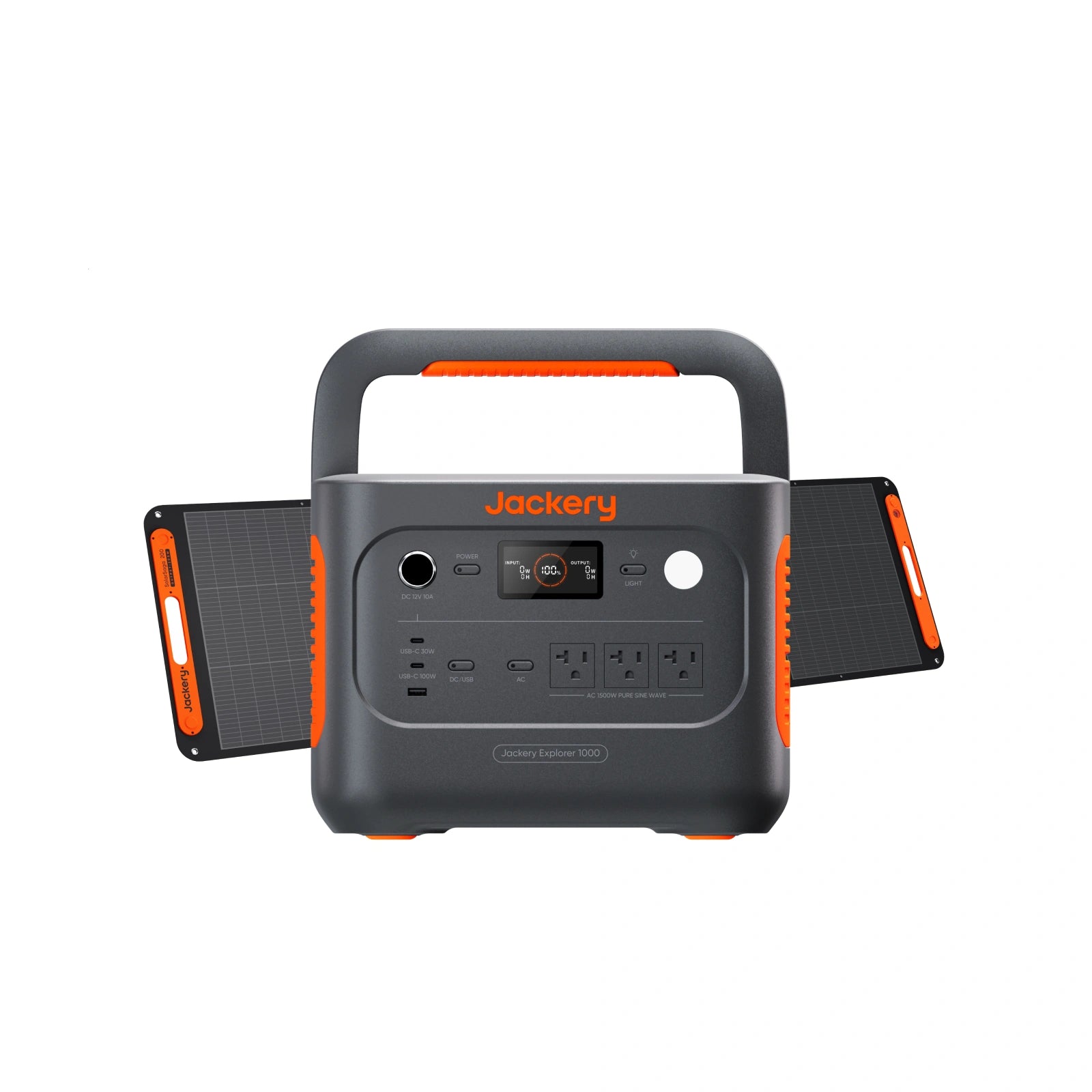
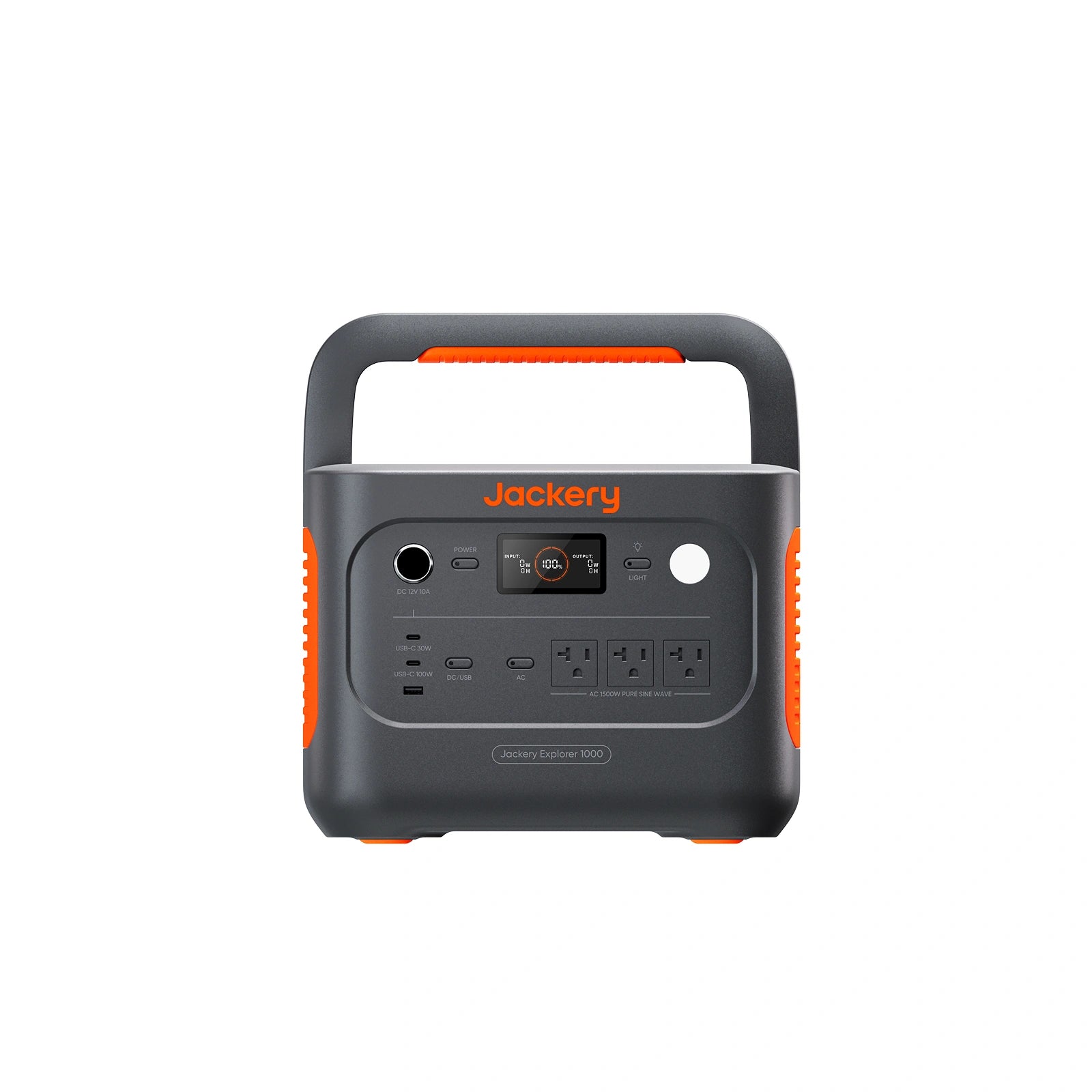
Look at the front panels and the USB story is identical: one 100W USB-C, one 30W USB-C, one 18W USB-A, and three AC outlets on each. The decisive difference is DC. The Jackery includes a 12V / 10A car port — the socket that runs 12V camping fridges, tire inflators, and vehicle accessories. The Delta 3 Classic has no 12V DC output at all, which is the Classic's most unusual omission and the first thing RV and van users should check. If your load list includes anything 12V, the Jackery wins this round by default; if everything you own charges by USB or AC, it will never matter. The Jackery also squeezes in a built-in light on the front panel.
Round 5: Portability and noise — the Jackery's home turf
At 23.8 lbs with a fold-away handle and a footprint roughly 19% smaller, the Explorer 1000 v2 is simply the easier object to live with — it is the lightest 1kWh LiFePO4 station in its class, and you feel the ~3 lb gap against the 26.7 lb EcoFlow every time you carry it to a car, a tent, or a different room. Jackery also rates its Quiet Charging mode at ≤22dB, quieter than the EcoFlow's under-30dB rating at 600W. Both are quiet by power-station standards; the Jackery is quieter still, which matters for bedroom and nursery use. This is the round that makes the Jackery the default camping pick in our home backup roundup's sister guides — weight is a spec you notice daily, not once.
Round 6: Backup behavior and software — EcoFlow's UPS and Storm Guard
For a station that lives plugged in at home, switchover speed is the spec that protects your work. The Delta 3 switches in 10ms — true UPS class, fast enough for a desktop PC or NAS to ride through a blip without rebooting. The Jackery's ≤20ms switchover (with a 1500W bypass mode) covers routers, CPAPs, and most electronics, but it is a step behind for the most sensitive loads. EcoFlow also adds Storm Guard, which watches weather alerts and tops the battery up automatically before severe weather arrives. Jackery counters with ChargeShield 2.0 (62 layers of protection, per Jackery) and the simpler, less fussy app. For pure home backup, this round — like Round 1 — goes to EcoFlow.
Winner by use case
- Home backup / outages: EcoFlow Delta 3 Classic — 1800W output, 10ms UPS, Storm Guard, faster recharge, lower price.
- Camping, tailgating, road trips: Jackery Explorer 1000 v2 — lightest in class, compact, and it has the 12V port your 12V fridge needs.
- CPAP and bedroom use: Jackery, by a nose — slightly more capacity and the quieter charging mode; both run a CPAP for two nights.
- Home office / NAS protection: EcoFlow — the 10ms UPS is the deciding spec.
- Solar-first setups: EcoFlow — 500W solar input vs 400W means hours saved on every refill.
- Value at list price: EcoFlow — both stations list at around $499 as of October 2026, so the EcoFlow's extra 300W and faster charging cost nothing extra. Street prices swing with promotions (the Classic was seen at $449 earlier in October 2026), so check both official stores before buying.
FAQ
Is the EcoFlow Delta 3 the same as the Delta 3 Classic?
The Classic is the version of the Delta 3 sold in the US today: same 1024Wh and 1800W core, but a simpler port layout (6 outlets, no 12V DC) and no expansion port, at a lower price than the base Delta 3 and Delta 3 Plus. This comparison uses the Classic's official US specs throughout.
Which one can run a refrigerator longer?
The Jackery, slightly — its 1070Wh battery holds about 46Wh more, worth roughly half an hour of fridge run time. Both keep a standard fridge food-safe for roughly 12–16 hours once compressor cycling is accounted for.
Which charges faster?
The EcoFlow on its standard settings: 0–80% in about 45 minutes and full in about an hour. The Jackery's app-enabled Emergency Charge also reaches full in about an hour, but its standard charge takes about 1.58 hours.
Can either power station run a 12V camping fridge?
Only the Jackery directly — it has a 12V / 10A car port. The Delta 3 Classic has no 12V DC output, so a 12V fridge would need its AC adapter, which wastes energy in conversion.
Are either of them expandable?
No. Both are fixed-capacity designs: 1024Wh and 1070Wh are all you ever get. Buyers who want to grow later should look at expandable models such as the EcoFlow Delta 3 Plus or Jackery Explorer 1000 Plus instead.
Which is better for a home office?
The EcoFlow. Its 10ms UPS switchover is fast enough to keep a desktop PC or NAS running through a grid blip; the Jackery's ≤20ms switch is fine for routers and laptops but a step slower for sensitive equipment.
Verdict
On the spec sheet the EcoFlow Delta 3 Classic wins this comparison: more output (1800W vs 1500W, plus X-Boost), faster everyday charging, a faster UPS, better solar input — and at around $499 on both official US stores as of October 2026, that extra output costs nothing extra at list price. For a station that lives at home as outage insurance, it is the rational buy, and it is the one we would recommend to most readers. The Jackery Explorer 1000 v2 wins the comparison you feel rather than read: ~3 lbs lighter, smaller, quieter, a touch more capacity, and the only 12V port here. If the station will travel — campsite, van, tailgate, boat — those traits outweigh 300W of inverter headroom you may never use. Decide where the station will spend its life, and the winner picks itself.
Research-based comparison — specs verified against official EcoFlow US and Jackery US sources in October 2026; no hands-on testing is claimed. Prices are official-store prices observed in October 2026 and change with promotions.
About our reviews
Specs come from published manufacturer data sheets, cross-checked against owner feedback. Runtime estimates use usable capacity (Wh × 0.85 ÷ watts). We do not lab-test units unless an article says so. Figures go stale. Check the current data sheet before you buy. This is not electrical or purchasing advice. How we research.
Related guides
 ComparisonsDJI Power 1000 vs EcoFlow Delta 2: Which Wins?Both hold exactly 1024Wh of LiFePO4 storage, but they spend it very differently: the DJI Power 1000 brings 2200W of output and…
 ComparisonsJackery Explorer 2000 v2 vs Bluetti Elite 200 V2The two best 2kWh values of 2026 head-to-head: Jackery Explorer 2000 v2 (2042Wh, 2200W, 39.5 lbs) vs Bluetti Elite 200 V2…
 ComparisonsBluetti Apex 300 vs Anker Solix F3800Two heavyweights of home backup: the Bluetti Apex 300 offers 3,840W and a 6,000-cycle battery, while the Anker Solix F3800…
Reader comments
No comments yet. Own this model or have a question about it? Share it below.