DJI Power 1000 vs EcoFlow Delta 2: Which Wins?
7 min read
On this page
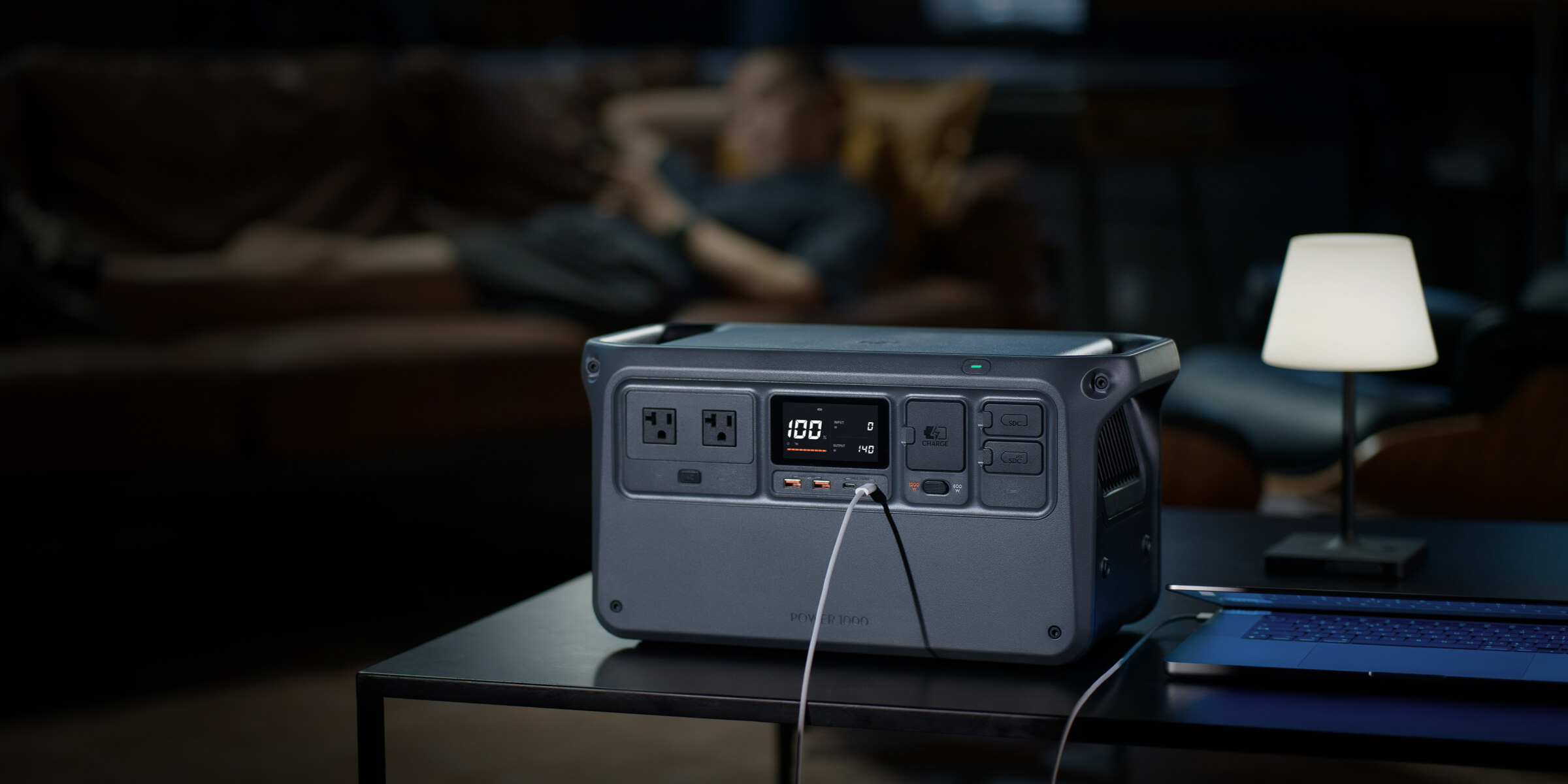
Both hold exactly 1024Wh of LiFePO4 storage, but they spend it very differently: the DJI Power 1000 brings 2200W of output and super-fast drone charging, while the EcoFlow Delta 2 answers with six AC outlets, an app, EPS backup and…
The short version
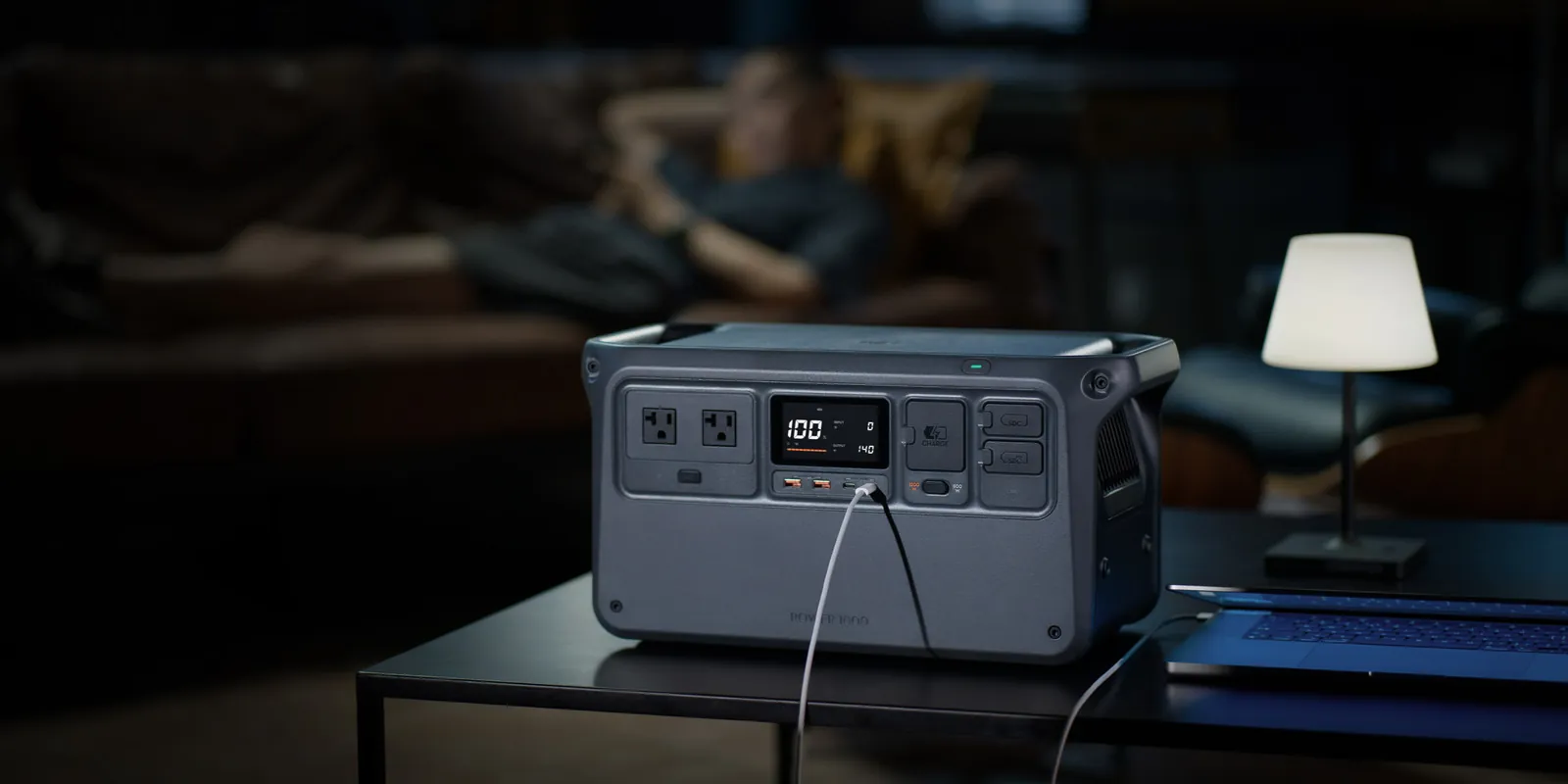
On paper this looks like a tie: the DJI Power 1000 and the EcoFlow Delta 2 both store exactly 1024Wh in a LiFePO4 battery, both recharge from a wall outlet in roughly 70–80 minutes, and both weigh within two pounds of each other. In practice they are built for different buyers. The DJI wins on raw AC output (2200W vs 1800W), USB-C speed (dual 140W vs dual 100W) and cycle life (4000 vs 3000 cycles) — and it is the only one that can super-fast-charge DJI drone batteries. The EcoFlow wins almost everywhere else for general home and camping use: six AC outlets instead of two, a proper app, EPS backup mode, built-in 500W solar charging, and the option to expand to 2048Wh or 3040Wh later. If you fly DJI drones, buy the DJI. For almost everyone else, the Delta 2 is the more complete 1kWh station.
This is a research-based comparison: every spec below comes from DJI's and EcoFlow's official documentation, verified in October 2026. We did not bench-test either unit.
Side-by-side specs (verified)
| Spec | DJI Power 1000 | EcoFlow Delta 2 |
|---|---|---|
| Capacity | 1024Wh LiFePO4 | 1024Wh LiFePO4 |
| AC output | 2200W continuous, 2600W max, 4400W peak | 1800W continuous, 2700W surge |
| AC outlets (US) | 2 | 6 |
| Extra output mode | — | X-Boost up to 2200W for resistive loads |
| Cycle life | 4000 cycles to 70%+ | 3000 cycles to 80%+ |
| AC recharge | 1200W: 0–100% in ~70 min; 600W: 80% in ~50 min | 1200W X-Stream: 0–80% in ~50 min, 0–100% in ~80 min |
| Solar input | Via separate DJI MPPT adapter module (sold separately), up to 400W per module | Built-in MPPT, 11–60V, 15A, 500W max |
| USB-C | 2x 140W (280W combined) | 2x 100W |
| USB-A | 2x 24W | 2x 12W + 2x 18W fast charge |
| Other ports | 1x SDC, 1x SDC Lite, 2x 1/4-inch thread mounts | 1x car port 126W, 2x DC5521 38W — 15 outlets total |
| Drone fast charging | Yes — SDC super-fast charge for Mavic 3 series, Air 3, Inspire 3, Matrice 30 (cables sold separately) | No |
| App control | None | Wi-Fi + Bluetooth, EcoFlow app |
| Backup switchover | No UPS mode | EPS emergency power supply mode |
| Expandable | No | Yes — to 2048Wh (DELTA 2 Extra Battery) or 3040Wh (DELTA Max Extra Battery) |
| Weight | ~28.6 lbs (13 kg) | 27 lbs (12 kg) |
| Dimensions | 17.6 x 8.8 x 9 in | 15.7 x 8.3 x 11 in |
| Warranty | Up to 5 years from DJI Official Store | 5 years |
Specs sourced from DJI's official Power 1000 product and store pages and EcoFlow's official DELTA 2 product page and manual. Cycle-life figures use each maker's own end-of-life threshold (70% for DJI, 80% for EcoFlow), so they are not a perfectly like-for-like comparison.
Output and outlets: DJI is stronger, EcoFlow is more useful
The DJI's 2200W continuous inverter is the strongest in the 1kWh class, and DJI states it holds that output until the battery is empty. That matters for stubborn loads — power tools, larger microwaves, workshop gear. Our full DJI Power 1000 review covers why that headline number is real, not a surge trick.
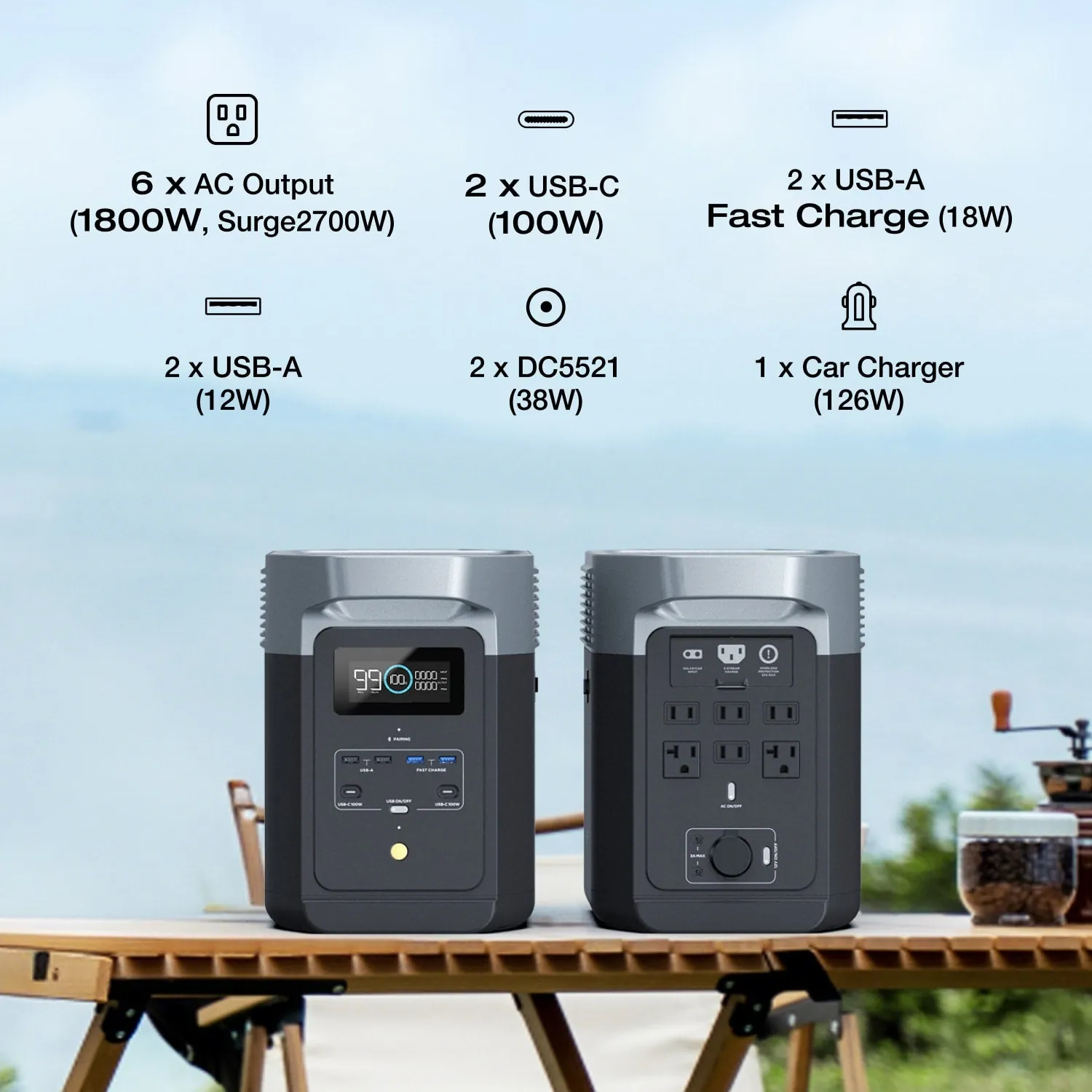
The catch is where that power comes out: just two AC outlets. The Delta 2 gives you six, plus a car port and two DC5521 outputs, for 15 outlets in total. For a home outage — fridge, router, lights, phones, a laptop — the EcoFlow's spread beats the DJI's muscle. Its X-Boost mode also stretches resistive loads to 2200W by lowering voltage, which narrows the practical gap for kettles and heaters, though it is not the same as true 2200W output. If your question is runtime rather than peak power, our guide to how long a 1000Wh power station runs walks through the math for both sizes of load.
Charging and solar: a tie on the wall, EcoFlow off-grid
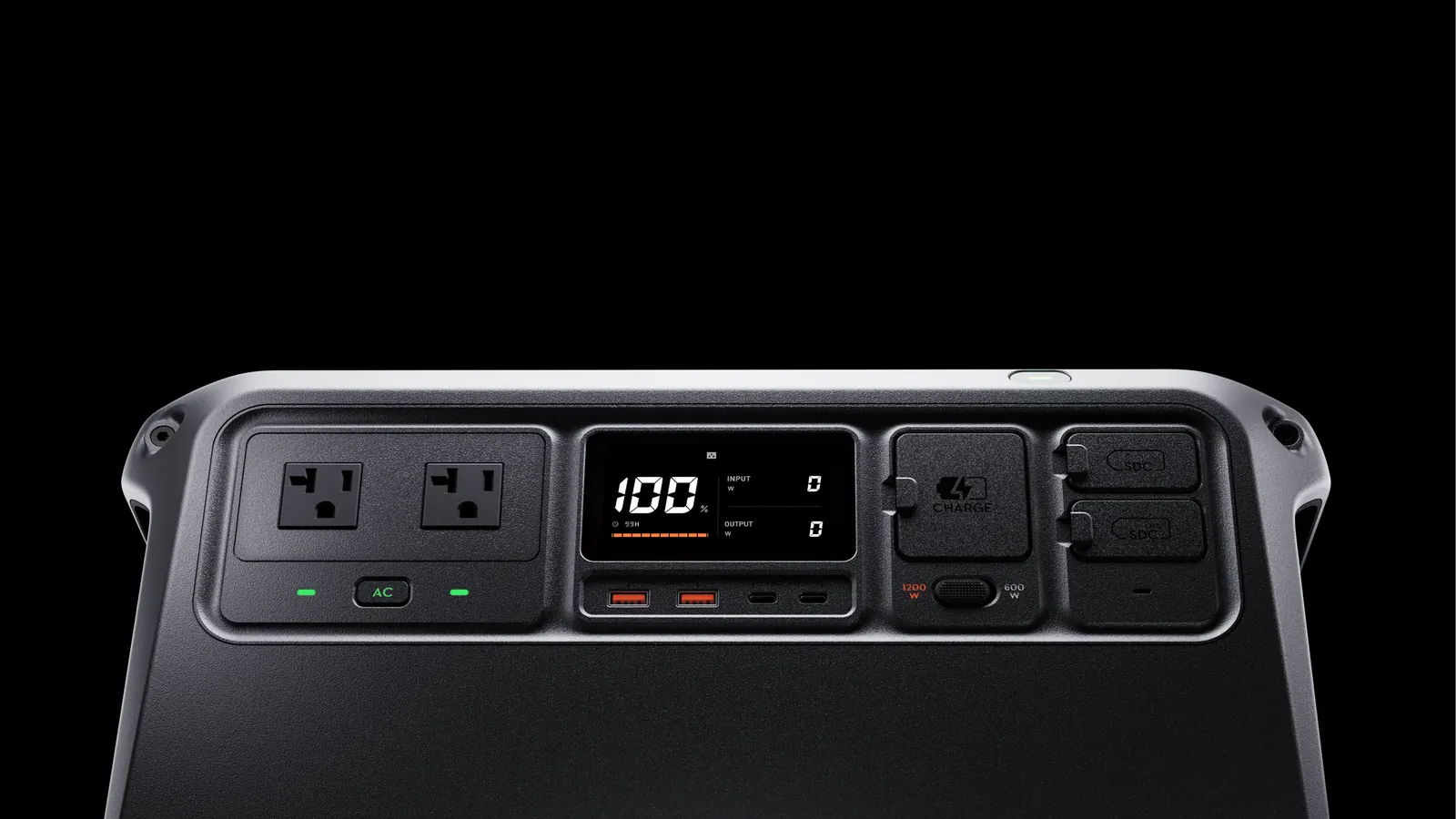
From a wall outlet there is little between them: DJI quotes about 70 minutes to full at 1200W, EcoFlow about 50 minutes to 80% and 80 minutes to full with X-Stream. Both support a slower, quieter charge mode in effect — DJI with a physical 1200W/600W toggle, EcoFlow through its app.
Solar is where they split. The Delta 2 has a built-in MPPT controller accepting up to 500W — plug panels straight in. The Power 1000 has no built-in MPPT: solar requires DJI's separate Solar Panel Adapter Module, capped at 400W per module, which adds cost and another box to carry. For solar-first camping or off-grid top-ups, the EcoFlow is simply easier, a point that also shows up in our best portable power stations for camping picks.
Battery life, app and expansion: EcoFlow plays the long game
DJI rates its cells for 4000 cycles to 70%+ capacity and backs the unit with 26 SGS test certifications — a strong longevity story. EcoFlow counters with 3000 cycles to a stricter 80%+ threshold, a 5-year warranty, and the feature the DJI cannot match: expansion. Adding a DELTA 2 Extra Battery doubles you to 2048Wh; a DELTA Max Extra Battery takes you to 3040Wh. That upgrade path is decisive for home backup, where, as our refrigerator sizing guide shows, a single 1024Wh box covers roughly one night of fridge runtime, not a multi-day outage.
EcoFlow also wins the everyday-tech round: Wi-Fi and Bluetooth app control for monitoring, charge limits and firmware, plus an EPS mode that switches to battery when the grid drops — useful for a router or CPAP. The original Power 1000 has no app, no UPS/EPS mode and no expansion port. DJI's own answer is the newer Power 1000 V2, which adds those features, so compare generations carefully before buying the original at full price.
The drone question
If you own a DJI drone, this section settles the comparison. Through its SDC ports the Power 1000 super-fast-charges compatible batteries — DJI cites about 32 minutes from 10% to 95% for Mavic 3 series batteries with the model-specific cable (sold separately). No EcoFlow station can do that at any price. The Delta 2 will still charge drone batteries perfectly well through AC or USB-C, just at standard speeds. How much that matters depends on whether you are a field crew turning batteries around all day or an occasional flyer — the same split we found when comparing the Delta 2 against another fast all-rounder in Anker Solix C1000 vs EcoFlow Delta 2.
Winner by use case
- DJI drone crews and creators: DJI Power 1000 — SDC fast charging plus dual 140W USB-C for laptops and cameras.
- Home backup for fridge, router and lights: EcoFlow Delta 2 — six outlets, EPS mode and expansion headroom. See also our best portable power stations for home backup.
- Camping and RV trips: EcoFlow Delta 2 — built-in solar, more ports, slightly lighter.
- Maximum single-load power (tools, big appliances): DJI Power 1000 — true 2200W continuous.
- Longest service life on paper: DJI Power 1000 — 4000 cycles, though note the 70% threshold vs EcoFlow's 80%.
Pros and cons
DJI Power 1000
- Pros: strongest 1kWh inverter (2200W); unique SDC drone fast charging; dual 140W USB-C; 70-minute full recharge; 4000-cycle rating.
- Cons: only 2 AC outlets; solar needs a separate MPPT module; no app, no UPS, no expansion; heaviest here at ~28.6 lbs.
EcoFlow Delta 2
- Pros: 6 AC outlets and 15 total; built-in 500W solar; expandable to 3040Wh; app control and EPS mode; frequent deep discounts. Full details in our EcoFlow Delta 2 review.
- Cons: 1800W output trails the DJI; fan noise under heavy load is a common owner complaint; extra batteries are pricey.
FAQ
Do the DJI Power 1000 and EcoFlow Delta 2 have the same capacity?
Yes — both are rated at 1024Wh with LiFePO4 cells, so runtime on the same load is broadly similar. The differences are output, ports, charging ecosystem and expandability, not stored energy.
Which one can run more appliances at once?
The Delta 2, thanks to six AC outlets and 15 total ports. The DJI can run a single heavier load (up to 2200W) but only offers two AC outlets, so a power strip becomes part of the setup.
Which is better for solar charging?
The Delta 2. Its MPPT controller is built in and accepts up to 500W of panels directly. The Power 1000 needs DJI's separate MPPT adapter module, capped at 400W per module.
Can the EcoFlow Delta 2 fast-charge DJI drones?
Not in DJI's SDC super-fast mode — that is exclusive to DJI's own stations with the right cable. The Delta 2 charges drone batteries at standard speed through AC or USB-C.
Which one is better for home backup?
The Delta 2 for most homes: EPS switchover, more outlets, and the option to expand to 2048Wh or 3040Wh later. The DJI suits a backup plan built around one or two heavy loads and fast wall recharging between outages. For a second opinion on the EcoFlow against a closer rival, see EcoFlow Delta 2 vs Jackery Explorer 1000 v2.
What about the DJI Power 1000 V2?
The V2 keeps 1024Wh but raises output, adds true UPS, app control and expansion support, which closes most of the gaps listed here. If V2 pricing is close to the original's, the V2 is the better DJI buy — confirm which generation a listing refers to before ordering.
Verdict
Same battery, different philosophy. The DJI Power 1000 is a specialist: class-leading 2200W output and drone fast charging that nothing else offers, wrapped in a deliberately simple, app-free box. The EcoFlow Delta 2 is the better generalist: more outlets, built-in solar, an app, EPS backup and an expansion path that lets it grow from camping box to real home backup. Drone owners should buy the DJI without hesitation. Everyone else should buy the Delta 2 — especially at the sale prices it regularly reaches — and put the savings toward panels or the extra battery.
Pricing note: the Power 1000 launched at $999 in the US and the Delta 2's street price has ranged roughly $350–$600 during 2026 promotions against a higher list price. Prices move constantly — check the current price for both before buying, and confirm whether a DJI listing is the original or the V2.
About our reviews
Specs come from published manufacturer data sheets, cross-checked against owner feedback. Runtime estimates use usable capacity (Wh × 0.85 ÷ watts). We do not lab-test units unless an article says so. Figures go stale. Check the current data sheet before you buy. This is not electrical or purchasing advice. How we research.
Related guides
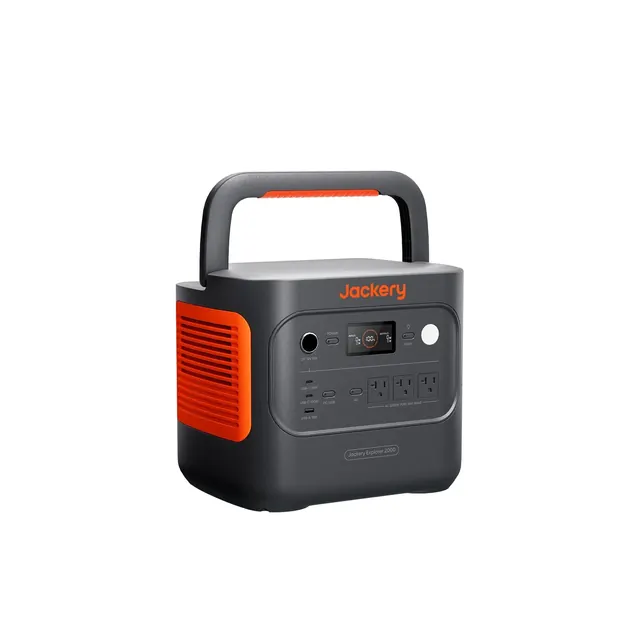 ComparisonsJackery Explorer 2000 v2 vs Bluetti Elite 200 V2The two best 2kWh values of 2026 head-to-head: Jackery Explorer 2000 v2 (2042Wh, 2200W, 39.5 lbs) vs Bluetti Elite 200 V2…
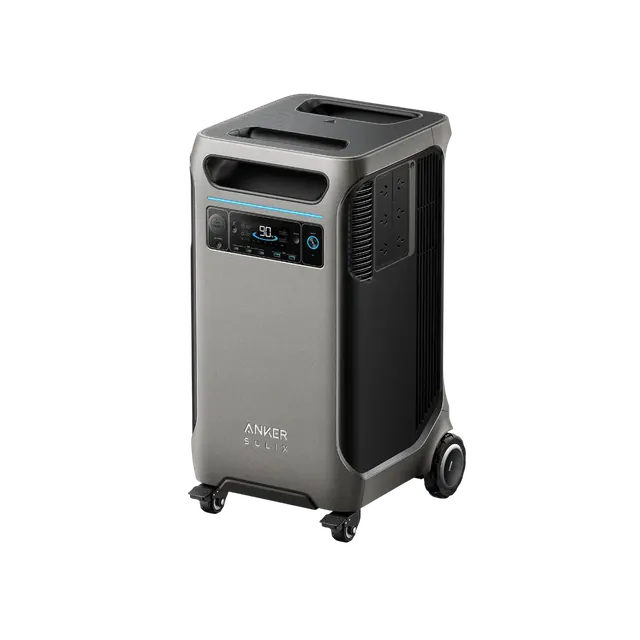 ComparisonsBluetti Apex 300 vs Anker Solix F3800Two heavyweights of home backup: the Bluetti Apex 300 offers 3,840W and a 6,000-cycle battery, while the Anker Solix F3800…
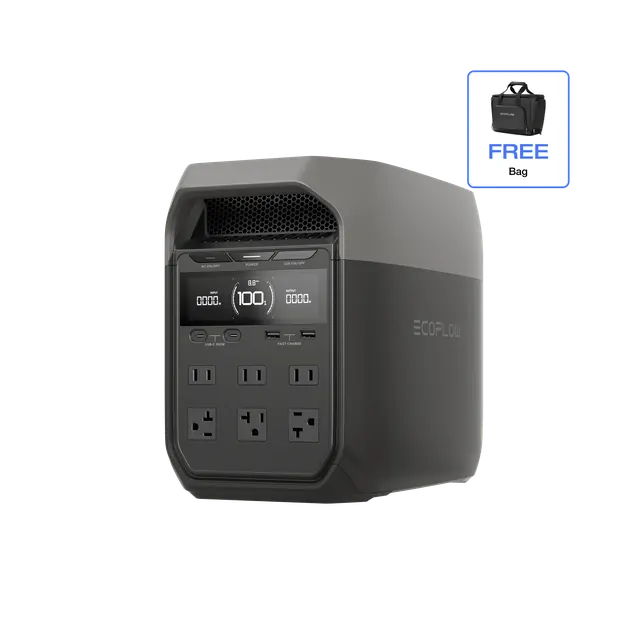 ComparisonsEcoFlow Delta 3 vs Delta 2: Should You Upgrade?The EcoFlow Delta 3 keeps the Delta 2's winning 1024Wh/1800W formula but adds faster charging, a quieter fan, a 4,000-cycle…
Reader comments
No comments yet. Own this model or have a question about it? Share it below.