UL 3700 Explained: Plug-In Solar Certification Guide
11 min read
On this page
- The short version
- What UL 3700 actually is — and is not
- The four safety problems UL 3700 exists to solve
- UL 3700 vs UL 1741: the distinction sellers blur
- Who actually has UL 3700 certification in October 2026?
- Why uncertified Amazon kits are a code and safety problem
- How to verify a UL 3700 claim in 5 minutes
- Frequently asked questions
- Verdict
UL 3700 is the first US safety outline written for plug-in solar as a complete system. This guide explains what it actually tests, which microinverters carry a verifiable UL 3700 certification in October 2026 — and why every one of them…
The short version
UL 3700 is the first US safety document written specifically for plug-in solar — the small panel-and-microinverter kits that feed power into your home through an ordinary wall outlet. Its full name is the Outline of Investigation for Interactive Plug-In Photovoltaic Equipment and Systems. UL Solutions published it in December 2025 and opened a testing and certification program based on it on January 8, 2026. Almost every new state plug-in solar law points at this standard, directly or through a generic "certified by a nationally recognized testing laboratory" clause — which makes UL 3700 the single most important label in this category. Here is the part most marketing skips: as of October 2026, every verifiable UL 3700 certification belongs to a microinverter, not to a complete kit. Three companies have announced certifications — APsystems, Hoymiles and Mango Power — and the evidence behind each claim is different. This guide explains what the standard tests, what each company has actually certified, and how to verify a claim yourself before you pay for a kit. If you are new to the category, start with our explainer on what plug-in solar is and how balcony solar works in the US; this page is its certification companion.
This is a research-based guide, not legal or electrical advice. Certification status in this category is changing month by month — every claim below was checked against manufacturer and testing-lab sources in October 2026, and you should re-verify the exact model you are buying before you plug anything in.
What UL 3700 actually is — and is not
Three facts frame everything else:
- It is an Outline of Investigation, not yet a consensus standard. An OOI is a real UL document that products can genuinely be tested and certified against — a certified product carries a legitimate listing from its testing lab. But an OOI can be revised more easily than an adopted ANSI standard, so requirements may still shift.
- It is system-level, not component-level. Older solar certifications test one box at a time. UL 3700 was written for equipment that a consumer installs without an electrician, plugs into a household circuit and may unplug while the sun is shining — so it evaluates construction, performance and labeling for that whole use case, in UL Solutions' own words.
- UL 3700 is the standard; UL Solutions is only one of the labs. Certification "to UL 3700" can be issued by any nationally recognized testing laboratory (NRTL). Of the three 2026 announcements below, one was certified by CSA Group, one by Intertek (the ETL mark), and one names no lab at all. A claim is only as strong as the lab record behind it.
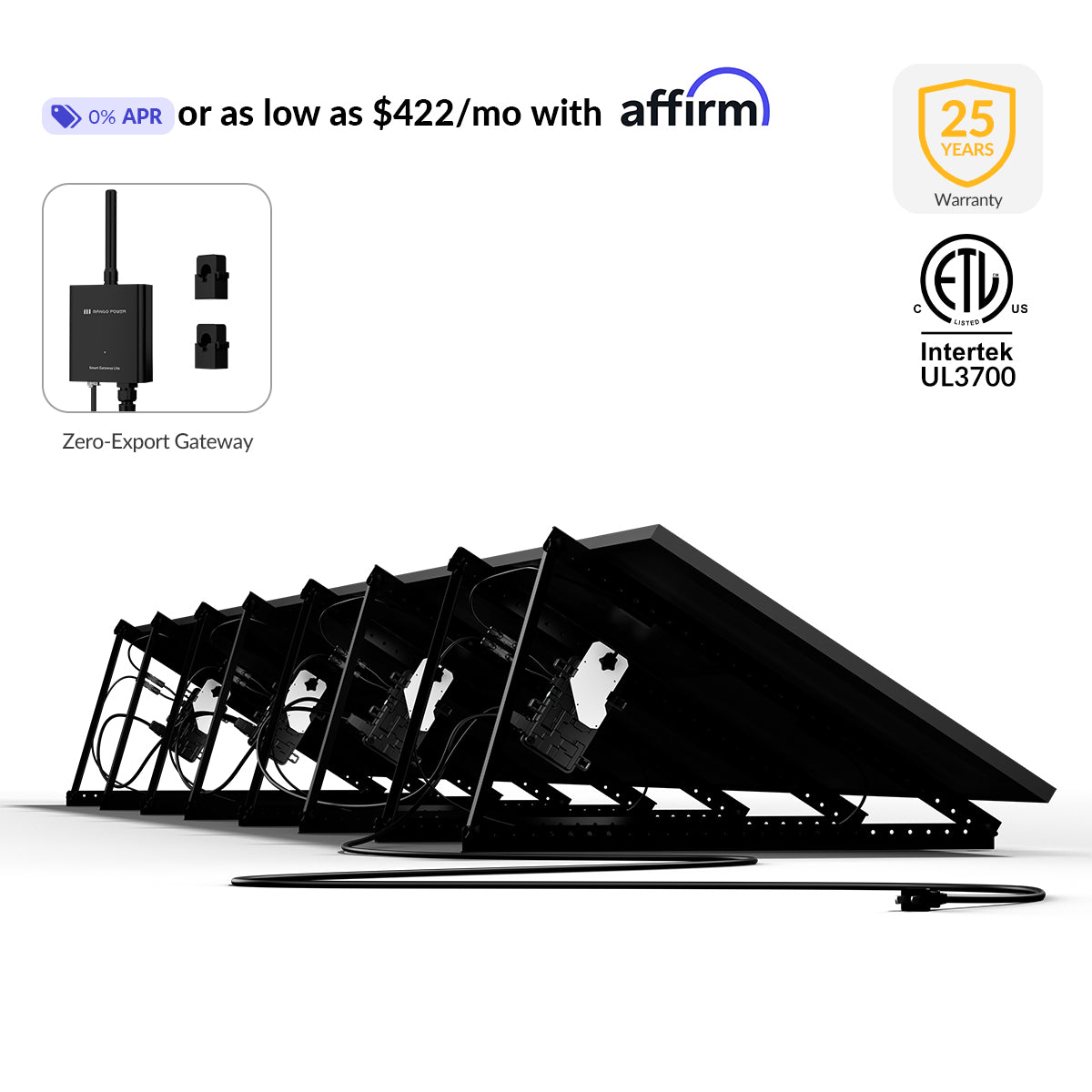
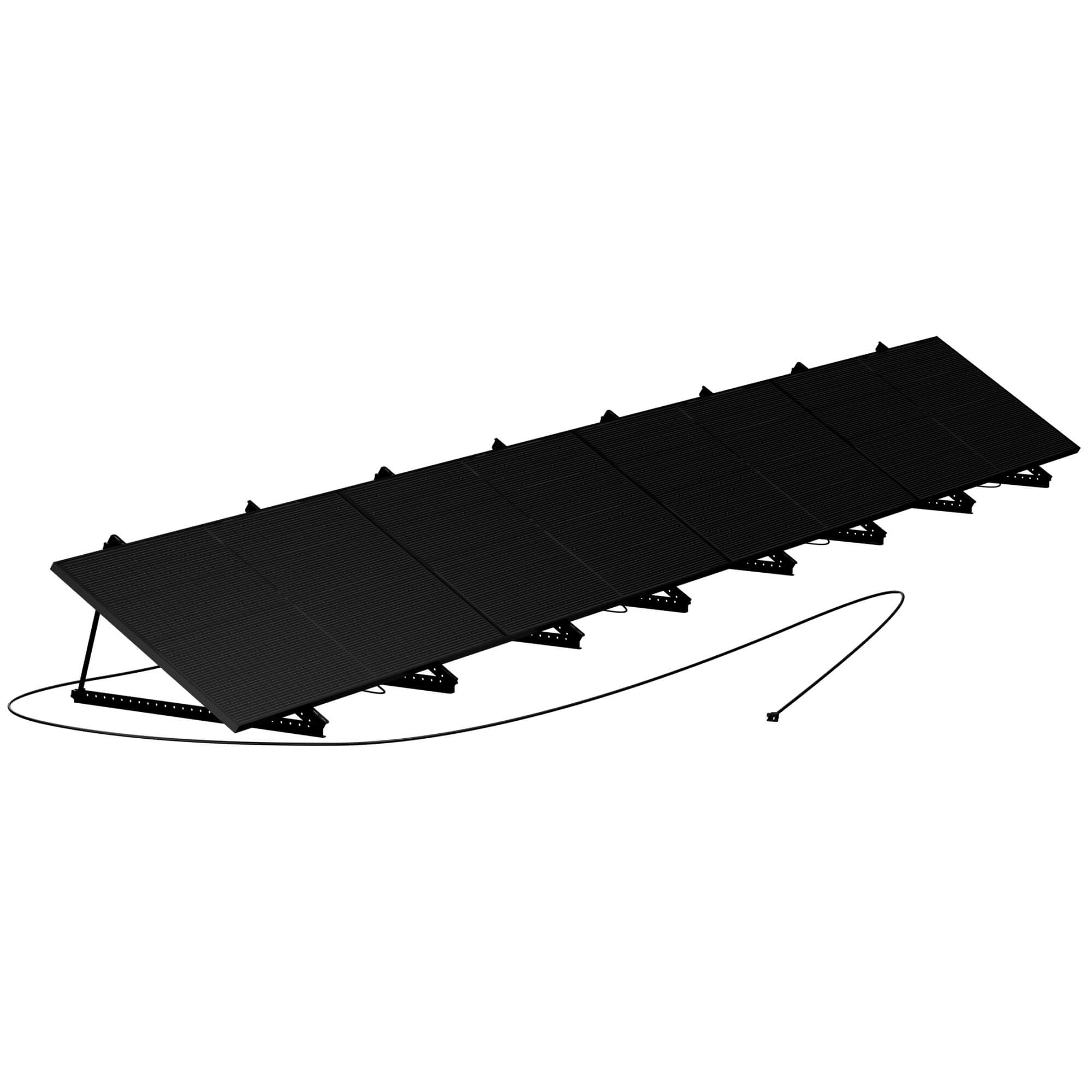
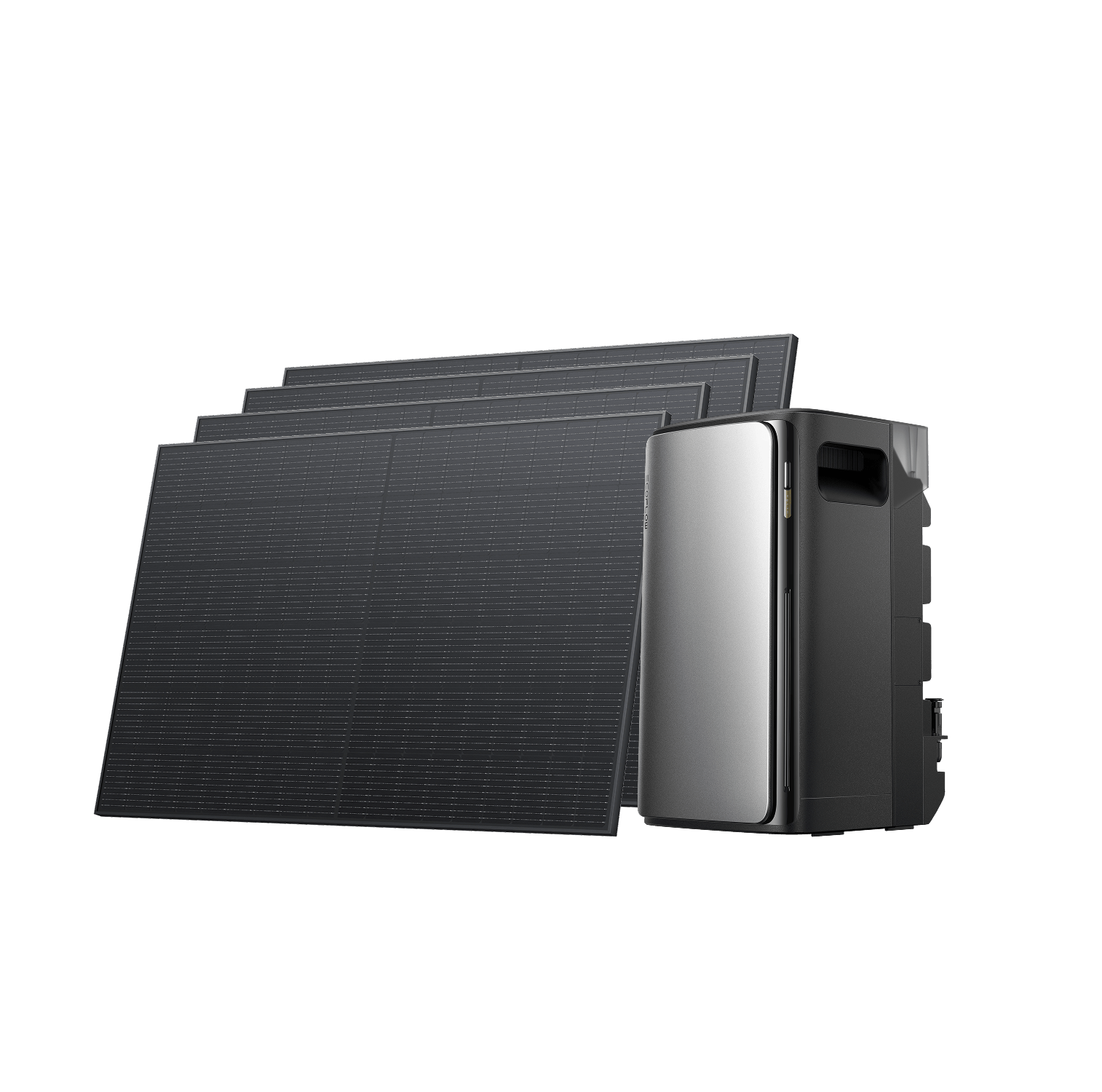
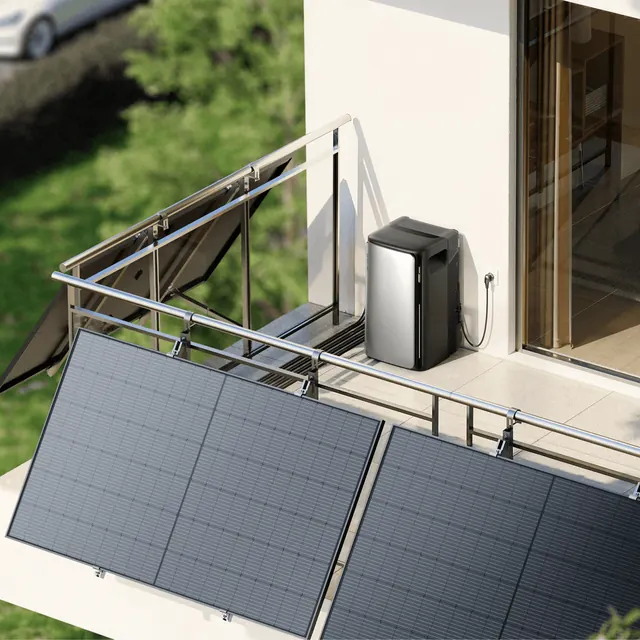
UL Solutions' launch release states the risks the outline is designed to mitigate: accidental contact with hazardous electric parts, unsafe installation, circuit overloads, and current flowing in the wrong direction. The Mango Power S kit pictured in this article is a useful visual reference: four 300W panels, a microinverter per panel, a zero-export gateway and a single plug-in AC cable — the exact class of system UL 3700 was written for.
The four safety problems UL 3700 exists to solve
| Safety problem | What can go wrong without it | What UL 3700 requires the system to do |
|---|---|---|
| Touch safety (live plug prongs) | You unplug the kit on a sunny day and the exposed metal prongs are still carrying solar voltage. | Power at the plug must drop to a safe level almost immediately after unplugging — Hoymiles publishes a 1-second figure for its HiFlow Pro, and states its microinverter stops producing within 135 milliseconds of disconnection. |
| Anti-islanding | The grid goes down, but your kit keeps energizing your home's wiring — and potentially the lines outside that utility workers are repairing. | The system must stop exporting power automatically during a grid outage. |
| Breaker masking and overloads | Solar feeding into the middle of a branch circuit can hide part of the load from the breaker that is supposed to protect that circuit, so wiring can carry more current than the breaker "sees." | Construction and performance requirements that mitigate breaker masking and protect against overloads and reverse current flow. |
| Ground faults and GFCI behaviour | A plug-in system pushes power in both directions through outlets and protective devices designed for one-way flow. | Ground-fault protection and compatibility with bidirectional GFCI protection, so protective devices still trip correctly with solar connected. |
None of these four problems exists in the same way for a permanently wired rooftop system installed and inspected by professionals — which is exactly why a dedicated standard was missing until 2026, and why a cheap uncertified kit is not "the same thing for less money." It is a different risk profile with a plug on it.
UL 3700 vs UL 1741: the distinction sellers blur
| UL 1741 | UL 3700 | |
|---|---|---|
| Written for | Inverters, converters and interconnection equipment for distributed energy systems — traditionally installed permanently, to the National Electrical Code, by professionals. | Interactive plug-in photovoltaic equipment and systems that connect through a plug and receptacle. |
| What a listing covers | The named component — usually the inverter or microinverter alone. | Plug-in equipment and systems: construction, performance and labeling for the plug-in use case, including touch safety and breaker masking. |
| What it proves about a kit | That the inverter passed inverter tests. Nothing about the panels, cables, plug and combination you actually bought. | That the certified item — still check whether that is a component or a whole system — was evaluated as plug-in equipment. |
Practical translation: "UL 1741 listed" on a marketplace listing is a component claim. It can be completely true and still tell you nothing about whether the kit is safe or legal to plug into your wall. Most enacted state laws were written with the system-level problem in mind — our state-by-state plug-in solar law tracker lists which certification each state's law asks for, including New Jersey's first-in-the-nation exemption for very small devices (at or under 400W) and the states that name UL 3700 directly.
Who actually has UL 3700 certification in October 2026?
Three companies have announced UL 3700 certifications in 2026. Read the "what is certified" column carefully — in every case it is a microinverter or a microinverter family, and the strength of the public evidence differs:
| Company / product | What is certified | Lab and evidence | Announced |
|---|---|---|---|
| APsystems EZ1-LV | Microinverter only (900W maximum continuous output, two panel inputs) — not a whole kit | Strongest public record: APsystems states the EZ1 is "CSA Certified to UL3700 standards," and a CSA Group public directory record (file 259077) names the EZ1-LV as a plug-in PV grid-interactive inverter. The CSA record also notes the models are intended for dedicated circuits. | July 15, 2026 |
| Mango Power S Pro | Microinverters only (500W units used in the Mango Power S kits) | Intertek issued an Authorization to Mark on September 7, 2026, announced by Mango Power on September 17. Mango's own post is careful: this component recognition does not by itself certify every complete kit or accessory combination. | September 17, 2026 |
| Hoymiles HiFlow Pro | Microinverter (marketed as the first plug-in solar solution to meet UL 3700) | Weakest public paper trail: Hoymiles' announcement and product page name no testing lab and no certificate number, and trade-press coverage was later corrected to say the unit is designed to meet UL 3700 rather than certified by UL Solutions. Treat it as a maker's claim until a lab record is published — and ask Hoymiles for the certificate before buying on the strength of it. | July 2026 |
The headline finding: as of October 2026, no complete plug-in solar kit — panels, inverters, gateway, cables and plug as one system — has a published UL 3700 system certification. What exists is component-level certification of the microinverter, which is real progress (the microinverter is the part that touches the grid) but is not the same claim. Two consequences follow. First, in states whose laws require UL 3700 by name for the system, even a kit built around a certified microinverter may not cleanly qualify yet — Maine and Vermont are the strictest examples. Second, any seller who tells you their whole kit is "UL 3700 certified" today is, at best, describing their inverter. Ask which part, which lab, and which file number.
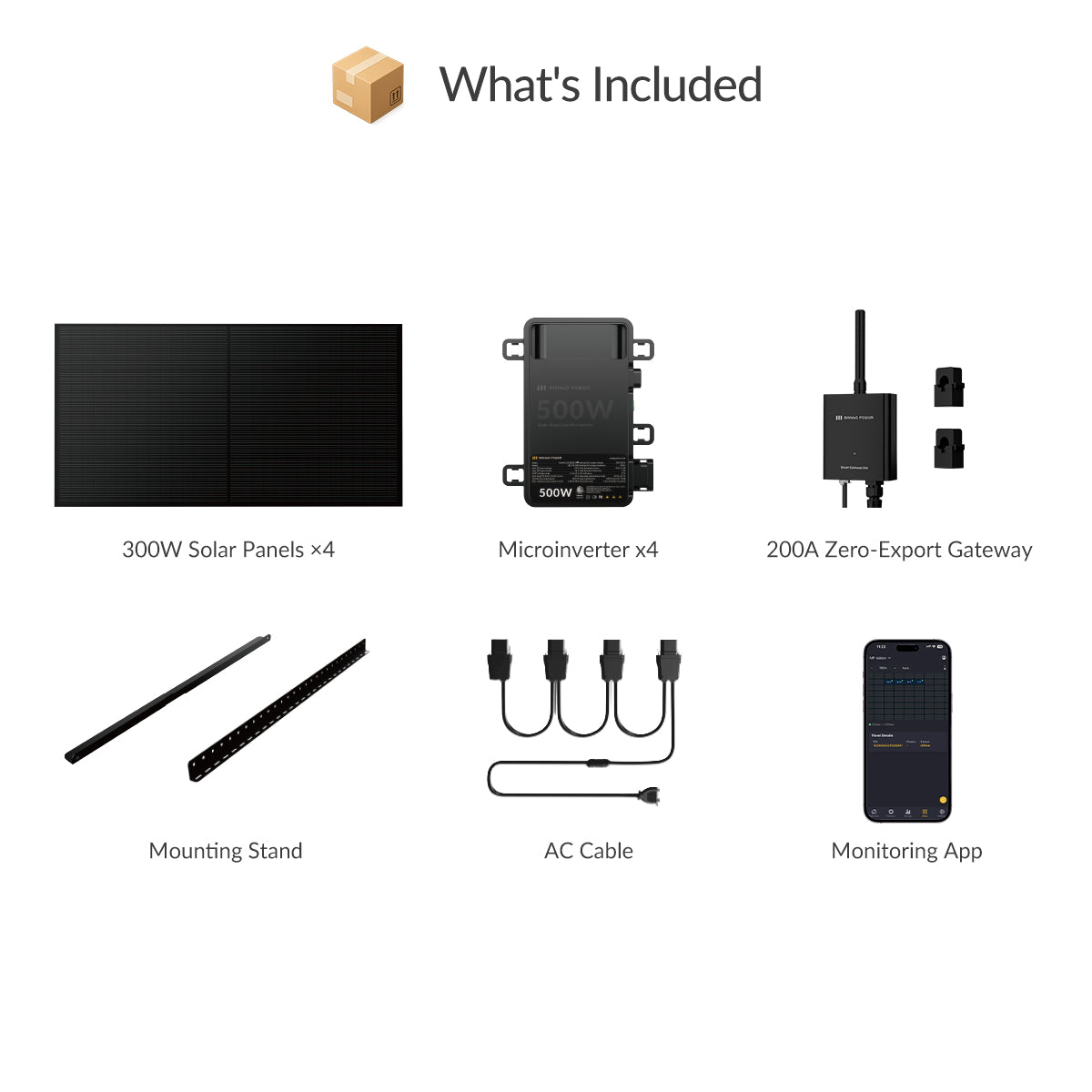
For scale on what one of these kits costs today: Mango Power's own US store lists the S 1,200W kit pictured here at $2,698 (list $3,224) as of October 2026 — certified-component plug-in solar is still a premium product, which is precisely why the $200–$400 uncertified marketplace kits are tempting, and why the next section matters.
Why uncertified Amazon kits are a code and safety problem
Search any major marketplace for "plug in solar kit" and you will find kits at a tenth of the Mango price, most with no NRTL listing of any kind, some with a CE mark (a European self-declaration, not a US listing) presented as if it were a US certification, and some quoting UL 1741 for an inverter inside a kit that has never been evaluated as a system. The problems are concrete, not theoretical:
- Code: in the 10 states with plug-in solar laws, certification by an NRTL is a condition of the legal pathway. An uncertified kit gets no benefit from those laws — and everywhere else, the ordinary interconnection and electrical-code rules still apply.
- Safety: the four failure modes in the table above — live prongs, islanding, breaker masking, ground faults — are exactly what an untested kit has never been shown to handle.
- Insurance and leases: a fire or injury involving an unlisted device backfeeding your wiring is the fact pattern insurers and landlords look for. "The listing said solar kit" is not a defence.
- EU-only products are not a loophole. European balcony-solar gear — including well-known microinverter lines sold only in Europe — is built and certified for 230V European systems. Shipping it to the US does not make it a UL 3700 product, a point we also make in our plug-in solar hub guide.
Our standing rule, unchanged: never connect a kit to your home's wiring if it has no verifiable NRTL listing. If the budget only stretches to an uncertified kit, the safe use of those panels is off-grid — charging a power station that never touches your home's circuits, the setup covered in our guide to how many solar panels you need to recharge a power station and our picks for the best solar generators for power outages.
How to verify a UL 3700 claim in 5 minutes
- Get the exact model name. Certifications attach to models (EZ1-LV, S Pro), not brands. A certified microinverter in one kit says nothing about a different kit from the same brand.
- Ask for the lab and the file number. A real listing has both: CSA, Intertek (ETL) or UL Solutions, plus a certificate or file number the maker should be happy to share. "UL 3700 compliant" with no lab named is a design claim, not a certification.
- Check the lab's public directory. Search the model in UL Product iQ, the CSA Group product listing or Intertek's directory. The APsystems EZ1-LV is the current gold standard here precisely because a public CSA record exists.
- Read the scope. Does the record name a microinverter, a subassembly, or a complete system? Note any conditions in the record — the CSA listing for the EZ1-LV, for example, specifies use on dedicated circuits.
- Match it to your state's wording. Some laws accept any NRTL certification; some name UL 3700; New Jersey exempts devices at or under 400W. Your state's exact wording is in our 2026 plug-in solar law tracker.
One last expectation to set: certification does not change the economics. A certified 800W-class kit that produces 600–900 kWh a year saves roughly $110–$165 a year at the EIA's October 2026 forecast US average residential price of about 18.2¢/kWh — an estimate that only holds if you consume the power as it is made, since plug-in solar earns nothing for export in every enacted state law. What certification buys you is legality and safety, not a faster payback. And in an outage, a grid-tied kit switches off by design; backup power is a battery's job, covered in our home backup power station guide.
Frequently asked questions
Is UL 3700 a law?
No. UL 3700 is a safety outline published by UL in December 2025. It becomes legally relevant because state plug-in solar laws require certification — some name UL 3700 directly, others require certification by a nationally recognized testing laboratory, which today effectively means UL 3700 for this product category.
When did UL 3700 certification start?
UL Solutions launched its plug-in solar testing and certification program, based on UL 3700, on January 8, 2026. The first manufacturer announcements — Hoymiles and APsystems — came in July 2026, with Mango Power following in September 2026.
Which plug-in solar kits are UL 3700 certified?
As of October 2026, none as a complete system. Three microinverters have announced UL 3700 certifications: the APsystems EZ1-LV (CSA Group, with a public directory record), the Mango Power S Pro microinverters (Intertek, September 2026) and the Hoymiles HiFlow Pro (maker's claim, no lab named in the announcement). Kits built around the first two are the closest thing to a certified kit you can buy today.
Is a UL 1741 inverter enough to make a kit legal?
Not by itself. UL 1741 certifies the inverter as a component for traditionally installed systems. Plug-in solar laws were written around the whole plug-in use case — touch safety, breaker masking, GFCI behaviour — which is what UL 3700 addresses. A UL 1741 inverter inside an unevaluated kit is a component claim, not a system certification.
Does the certifying lab have to be UL itself?
No. Any nationally recognized testing laboratory (NRTL) can certify to UL 3700 — CSA Group certified the APsystems EZ1-LV and Intertek (ETL mark) certified the Mango Power S Pro microinverters. What matters is a verifiable listing in that lab's directory for the exact model, not which lab issued it.
Can I legally plug in an uncertified kit if my state has no plug-in solar law?
No law does not mean no rules: without an enabling statute, the standard utility interconnection process and your local electrical code adoption still technically apply to anything feeding power into your home's wiring. Our advice is unchanged — never grid-connect an uncertified kit. Use the panels off-grid with a power station such as the EcoFlow Delta 2 instead, which needs no certification pathway in any state.
Verdict
UL 3700 is the standard that turned plug-in solar from a legal grey area into a product category: published in December 2025, open for certification since January 2026, and already written into the laws reshaping 10 states. But the honest October 2026 status is narrower than the marketing: three microinverters carry UL 3700 certifications — APsystems' with the strongest public evidence, Mango Power's via Intertek, Hoymiles' as a claim still waiting for a published lab record — and no complete kit is system-certified yet. Buy on the lab record, not the badge: exact model, named lab, file number, directory entry, scope. We will update this guide as the first whole-system certifications appear — last checked October 26, 2026.
About our reviews
Specs come from published manufacturer data sheets, cross-checked against owner feedback. Runtime estimates use usable capacity (Wh × 0.85 ÷ watts). We do not lab-test units unless an article says so. Figures go stale. Check the current data sheet before you buy. This is not electrical or purchasing advice. How we research.
Related guides
 Sizing guidesCan a Portable Power Station Run a Window Air Conditioner?Yes, but only a mid-size or larger station, and not for long. Window AC watts by BTU from ENERGY STAR data, startup surge, and…
 Buying guidesIs Plug-In Solar Legal in Your State? 2026 Law TrackerTen states have now passed plug-in (balcony) solar laws — six are in force today and four switch on in 2027. This tracker lists…
 Buying guidesWhat Is Plug-In Solar? How Balcony Solar Works in the USPlug-in solar (balcony solar) is a small panel-and-microinverter kit that feeds power into your home through a standard wall…
Reader comments
No comments yet. Own this model or have a question about it? Share it below.